
Down The Rabbit Hole – Swirls & Collisions
Abstracts in Milk, Colours & Oil
ABSTRACT
Aniruddha Bhattacharya
1/27/20264 min read
Guwahati
I recently did a children’s experiment to make pictures and it turned out to be a whole lot of fun behind the lens. Watching bright colours blend and mix into bubbles in water that pop later to release colour gave me a lot of opportunity to catch bright colours doing their thing. The love for colour usually comes naturally for us guys who like images I think. Colourful and bright things always draw the most lenses as a rule after all. The process of making my “New Adventures In Abstract” gave me abstract images which seemed like a new rabbit hole that definitely needed further investigation for sure with the 100 mm lens. As things turned out, playing with colour is fun for children of all ages and especially for us guys who like to see the bright and colourful on our screens. The concept is a flip for me conceptually because of the absence of identifiable subjects and the liberty of setting up the shots that one usually cannot take while photographing wildlife. Those liberties are a part of other kinds of photography though and that perhaps adds to the whole interest as its part of the same craft essentially. Both genres are unpredictable in their own way which probably is what makes them fun. It’s totally different and yet achieved using the same tools and principles.
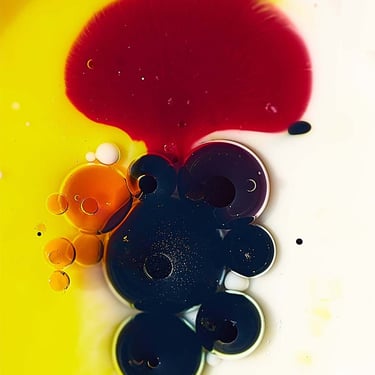
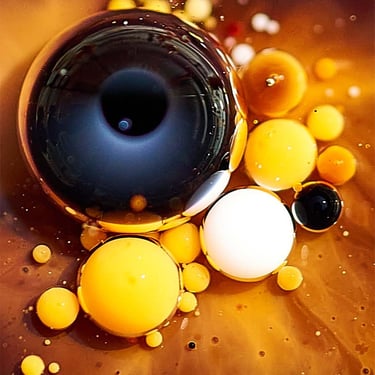
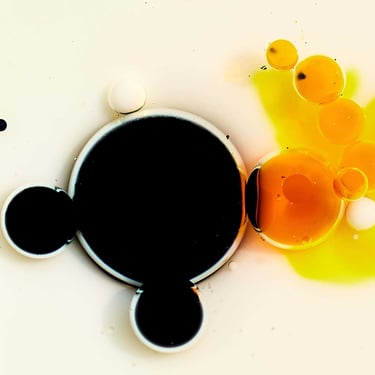
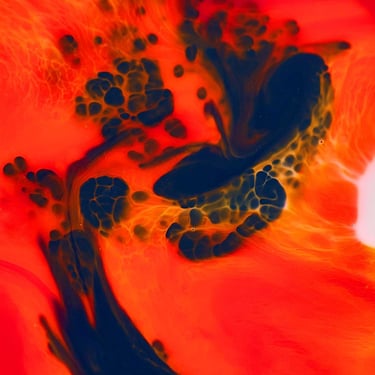
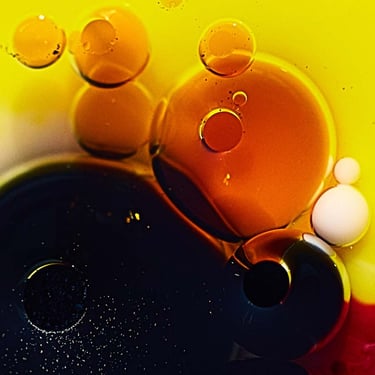
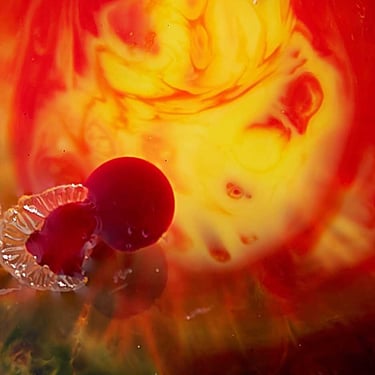
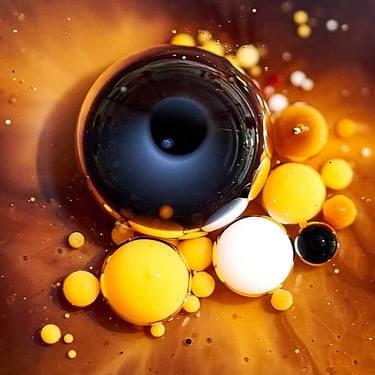
The mixing of colours in water with oil was also all about simultaneous swirls and collisions going on at different levels of the medium. Things collide all the time at different scales if you think about it. Even the pouring of water into a glass is collision at its level. The colours in that experiment were mixing in water, with oil serving as a visual filter at certain times and as an additive that caused bubbles on others. The colours I’d used were water based and would dissolve eventually in water which was the base. The obvious next question for the observer is what if we tried it on a different base? Something thicker which doesn’t allow for such fast mixing of the colour logically would let us photograph a slower mixing process. Well, milk has fat, it’s thick, it photographs very well and it’s white, the best base colour to draw and write on. So milk is where the rabbit hole of abstract led me to next and as expected, it was thicker and the process of mixing was a lot slower. The oil formed bubbles a lot faster and easier with the fat in the milk and the colours. The collisions between these bubbles were pretty interesting as you can literally see the colours from one bubble invade the other very slowly in real time. The bubbles pop eventually and that too is slow and photographable.
I’d used a glass bowl for my first try with water which made me wiser. There’s no point in planning much beyond your focal point with macro photography. Sure, with a bowl, you can have multiple things going on at different ends of it but milk wasn’t as readily available as water and so I chose little disposable cups this time around. It made it easier to start over after the eventual mess and also let me concentrate on one thing at a time. The textural change with milk was the most fun from behind the lens. Staying in the focal box is downright essential with things at this scale and it kinda makes sense to me now why focus stacking is the option of choice when you need to cover more ground with Macros. Shooting at F 14 would open a world of light and blur at that little scale. Collisions and swirls was what this experiment brought and the addition of a little bit of detergent on a cue stick would reset the playing field by cutting through the colour to bring up the milk again to restart the swirling process.. Controlling the amount of oil in the mix limits the number of bubbles. More isn’t always good and it all depends on what’s unfolding before your eyes. You cap when you see potential or use the detergent to move things around. It’s all good fun and you can restart whenever cause you’re using a little cup.
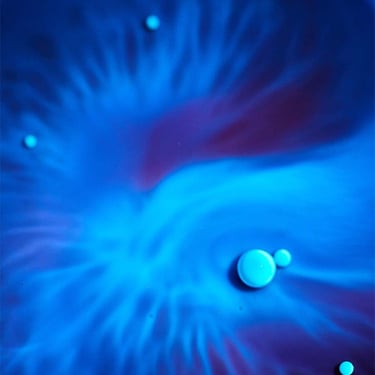
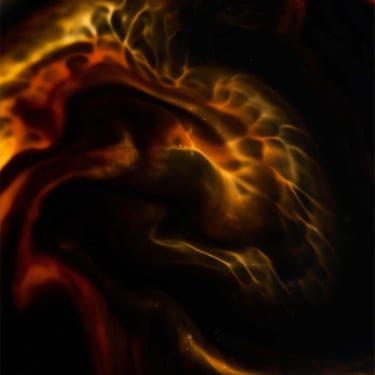
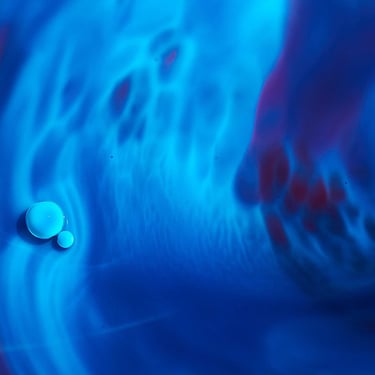
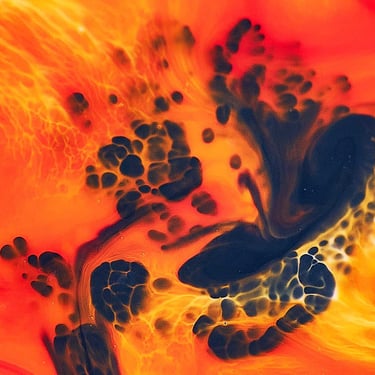
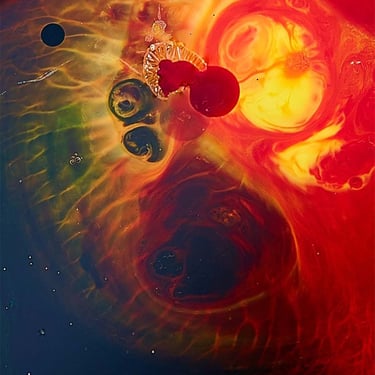
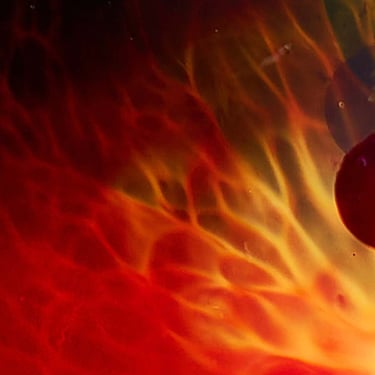
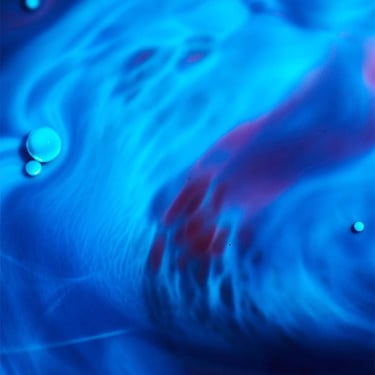
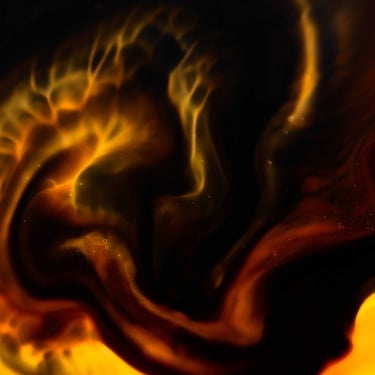
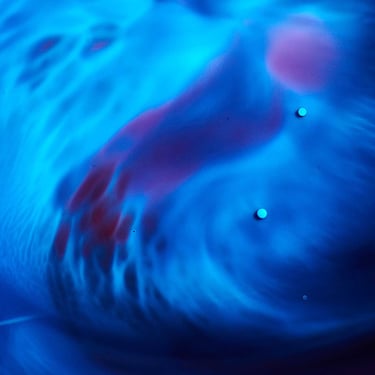
Light, shadow and texture can form such intricate three dimensional looking images in two dimensions like in the pictures here. To me, those images look like fantasy, space whatchamanot and nothing like what I was looking at when not looking at the scene through the view finder. I didn’t see most of these patterns when the scenes were in front of me in 3 dimensions. The little shadows are so relevant. I'm not trained yet to notice such intricacies right away. You’re definitely "making" a lot more of these pictures than you do with wildlife. The adrenalin with wildlife comes while seeing the subject in the scene. It comes during the processing with these kinds of images. Your scene here is still too small and far even with a macro lens until you see it on a big screen. That’s when you catch it all and it hits.
You’re never going to get the same patterns when making these kinds of pictures and that’s where its fun is. You do have control over the ratios in the mix and that influences a lot of the behaviour of the scene but even a slight change in the wind can make the scene start swirling differently. As the maker, all I could do was to focus on what seemed most interesting to me and hope that what I imagined would hopefully provoke a fleeting thought for the audience by being relatable and yet strange. My way of trying to achieve that was to use relatable colour combinations and varying the introduction of the different liquids that make up the scenes. More practice may perhaps bring out more techniques and I guess we’ll all find out if I’m kept drawn to doing these. I know that I definitely enjoyed the process of making these for sure.
Playing around with these liquids was so much fun and it simultaneously coached me about the process of rendering three dimensional spaces into our two dimensional images. It introduced me to the concepts of image creation and manipulation which I hadn’t indulged in at all as a wildlife guy. Space and form on an image are all about their perception on it and that perception can be tricked with change of scale and medium. When the audience isn’t aware that you’re showing a thicker environment that’s influencing the background texture and behaviour of the elements being photographed, it can open up fantastical flights of fancy for the mind that abstract imagery tries to show. The end products for me are pure fantasy and I love that. It enforces for me, how images and videos are rooted in the creation of perception. Getting the 100 mm Macro lens is surely opening up more of the possibilities of this craft for me and I’ve got a few more ideas that I really want to dabble in. Let’s find out shall we?
© 2026. All rights reserved.