
Frontman Material - The Cousins, Shama
Melodious & Stunning, The White Rumped & Andaman Shamas
BIRDSFLYCATCHERS
Aniruddha Bhattacharya
6/9/20266 min read
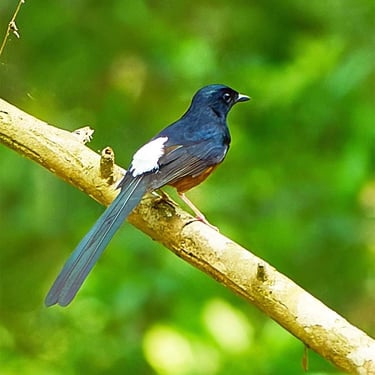
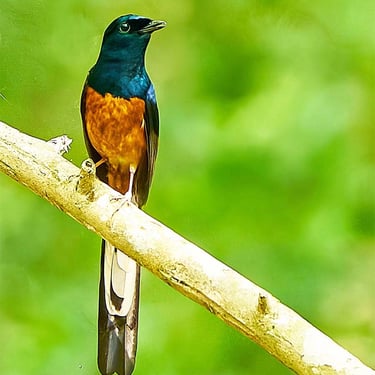
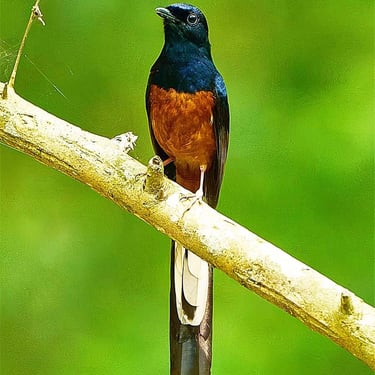
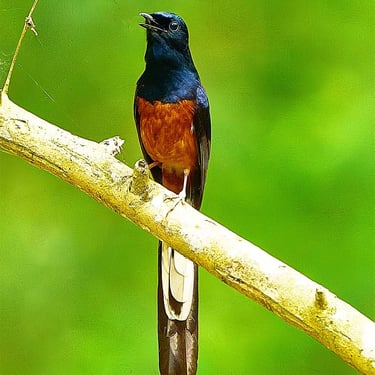
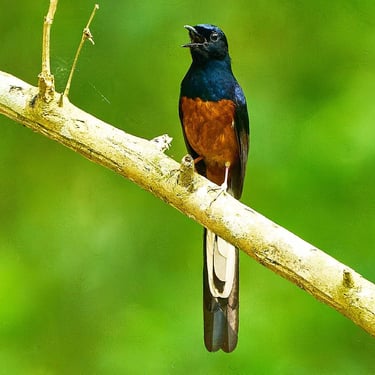
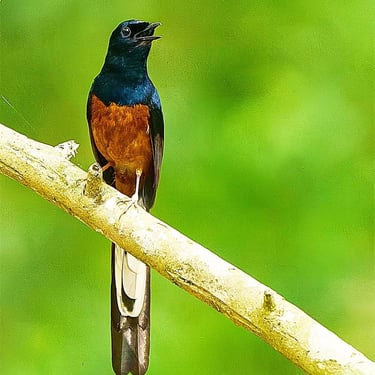
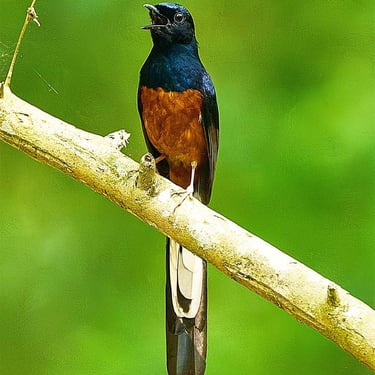
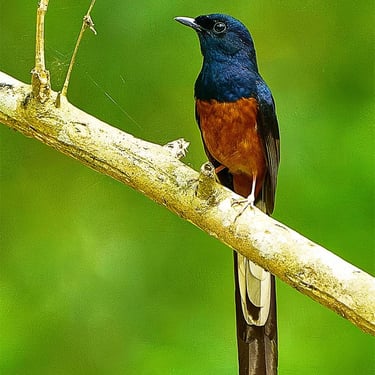
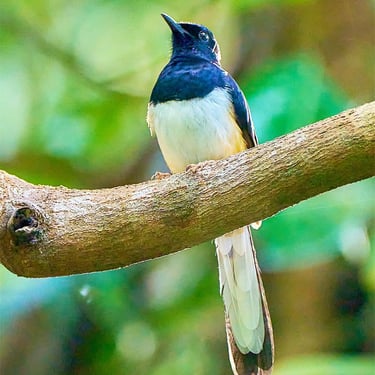
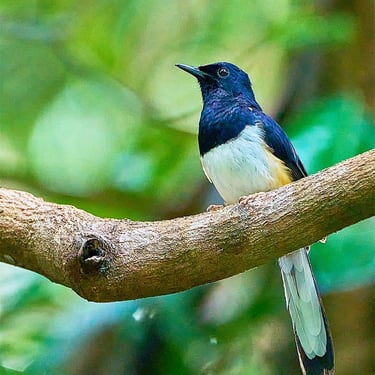
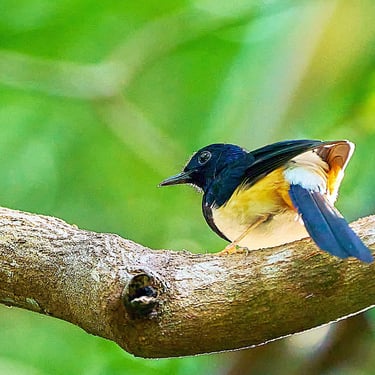
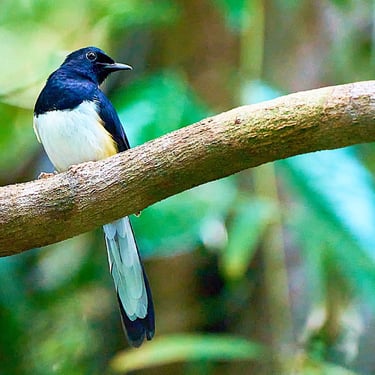
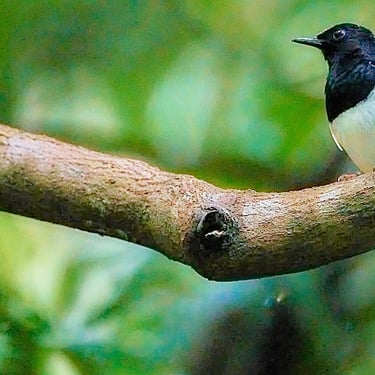
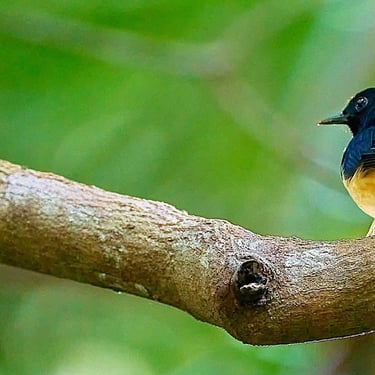
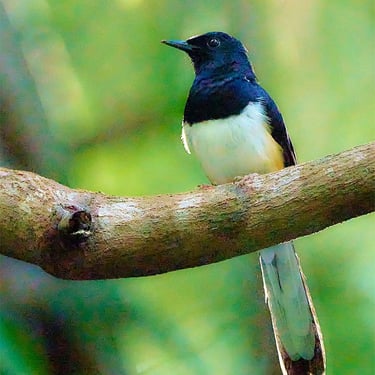
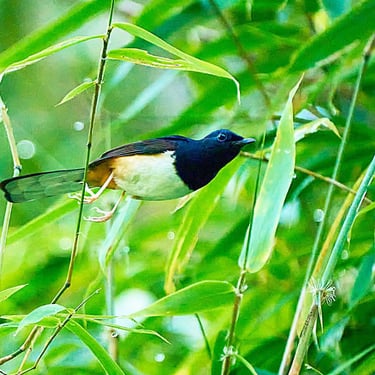
Pics : 1 - 8 = White Rumped Shama ; Pobitora Wildlife Sanctuary | Pics 9 - 16 = Andaman Shama ; Shri Vijayapuram
Not everyone among us can sing. Some of us are just born with the talent and some train for it. Some get better with training and I know plenty that get nowhere despite it. Then there are others like yours truly who sadly get out of practise and can’t hold a scale anymore. In all my years of hanging around musicians and singers, I’ve learnt that you just have to have it upto a degree in that game and what you have is limited to you and you alone usually. Sure, practise helps a lot and communities that practise music together usually produce the better musicians and that’s the same as with any other skill set. You can’t be a runner unless you run for example and even if you can sing, not every singer is frontman material. That’s a whole different game and added responsibility.
You know, growing up, I was given the impression that all birds usually sing these melodious tunes like in the cartoons and stories of our childhood. All lies I tell you. Most birds wouldn’t be able to sing to save their lives in reality. All birds call, some babble, some squak, many hiss and some even mimic and growl. There’s nothing pleasant about many bird’s calls and perhaps that’s the reason why only the ones that had some inherent melody in them were picked for the gilded cages of the affluent in Human society. In fact, a bird pretty much had to be frontman quality really to be picked for that duty if you think about it cause no one was gonna have a 6 foot Ostrich in their bedroom no matter how well it sang ( if it actually did that ). No, the performer had to be presentable, manageable and melodious. Well, as it turned out, some species among the Old World Flycatchers had all the traits necessary for home entertainment before the coming of the Television and among them, the White Rumped Shama in all it’s variations just ticked off all the boxes for the slavers thus making it one of the most coveted caged songbirds of days gone by. They sang well, looked awesome and were of a manageable and non-threatening size. Interesting to note here though that while some other domesticated and caged birds have elected to evolve around Humans even upon their release from their subjugation by Humans, most of the Flycatchers have bolted straight for the woodlands for their own reasons and now live and thrive in the forests whether they are migratory in nature or not.
I got into Flycatchers pretty late in my journey in wildlife with the exception of the Indian Paradise Flycatcher who I wrote about in “Life In The Fast Lane” and the Himalayan Ruby Throat whom I ran into in Bhimtal like I wrote in "The Odd Ruby Throat." It wasn’t a bad thing at all in hindsight given how long it took me to nail decent images of the Indian Paradise Flycatchers like I said in that post and that Ruby Throat was pretty much an urban oddity who was brought to my lens by favorable chance. I just didn’t have the skill and experience needed to catch these usually little and fast guys easily. I probably didn’t even see many of them out in the woods cause of their love for hanging out in the bushes. Well, most of these small birds have a distinct body shape that sets them apart. The Andaman Shama was incidentally the first of these guys who I ran into in the Andamans followed by the Red Breasted Flycatcher and The Tickell’s Blue Flycatcher who I caught in Mulshi last year. My recent trip to Pobitora got me face to face with the White Rumped Shama which is the primary subject of this post although the Red Breasted and Blue Flycatchers are pretty melodious songsters in their own right and have been subjected to caged lives in the past for their beauty and singing talents as well. All things considered though, the Shama was perhaps one of the most coveted of the songbirds along with the Nightingale (another Flycatcher) during the times when keeping caged birds was still a thing cause these birds just sing and hold notes better than most which pretty much sets them apart along with their dainty and smart looking physical features which pushed the market for their demand in homes that could afford the luxury of having them.
Well, you really oughta hear it and you’ve got You tube for that. As far as I’m concerned, I remember that afternoon in Sri Vijayapuram pretty well cause the day that I met the Andaman Shama was one of the most eventful birding related days for me as I learnt so much on that afternoon when Mani pulled his car into a narrow lane which was a treasure trove for birds. We would drive a little, stop, wait, photograph and repeat all of that afternoon. That overgrown, little lane was full of different kinds of birds among whom were two Andaman Shamas. Mani knew his spots pretty well and we’d usually have to wait a little for the species he was after to show up but never in vain. The Shama, true to its Flycatcher heritage was the fastest of the lot and I could only catch one of the two in the clear on one perch before my subject bolted off like you can see in Pic : 16. I’d heard his song in the bush before my guy fluttered to the branch you see in Pics 9 to 15. He didn’t give me too long and my attention shifted soon cause his exit brought a Minivet into the same scene for me. It was a short and sweet meeting that made me wish for more pictures of the species which we did not encounter again and sadly the Andaman Islands is the only place where you can see the Andaman Shama which is no longer considered to be a sub species of the White Rumped Shama whom I ran into in Pobitora in March finally this year.
Now, this guy in Pobitora didn’t notice us when we spotted him on a branch which wasn’t very close to the road. I was in a hurry on seeing him cause I’d finally caught the famous frontman of the wildernesses of India totally unaware and going about his business of serenading in the middle of the afternoon. The first impression that he brought was that his colours were a lot more detailed than his cousin’s. The blue and black with lighter blue ascents on his head along with the brown definitely made him look more like the main event than his cousin who was mostly dark blue and white. This little guy sang clear and long as well and gave me ample time to nail down the pictures you see here. He sang two phrases, looked about some in between and then was off probably cause he didn’t get the response that he was after from his efforts.
These birds are usually around 25 – 28 cms long and can get upto 30 grams in weight. They aren’t the smallest and yet they move with the urgency of smaller birds. Being Flycatchers, they’re “Sallying” birds who specialize in snatching prey on the wing and in flight. Given their nature though, these guys do not launch into repeated sallying expeditions like the Indian Paradise Flycatchers. They seem to prefer the security of the bush and lower elevations than some other Flycatchers. That said, they’re pretty fast and confident and they know that they run circles around most that they run into. The confidence is evident even in their caution which I’d say they share with Flycatchers like the Red Breasted Flycatcher as well. There are nine sub species of the White Rumped Shama and eleven species of Shamas out there with slight evolutionary differences. Our cousins are but two of those eleven and the difference in appearance between the two species is pretty clear from these images. Their songs too are distinct and different from each other’s and I’m certain that the same will probably hold true for the other nine as well.
Running into the guys in this post makes me wonder though if the species of birds that sing well do so by practise or inherent talent and I’m honestly inclined to believe that it’s probably by a little bit of both. All beasts learn from their parents and it has to be so when whether you get to mate or not depends on that skill. Lady Shama would expect nothing less given what she’s learnt from her Momma too. In the world of the Shama, he has to be the top frontman and that’s just how it is. The females you see, sing shorter and softer. They are never the main event and my guy just has to be the frontman. No choice about it. He just has to grow up to be Frontman material one way or another. Aren’t we pretty lucky for the variety of choices that come with our lives? Well, my guy fits it though just look at him in Pic 6. Totally in his element and doing his thing with confidence. Such a gorgeous bird who I hope to keep meeting now that I’ve found em so close to home. Let’s see if I can learn a little more about them shall we?
© 2026. All rights reserved.