
Gobsmacked By The Ordinary I - Spotted Doves
Surprised By The "Ordinary" Spotted Dove
BIRDS
Aniruddha Bhattacharya
5/5/20265 min read
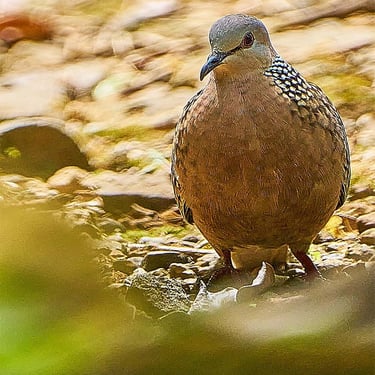
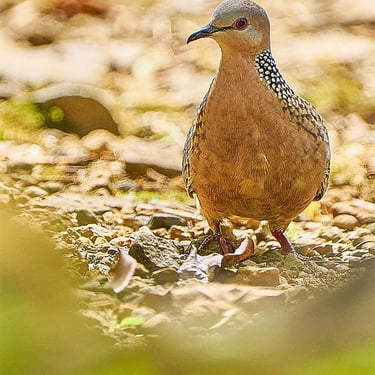
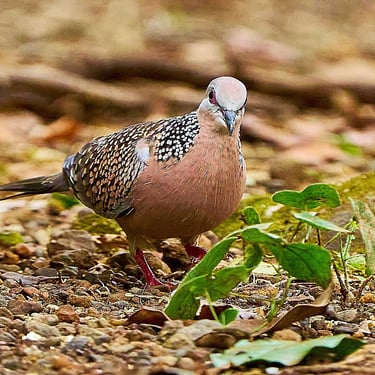
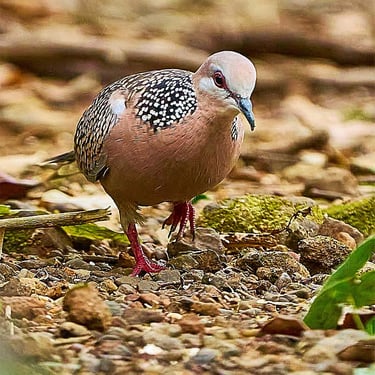
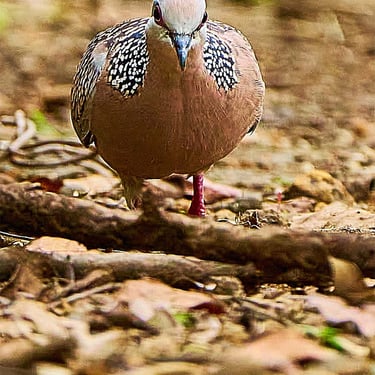
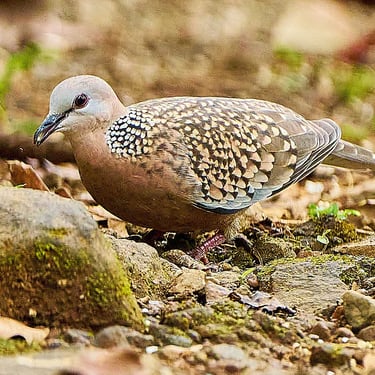
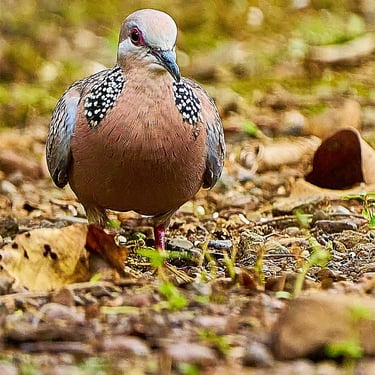
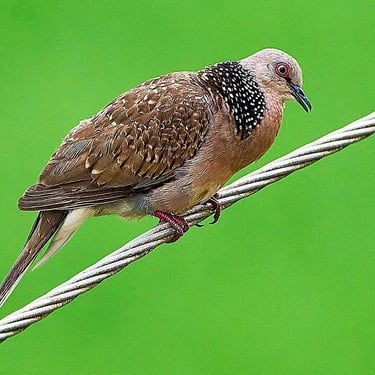
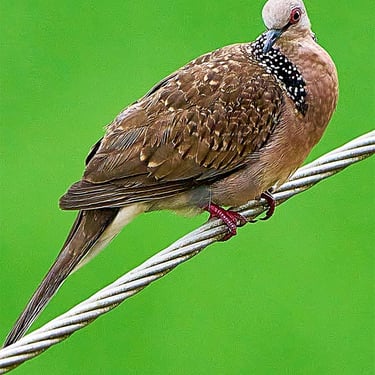
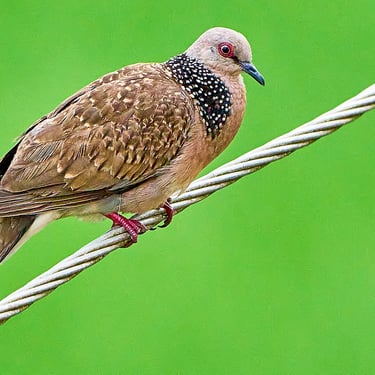
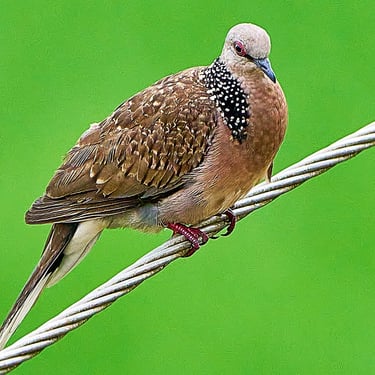
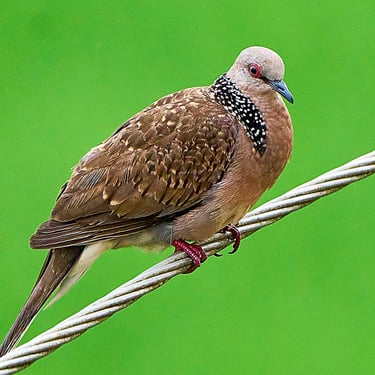
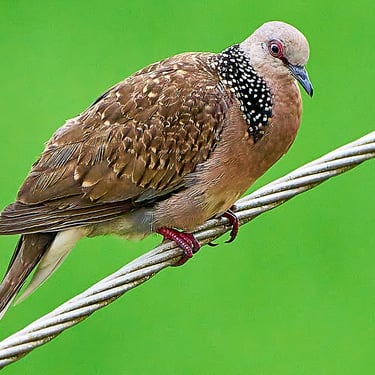
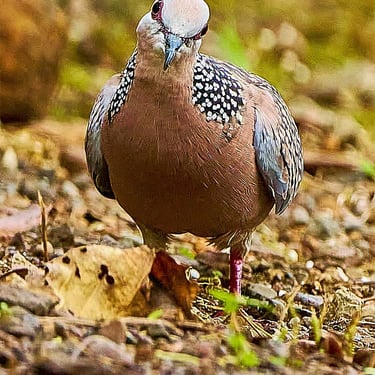
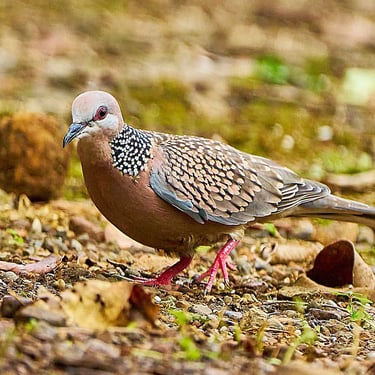
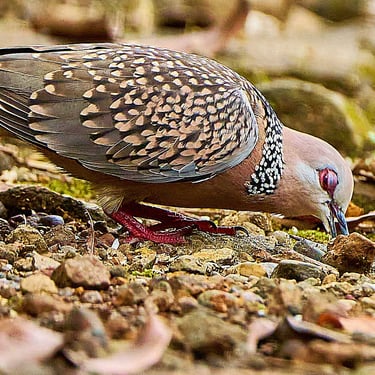
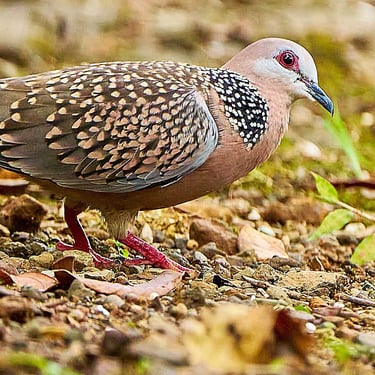
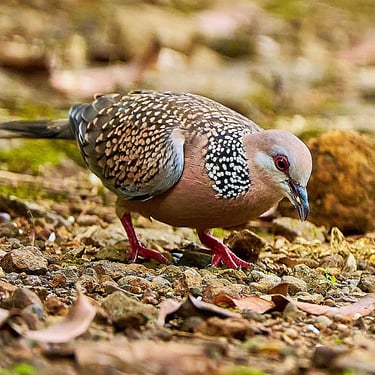
Pics : 1 - 12 & 19 - 24 = Spotted Dove ; Mulshi, Maharashtra | Pics : 13 - 18 = Spotted Dove ; Pobitora Wildlife Sanctuary, Assam
The first creature that I saw with red eyes was the Black Shouldered Kite and the attraction was instant cause those red eyes were just so cool. It was a huge surprise and truly was the first time that I was literally gobsmacked by the presence of a fairly “common” species. I learnt soon though that birds with red in their eyes are not uncommon after all and I’ve run into quite a few birds with that trait since then without actually looking for them. The most common species of red eyed bird around my home’s location though, managed to dodge my lens for a pretty long time and the fault is mine totally.
The “common” or “easily found” is not usually coveted in birding circles. Perceived rarity is. It’s interesting because in Big Cat circles, the game flips and people just want to see the famous characters who have legendary lore woven about them by the stakeholder community. Big Cats are given names in every Human culture and every park campfire and safari vehicle is always abuzz with the stories of their lives and first-hand accounts of their sightings. The thing is that while Big Cats are identified and tracked by Humans, birds are often migratory and not easily identified individually. In Human wildlife circles, Cats are coveted for sightings because of their individual fame, birds are coveted for perceived novelty and the rest, well the rest are the spice usually. Every birding trip brings with it discussions about habitat and species-specific character traits. It’s not a surprise then that, when you meet people from the community at a new location, they almost always ask you if you prefer Reptiles or Mammals. Many people prefer one of the two. What can I say man, I love em all equally.
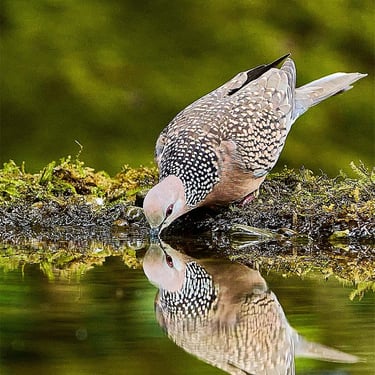
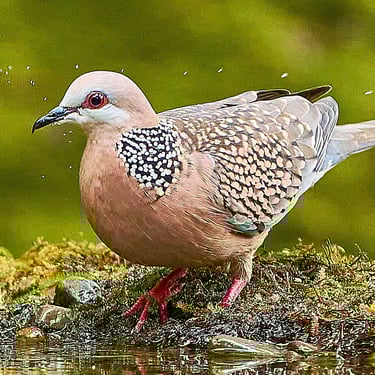
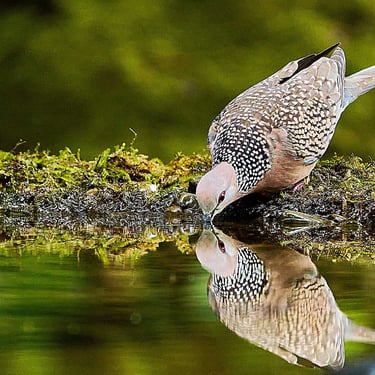
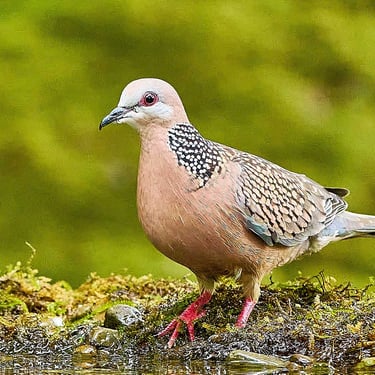
The Spotted Dove is probably the most easily found creature with red eyes if you’re from where I am and yet, I could only manage my first images of them last year at Mulshi for the first time. The setting made up for lost time though cause the images were pretty uncommon as the bird was caught being beautifully reflected at the watering hole while quenching it's thirst ( Pics : 1 – 5 ). The score was another gobsmack moment for me cause what I was nailing down was completely unexpected and not even from my wildest dreams. I'd never imagined catching such a small beast's reflection in this manner. Another bird of the species that I met at the same location a little later gave me some pretty awesome stares as well as you can see in most of the images here. See, the thing was that I’d been chasing wildlife in the dry forests at the centre of the country mostly to increase my chances at uncluttered images for a very long time but these guys, although common, do not prefer the dry forests. They need more moisture around them and our belated meeting was probably because I was in the wrong habitats. I might have driven past them during some of my trips to the South as well but these guys are so common that many guides probably ignore them totally and I didn’t really question much while I was getting into this whole wildlife thing. It was probably just a differently coloured Dove at a Tiger park as far as I was concerned back then. I started questioning more as this hobby took hold and as I started to understand that something which is common for one person might just be the rarest thing for another because of their personal experiences and exposure. With time I guess, I also learnt that good pictures could come from the most common of subjects if that moment is rare and it’s not like us hobbyists have much of a chance at finding seldom seen creatures. Our chances at capturing rarities usually have to come from the common.
These birds are found in woodlands, scrub, farmland and habitation areas in India, East Asia and Southeast Asia. They prefer the moister regions to the dry which is preferred by their similar looking cousins, the laughing Doves. They have been introduced to other parts of the world like Australia, Hawaii, southern California, Mauritius and New Zealand where feral populations have become established. More power to them if you ask me and although they’re not the cutest of the pigeons in my book, they have thrived despite the forced relocation and they do have the red eyes. The poor guys were probably easier to get a hold of in comparison to others like the Yellow Footed Green Pigeon who have a perpetually joyful attitude and all those colours.
Like most Doves, they’re found foraging on the ground for grass seeds, grains, fallen fruits and plant seeds. That said, they’re no vegetarians and have been recorded feeding on insects and even grabbing winged termites for a quick munch. There are five sub species of this lot with slight visual and vocal differences but the overall look remains pretty much the same thankfully for those who need to identify the species that they run into.
These guys are pretty easy to photograph cause of their chilled out attitude around us and our habitats. Common things can come together to make excellent images like the one of my guy taking a sip in Pic 1. You can see also see the trail of water droplets when he jerked his head up after that drink in Pics 2 and 3 and there’s no way Id’ve managed that with a smaller bird with a little beak no matter how rare the species and that’s exactly what I was talking about at the start of the post. These guys make for pretty good subjects cause they’re pretty mid sized, they’re not nervous, they aren’t in a hurry and you won’t get any sudden movements from them. They are comfortable around us and all of those traits make them very good subjects that give you the time you need to come up with interesting compositions. Using Aperture Priority is fine for these guys and I can vouch for the fact that very few kinds of birds give you the luxury of paying attention to composition like they do and it’s something that I intend to use to my benefit whenever I see this species again in an interesting setting. In fact, my subject in Pics 13 – 18 was hanging out on the wire outside my room’s balcony at Pobitora even in the rain. They’re not skittish at all and that has its advantages for a photographer for sure.
All Doves are associated with peace, love, gentleness and the same goes for this spotted variety as well. I guess that reputation probably started with their presence in our immediate environment and their overall chilled out attitude which makes them easily relatable to and the biblical tale about the Dove returning with the olive branch to signal the end of the great flood pretty much cemented that reputation in place over time. The symbolism of that story in the most read and followed book in the world gave them their reputation as much as it was their attitude and easy recognition by Humans. Lore worked out pretty well for these guys but they deserve it too given our long and complicated relationship with different kinds of these birds.
I finally ran into these guys at Mulshi and Pobitora during my recent trips out in the wilderness and it helps to have learnt why the meeting didn’t happen earlier. We met late but it was a very fruitful meeting thanks to local conditions and chance. I think I scored a couple of pictures that were well beyond my expectations and in such a good way. It was a meeting that proves my point about finding excitement from common subjects in uncommonly seen acts and behaviours. Now, I’m not saying that variety isn’t good. I get pretty excited when I see a species for the first time and it's a rush that I understand well. Im just saying that perhaps novelty is marketed a little too much in the world of bird photography and we often forget to appreciate the common as much as we should because novelty in this game is directly related access to different habitats. But then again, I’m looking at this from my perspective and perhaps justifying my personal preferences. To each their own really just as long as we spend a little time out of our fake environments to think about the real environment that sustains it all. That’s all that matters and I hope that we all find the time to do that.


© 2026. All rights reserved.