
In The Realm Of Unicorns I - The Playful Sub Adult
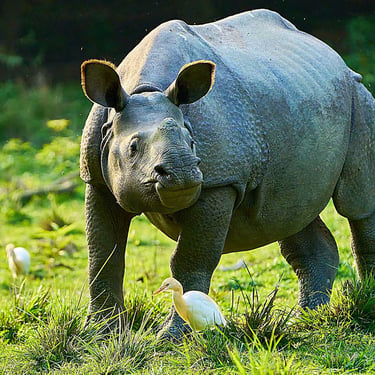
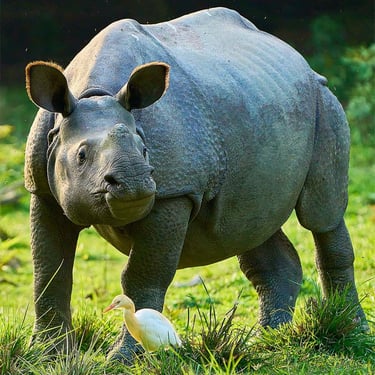
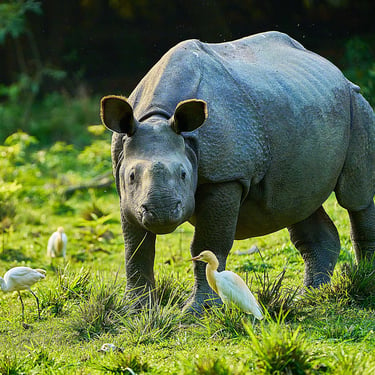
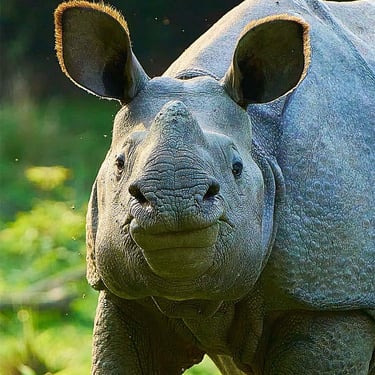
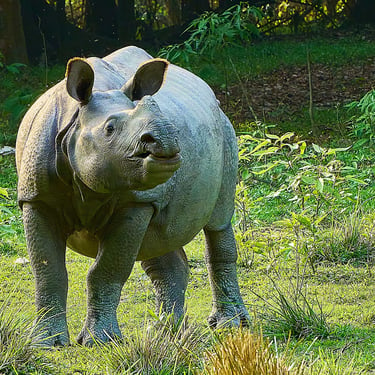
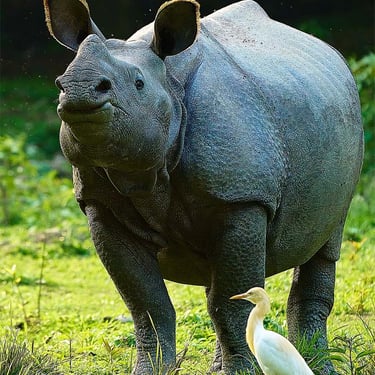
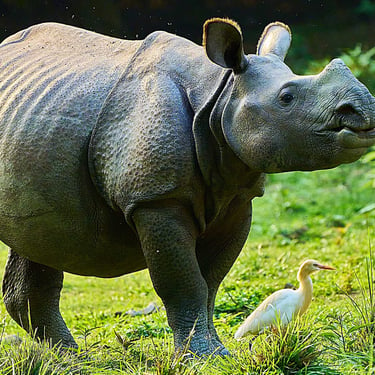
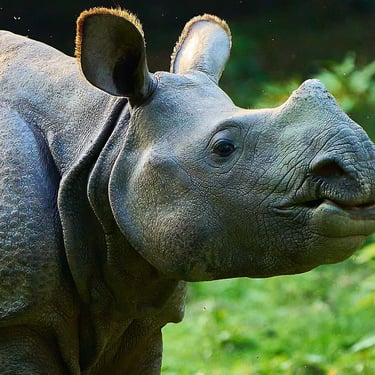
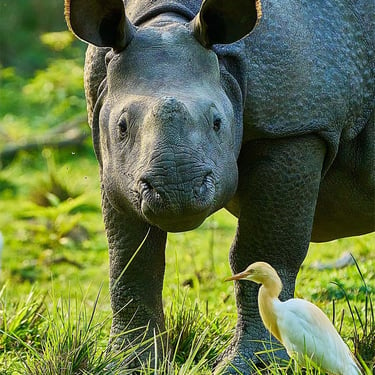
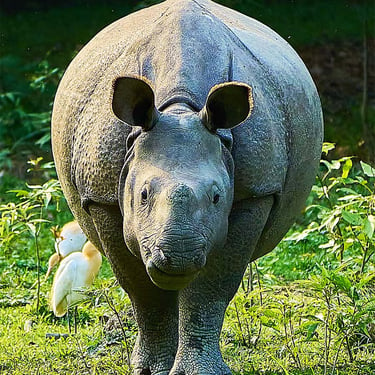
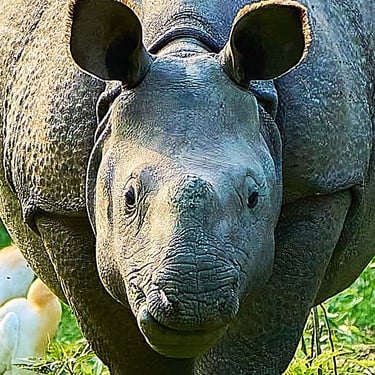
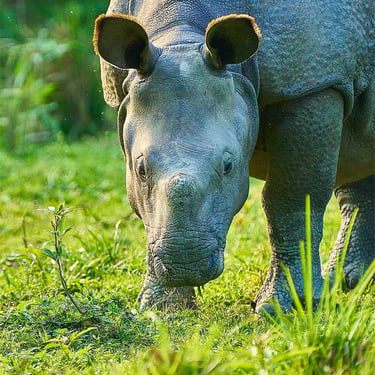
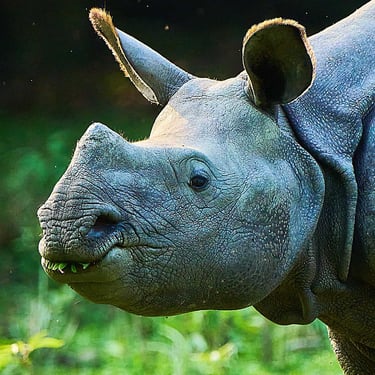
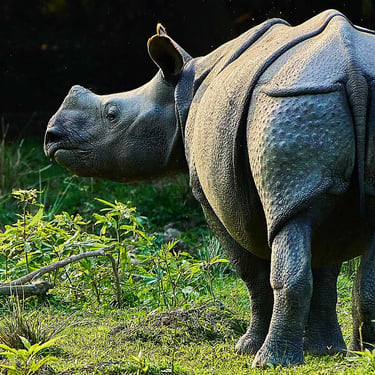
A Sub Adult Rhino At Pobitora Wildlife Sanctuary
RHINOS
Aniruddha Bhattacharya
4/7/20266 min read
Pobitora Wildlife Sanctuary ; Assam
For those who don’t know, I live in the land of The Unicorns. No seriously ! Now, if there was any real historical or fossilized evidence of a species of horned horse, wed’ve found it by now my friends. The last surviving Unicorn species is the One Horned Rhinoceros and the place that has the highest numbers of this megafauna of olden times, is my home state of Assam. People travel from all over the planet to see these wonders and us locals pretty much do what all locals do about what’s special about their location. We go out and look for what’s exotic for us. Well, there’s also the fact that megafauna can be pretty boring too cause it’s just a few of the herbivores among them that have survived this far. There’s limited action around their routines cause no one messes with these big boys usually. But yeah, I’m as guilty as most of chasing the exotic in this regard I guess. If you’re out for Rhinos though, Assam’s the place to be and hopefully you come armed with a lot of patience as the action with these guys is brief, fast and in between long periods of grazing throughout the day.
One would assume that the best place to see them would be Pobitora National Park which is a stone’s throw from my hometown of Guwahati because over 100 Rhinos live in this little 40 square kilometre park, giving it the USP of having the Highest Density of Rhinos in the world. But density means nothing to a photographer without access and the possibilities of close encounters with these guys was what made me find my way to Pobitora last week. I wanted to see Rhinos up close and learn more about their ways. The hope was that the weather and terrain would help in the making of some good images of Rhinos and the other inhabitants of the place. I’d seen my share of Rhinos but not with my current camera kit and I know that I see things a lot differently since I’d last been in Kaziranga and was given quite the fright by a male Rhino who mock charged at me, which I wrote about in “Too Close For Comfort.” I also had a wish list of sorts you see, cause Rhinos may not be rare sightings for us locals but their calves surely are and my hopes were on finding a lil one of their kind. Well, I wasn’t lucky enough to find a little calf in Pobitora last week but a sub adult, I did get lucky with and I guess that really should suffice given the lay of the land there. Pobitora isn’t anything like Kaziranga topographically and I doubt that any mother Unicorn would bring her suckling calf right up to the road there which is at the same level as the grassland. Location and topography are more important for the residents and this open access tourism zone isn’t really one for a little calf. You’ll also probably never see Rhinos as up close in Kazi as I just did in Pobitora and that definitely makes for more details in your images.
Tourism is only allowed in a very limited area of the parks in India. Pobitora is small and covers lesser than 40 square kilometres. There’s around 15 Kms of that in the tourism zone in the plains which you can drive around in one of the 20 vehicles that the park issues permits to. The rest is in the mountains where safari vehicles don’t go much anymore as the Pied Hornbills who were the attractions of that area have started descending from those hills in the non-breeding season. So, what you’re left with is a limited area that you have access to on your normal safari trip in the range. Totally unlike Kaziranga and Manas, this wooded grassland offers open views on all sides from your vehicles and is very differently beautiful. There’s very little clutter and very little bamboo. It’s a gorgeous, riverside meadow forest that I did not imagine possible in Assam. The forest ranges here are usually either thick and cluttered or huge, flat grasslands. This had a bit of both together and without the clutter. I saw groups of Rhino grazing from the highway on my approach to the place but when I got there, I realized that there was no way for me to get to those grazing grounds. So, it’s 40 Kilometres technically perhaps but you’re pretty much on the little road that goes around that pretty, riverside meadow forest. But it’s a very pretty, riverside forest and that surely is an upside for any photographer. Pros and Cons man and we gotta take it as it is. It’s all a part of the chance.
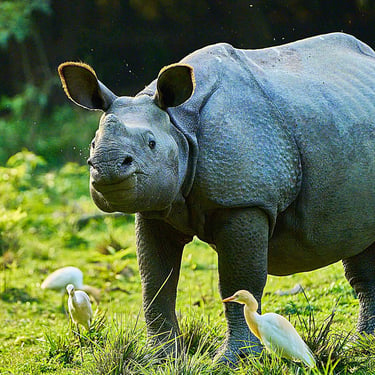
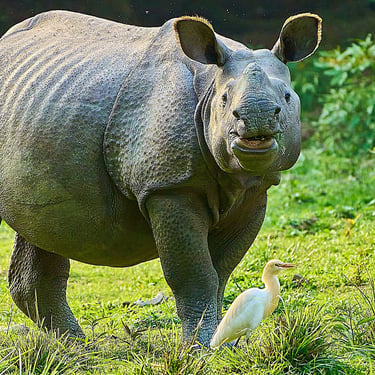
Rhinos took over this beauty of a forest a long time ago and Rhinos are known to be picky about their real estate. They grab and hold the best spots that suit their kind always. I don’t blame them at all in this case cause this location is gorgeous and you can see that starting from when you approach it to all the while that you’re inside this reserve. It’s very easy on the eyes and camera friendly. Upon arrival, I found my guy out grazing with his mother who was pretty much almost double his size. Her horn’s broken off and Umesh who was driving me identified her easily and mentioned that she was an old timer in those parts of the range. Baby Indian Rhinos weigh an average of 65 Kgs at birth and they grow fast, gaining upto 2 Kgs a day for the first year to eventually reach the adult weight of between 1500 and 2000 Kgs depending on the gender.
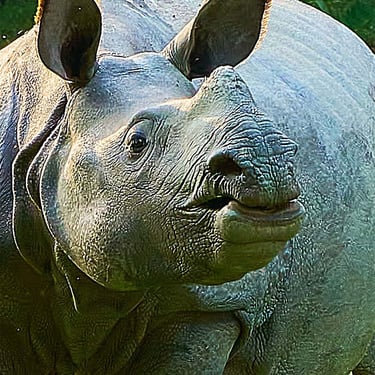
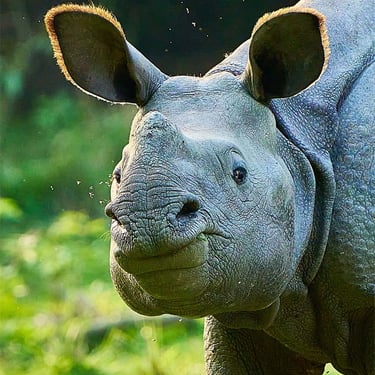
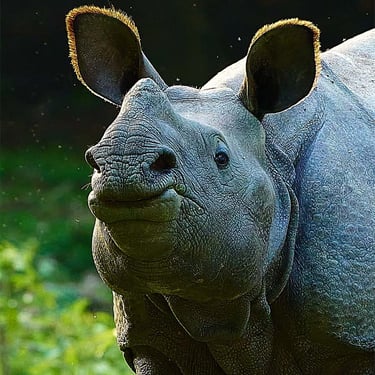
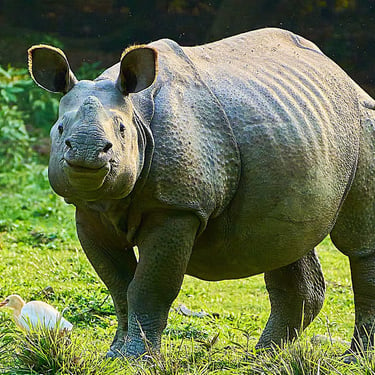
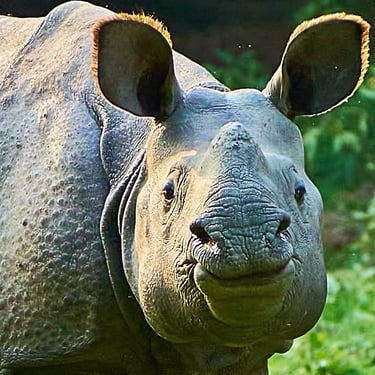
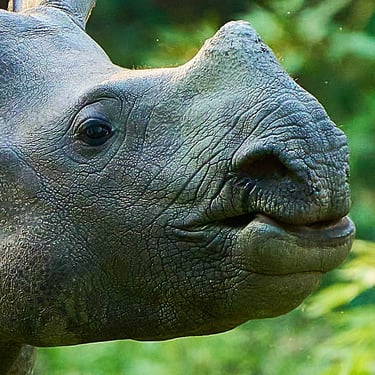
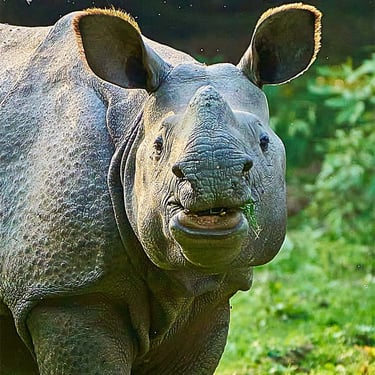
Knowing these guys some, I decided to park and wait a little as we were pretty close and my guy was prime target as far as my intentions were concerned. Young rhinos stay with their mothers for up to three years usually and this guy had not even developed his horn yet as you can see. I hadn’t been this close to Rhinos in all my trips to Kazi unless you count the one that fake charged and this scene was coming together pretty much as I’d hoped for on my first trip into Pobitora. My curiosity eventually got my subjects attention alright and interestingly, that brought out a reaction from the veteran mother as well. They were right by the forest trail and we had our guy strutting about and giving us the stares pretty soon which you can see in the photos here. Oh it was "on" all right and we were dancing pretty soon at a very different and slow rhino pace of things. It was a very different and unique experience from behind the lens because one gets used to being in a rush with most animals.
Rhinos are usually solitary and loosely territorial. The females have larger ranges usually but there’s a lot of overlap. Young male adults are sometimes seen in groups that provide them security when they are around larger male’s territories. A large bull may or may not permit intrusion into his territory and it’s all a mood thing with them. They’re a lot more aggressive when there are possibilities for mating involved in the mix. Similarly, female grazing groups are also seen often. In fact, I saw a group of 6 individuals from the highway on my approach to Pobitora like I mentioned before but overall, they are solitary animals and mothers can have up to two calves from as many pregnancies around them. Calves start grazing within the first three months of birth although they are pretty much reliant on their mother’s milk for actual nourishment during their first year at least. They become mini versions of their parents visually like this one at around one and a half years of age. Their horns start growing at birth and those things grow at the rate of 5 to 7 cm per year. Given the overall size and the size of the horn, one would imagine that this one will be leaving the mother’s side within the next year or so.
I got a day and a half to do my thing in Pobitora and I needed it bad after missing the birding season this winter. Finding this sub adult Rhino on my first safari there was a huge win that I’m very thankful to Mother Nature for. This beautiful little reserve had a few more surprises for me but understanding that this place is not just all about the Rhinos was probably the most important lesson that Pobitora taught me They’re not all around the place as indirectly advertised. The other lesson was that it’s probably not all about the water birds that it’s also touted for either. The beauty of this place is in the unique location and topography of the place and had the rain not washed out my last day there, Im sure that I’d know a lot more about it than I do. Well, it’s an hour away so yeah. This one, Im sure that I’ll find out more about in the seasons to come for sure. It feels good to be surprised again and to be sorting images. My advise on the spot is to not fall for the gimmicks. Pobitora is no “mini Kaziranga”, It’s Pobitora which has Rhinos in common with Kaziranga and Manas.
© 2026. All rights reserved.