
Intercontinental Expansionists II – Indian Golden Jackals
The Jackal's Secret
JACKALS
Aniruddha Bhattacharya
8/25/20265 min read
Pobitora Wildlife Sanctuary
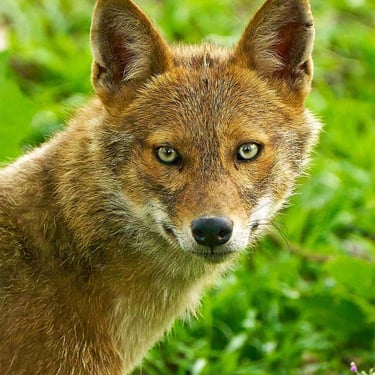
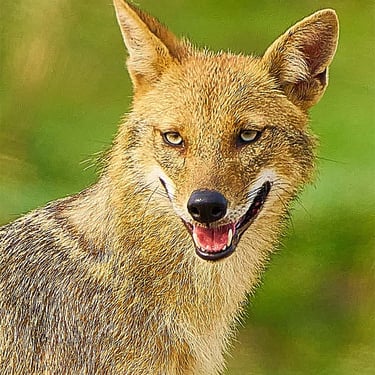
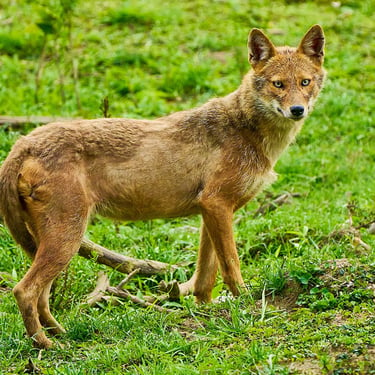
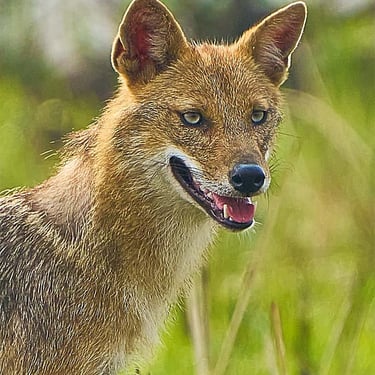
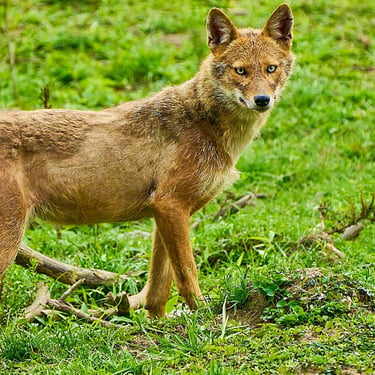
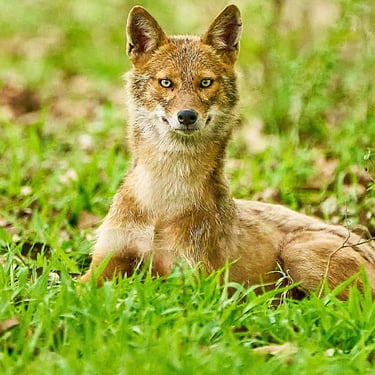
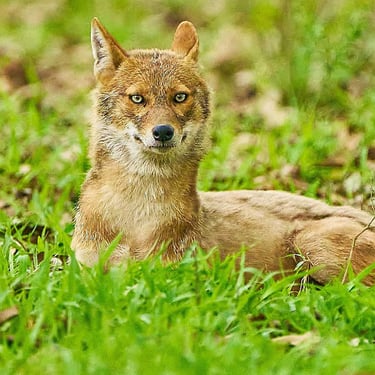
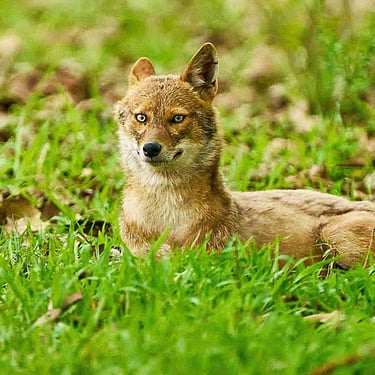
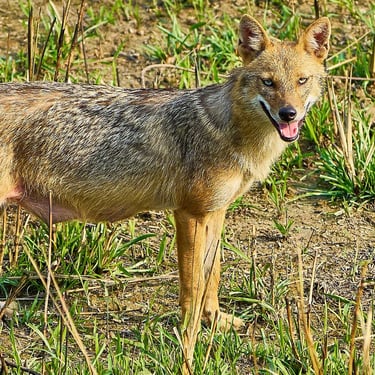
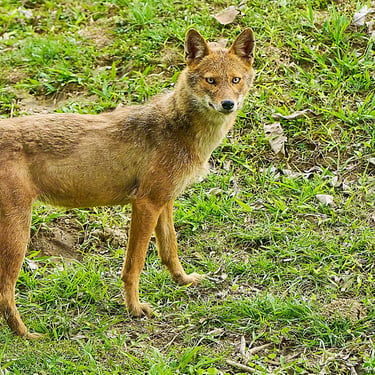
Finding Golden Jackals so close to home at Pobitora Wildlife Sanctuary and scoring gorgeous, detailed, close-up images of em there got me very curious about this species and their expansion from India to far away Europe. So, as promised in “Intercontinental Expansionist I”, I did some digging about the history of this species to work out how that even happens in nature. Well, as it turns out, migration and territory expansion wasn’t a rare phenomenon for this species at all historically. These guys spread from India apparently 20,000 years or so ago but their ancestor, the now extinct Arno River Dog actually lived in Europe around 1.9 million years ago. The species has apparently gone back and forth geographically through the ages as it evolved and changed itself in time and manoeuvred the changing environment as well simultaneously. They’re mobile, adaptable and have adjusted to what’s come their way in many ways through the eons and migration is just one of them. The success of any species leads to expansion of the territory of their influence during times when the species is doing well. Animals may also have to migrate because of changing environmental conditions which also includes other animals and their presence in the territory. Creatures that stay in a specific territory for generations, adapt and change themselves in ways that makes them slightly different from their ancestors and breeding with other similar local creatures if possible often changes the species further still. I guess that it just shows how these animals have adapted for survival historically just as they are doing now with their blending into the cityscapes of modern India where the actual action is at for them at this time like I said in my previous post about the species. They’re just doing the evolution like us all on this planet and it’s all about survival. Their descendants might someday ditch the Human cities for some reason or another and when they do, they will just do so carrying a different name which they themselves never cared for anyway and that’s just how it keeps going around for em.
The Golden Jackal despite the similarity in names is not a close relative of the African Silver Backed Jackal, (Ref: “Top Dog”) which is the grand sire of most of the members of the Canidae family. The differences between the species are obvious on sight and the same goes with their other cousin, the Arabian Wolf as well. These guys are usually found abundantly in valleys and beside rivers and their tributaries. No wonder then, that they have chosen Pobitora as a habitat since it pretty much ticks off all of their checklist for hospitable real estate. They are also well known for enjoying proximity to human settlements for easy access to domestic fowl and domestic mammals upto the size of buffalo calves which are potential prey that suit them pretty well. Living close to humans has also enabled these guys to mate with human friendly Canids like the Pariah dogs and given their offspring even better access to the cities that the parents skirted around. Pobitora is right on Guwahati’s outer flank and Pobitora does not have any larger predators like big cats who would ruin the predation party for these guys. They are the apex predators in that little meadow forest by the river which they share with Rhinos who although large aren’t in any competition with them for prey. Given their huge range, these Jackals compete with the Red Fox, the Steppe Wolf, Jungle Cats, the Caucasian Wild Cats and also Racoons. All Wolf like Canids do not share the same ancestors and yet they can interbreed easily. The reproductive liberty that these similar species enjoy is a huge contributor for their success and diversity across the planet. They have spread to every continent and have adapted there instead of choosing a limited hospitable range as their benchmark like many other creatures. In fact, they have worked themselves into our homes even and we just cannot stop loving them for that. The Golden Jackals of Pobitora live next to Rhinos and Barbets while others of their kind live quite as comfortably next to the Caucasian Wild Cats and Northern Bald Ibis found in Turkey. They’re tough alright and in the most unobvious ways and no one would ever guess that they have outwitted and outlived most of supposedly more dangerous ones around them historically.
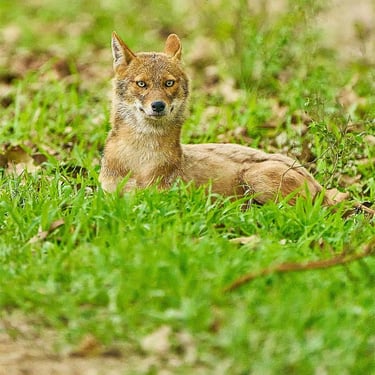
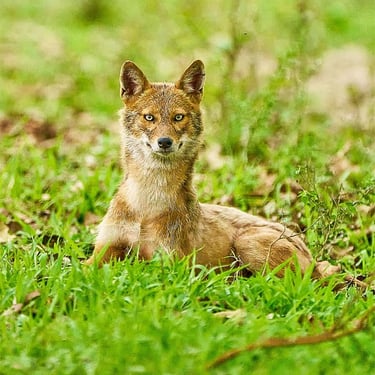
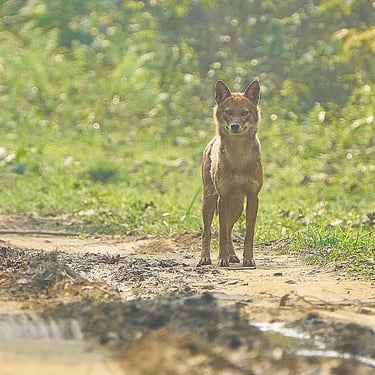
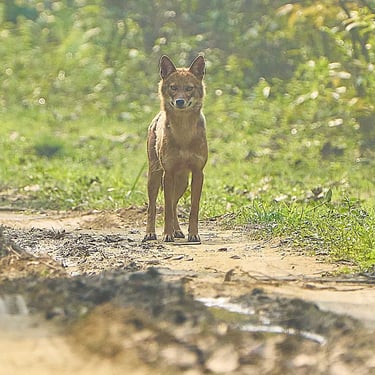
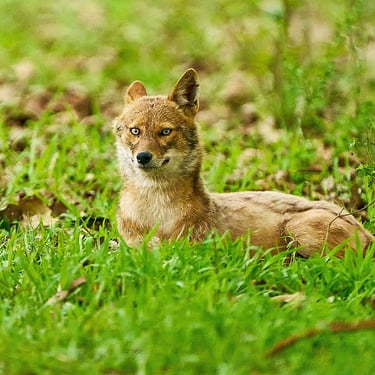
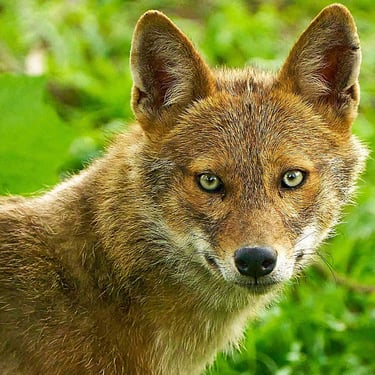
I ran into a few other Golden Jackals at Pobitora after my initial meeting with the female who I mentioned in my previous post about the species on here. The light wasn’t as good as on the first meeting on most of those occasions and the subjects weren’t as bold either. That said though, the eyes on my guy in most of the images here just had my attention for the entire duration that I could have his gaze for. I ran into him on my last trip into Pobitora before the rain that followed that evening washed out my plans for the next day there totally. Although not as bold as the first female, he did stick around and did not run off in a hurry on seeing our attention on him. Seeing all of these Jackals at Pobitora had me pretty curious to learn more about their social structure and that evening as we were heading back after sunset, we ran into three of these guys who were dragging part of a Buffalow carcass across the road. It was interesting to see that they hurried it across the road and waited for our vehicle to pass and as we went around the bend, those guys started howling all together. Their howls brough two other Jackals strutting up purposefully towards the sound whom we ran into down the road separately. Well, it was getting dark and I didn’t even bother reaching for the camera or phone to record all this but I do know now that although these guys are known to not hang in packs, loose family groups do exist which comprise of the dominant mating couple and their older offspring and who’s to know if the territorial neighbours of the same species are actually related family members as well. I’m pretty sure that they wouldn’t be howling from the location of dinner if it would bring them war. Jackals are smart and there’s enough stories and lore about that in our texts. These guys in Pobitora are cooperating when it suits them if you ask me and perhaps I’ll have more to add to this theory when I return there and soon hopefully. It adds up really if you think about it. They literally have no competition for that kill in that location except the avian scavengers there who’d surely get into it when those three would retreat for the night and I’d share with my kind too if the alternative was to have to just loose it to ones who won’t ever repay the favour.
The Golden Jackals of Pobitora were a wonderful surprise for me cause I got to observe them up close, take pictures of them and also got to listen to their famous howls from pretty close as well. It was an unexpected crash course in these guys that I feel was actually something that I should have come by a lot earlier but the behaviour of these guys in most reserve forests of the country just does not allow that like I said in my previous post about them. The ways of the Jackals are different and our ancestors were correct in assessing them as being intelligent. It’s that intelligence and their ability to interbreed with all Wolf like Canids that’s elevated them to their position on the planet. All Wolf like Canids although not as strong as big Cats have historically used cooperation within themselves and also with other species like Humans to get ahead and they have always done it with love, intelligence and loyalty rather than just brute force and stubbornness. That’s just how nature makes them tick I guess and if you ask me, we’re all much better off cause of it.
© 2026. All rights reserved.