
Remembering Trinity - Asian Open Bill
Rediscovering The Unique Asian Open Billed Storks
BIRDSSTORKS
Aniruddha Bhattacharya
11/10/20265 min read
Pobitora Wildlife Sanctuary
I’ve been seeing these guys around for a while and I’ll admit that I probably did not give them the attention that they deserve till one of em recently pulled a move that just made me take notice. See, the thing is that Asian Open Billed Storks are seen easily on any trip to Kaziranga or any other reserve forest in Assam. They do not make for impressive subjects usually though because the topography of the reserves here has them at a lower level than the roads which we’re at like I wrote in “In The Realm Of Unicorns II”. They also do not hang out right by the road for you to see them up close clearly and the combination of these factors just takes away a lot of what’s special about these guys unless you’re looking for it specifically and given how I live here, I was just not looking because I didn’t consider them special enough back then. I could not have been more mistaken though because evolution has taken these guys down a path that only two species have trodden on and that truly sets them apart from the rest of the birds on the planet.
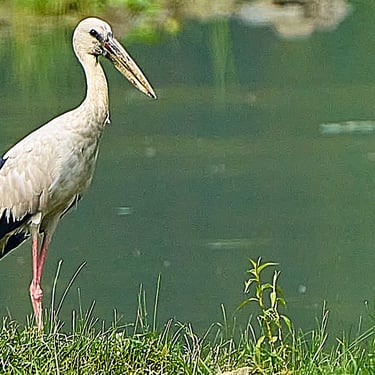
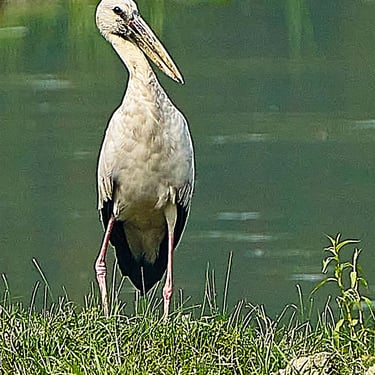
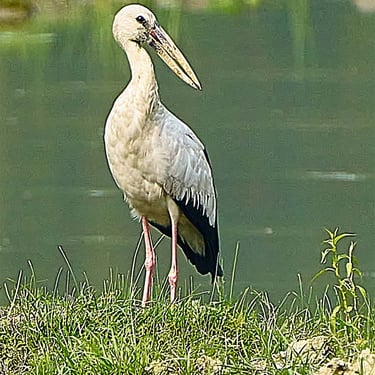
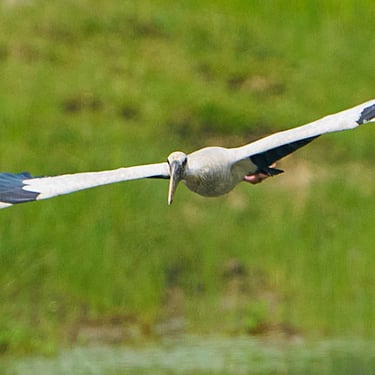
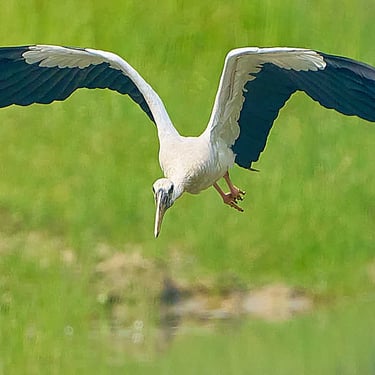
How the hell did I miss those weapons of mass destruction on these guy’s faces though? Just look at my guy in Pic : 2. Absolutely terrifying, no? Well, that open bill is what makes my guy unique and it’s an adaptation that makes these guys experts at hunting snails. Yep ! Snails and contrary to what many people say, those bills do not actually function like nut crackers. The way that these guys go about it is that they wade in shallow water with the tip of the lower bill turned to the right a little so that the blade can slip right into the opening in the snail’s shell. Our guy then shears the snail’s soft body away from its protective shell, swallowing the meat. The gap in our guy’s bills allows the tips of the mandibles to meet at a precise and powerful angle and even hard and slippery freshwater snails cannot get away from popping out of our guy’s grasp. Interestingly, chicks of the species are born with straight bills which develop the open gap as the bird matures into adulthood. Our Asian Open Billed Stork and its cousin the African Open Billed Stork are the only two birds with this speciality and that itself makes these birds unique specialists who are in a league of their own.
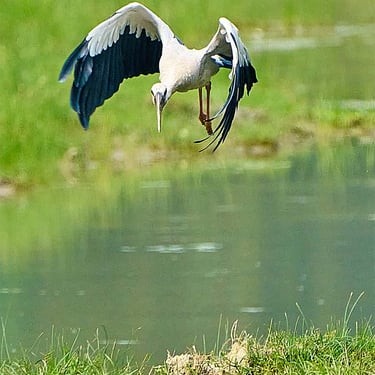
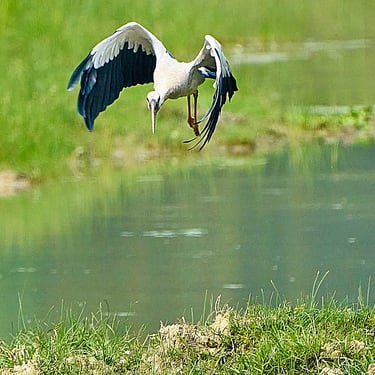
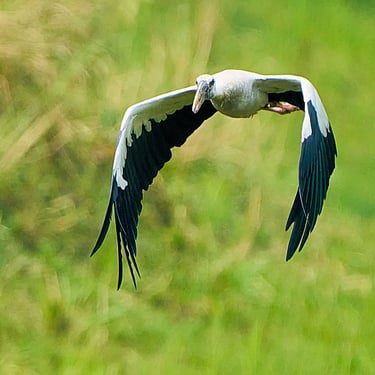
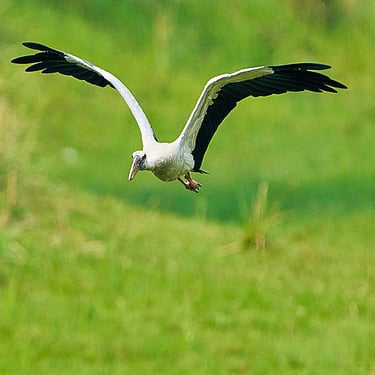
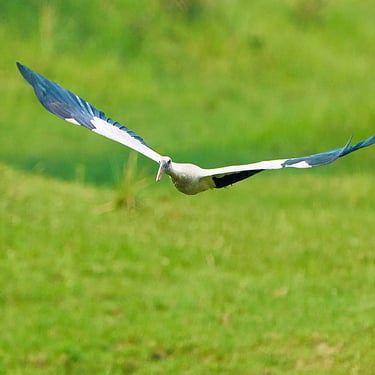
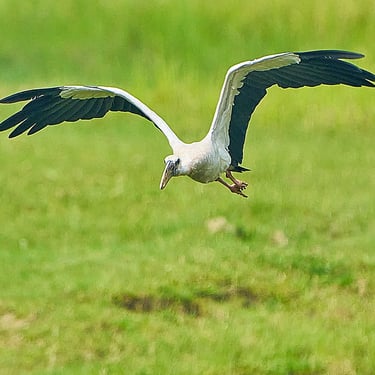
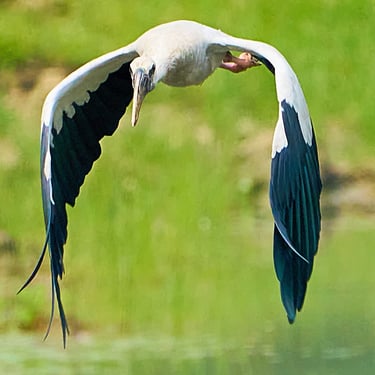
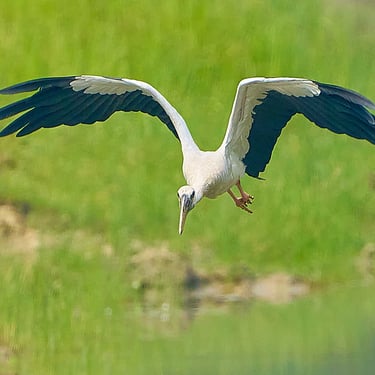
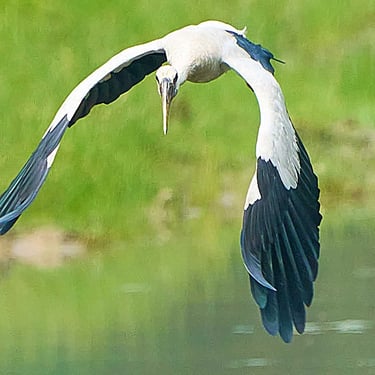
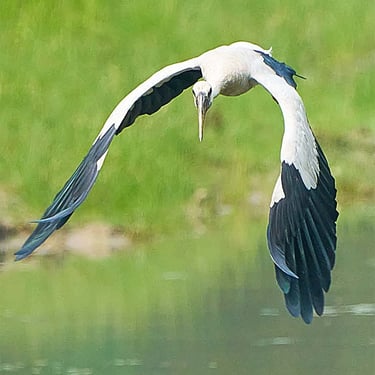
Remember how “Trinity” from the Matrix leapt up vertically to kick some serious rear ends in slomo in that epic scene? Well, that’s what I was reminded of when I saw my guy take off vertically in Pic : 1 earlier this year when I visited Pobitora. The move drew my attention to these guys after seeing them just hang around not doing much on so many of my previous visits to the reserves of Assam. I hadn’t seen a high vertical take off by any bird till then and my guy literally took off with his eyes on me and flew towards us with his gaze locked in till he shifted it and flew off to the side. Action always draws my camera as does eye contact and this bird was giving me both while making me a part of the action as well. It was quite the move to show off this species in all its splendour as well cause seeing my guy with his wings spread in flight changed my perception of the species cause they’d seemed docile on my previous run ins with them. The immediate result of that experience was that I pretty much rushed to grab the next opportunity with their kind which presented itself the following day when I met another bird of the same species at a closer distance. Yeah! that bill looked impressive from close alright and deserves all the attention that this bird gets for it which I’d ignored till I looked again. The thing was that at just 81 cms in length, these birds are small for Storks as well and that’s what had actually ruined their impression for me and especially cause I was seeing them at a lower level until I saw one of em in flight like I just mentioned. These guys prefer to forage in inland wetlands in comparison to riverbanks for their needs and the low topography of the reserves in Assam suits them very well. That’s the reason why they’re found walking around exactly where their photographs do not do them justice usually except perhaps in Pobitora. These guys have a habit of soaring in the thermals during the warmer parts of the day to descend rapidly to their feeding areas when the temperature changes. They go after snails, water snakes and large insects which isn’t the norm for most waders generally and other Storks particularly. These guys are often seen tip toeing unhurriedly either alone or in small groups inside the reserve forests of Assam and in real estate that isn’t in any demand by other Storks and waders. Their specialization keeps them away from competition and that works pretty well for them.
These birds migrate locally in response to water availability and seasonal change. They do not undertake seasonal, long-distance migrations. Their young though, tend to disperse over large distances after fledging. A bird that was ringed in Thailand was found over 1500 kms west in Bangladesh while many others have been recorded to travel hundreds of kilometres in their search for a home. These guys form seasonally monogamous pairs and breed after the rainy season except during times of drought when they might skip breeding completely for the season. They breed in colonies which are often found in villages and crop fields. In selecting trees for their colonies, they prefer trees that are big, tall and not the trees which are in demand for resources like fruits, etc. Their nests are close together in their colonies and that in turn leads to aggressive interactions between birds in neighbouring nests often. Both parents of the species take part in the incubation of the eggs and the chicks hatch in about 25 days. It has been discovered that colonies closer to human settlements had lower breeding success rates as did colonies settled later during the breeding season. The colonies that were settled in agricultural landscapes in Nepal fared comparably to the ones in the mangrove forests of West Bengal.
Photographing these guys isn’t a tough ask even when they are in flight because of their long and slow wing flaps. That said though, 1/2500 is the standard that I keep my cam at on Shutter Priority for birds always cause with them you just never know and there are no downsides to a fast shutter for me if I can afford it as far as light is concerned. The issue of a bad angle for photography is what ruins their pictures the most and now that I’m aware I’ll be doing my best to fix that the best that I can when I run into them in the future.
The Asian Open Billed Stork is a specialist that has carved out a place for itself that has kept its kind prosperous despite their smaller size in comparison to other birds in the same family. Now, those mandibles on these guys sure look intimidating to me but I really am looking forward to seeing them again so that I can perhaps work out new ways of getting better images of these special residents of my home state. I guess that I’ll have to continue this post if it does happen sometime soon cause I am probably headed out to Manas soon. I do wonder though, if they did take inspiration for Trinity's moves from these guys? Could just be the case you know? Oh well.




© 2026. All rights reserved.