
Sone Ki Chidiya - Black Naped Oriole
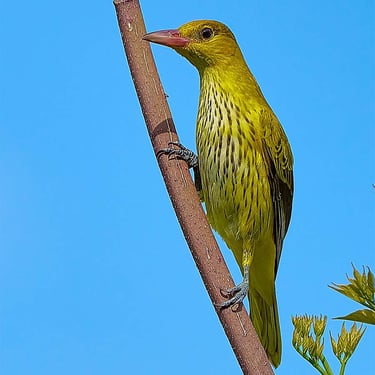
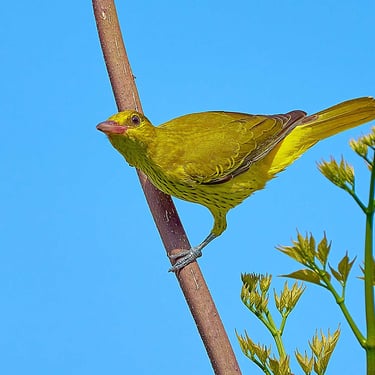
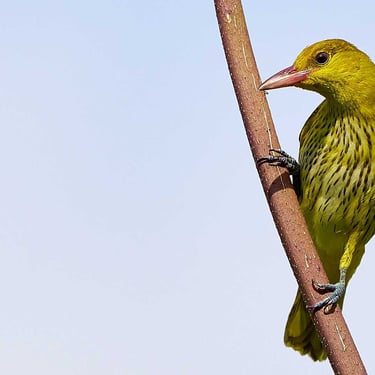
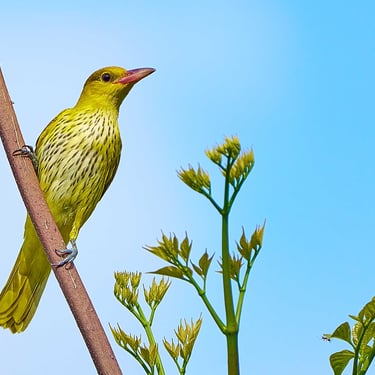
Adult & Juvenile Black Naped Orioles
BIRDS
Aniruddha Bhattacharya
1/20/20264 min read
South Andaman
Some characters that I meet out in the wilderness are more of a surprise than others. Most of these end up being delightful finds for me cause I’ve decided to shoot first and read about the birds that I cannot identify after the meeting. Expectation management in this case comes with a side of wonderful in field delights and also gives me reason enough to justify my laziness around reading up on probable sightings when it comes to birds. I’m pretty certain that this approach will soon reach its limitations as more varieties of species end up with their pictures on this site but like with the incidental discovery of in camera techniques, this approach to the discovery of subjects has been a pretty fun way to learn about our home and has kept me happily at it for a bit and more. But it’s not every day that you run into a bird that takes your mind straight to a phrase that’s been used to describe our country. If you’ve seen them then you probably know why the Black Naped Oriole best fits the description that we’ve all heard about our ancient land. They just are the real ‘Sone Ki Chidiya’ ( Golden Bird ).
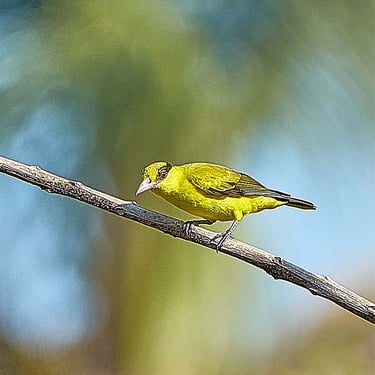
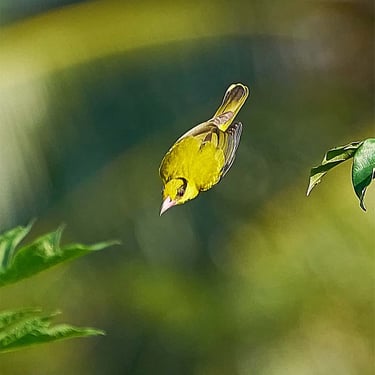
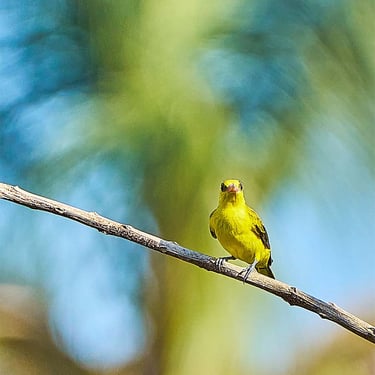
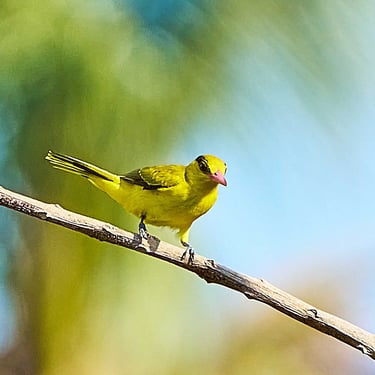
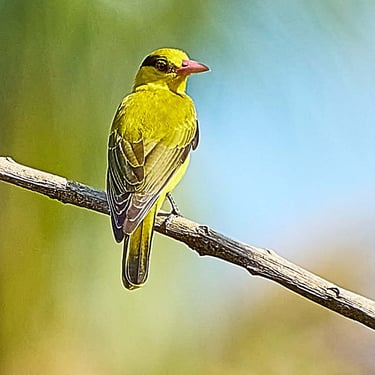
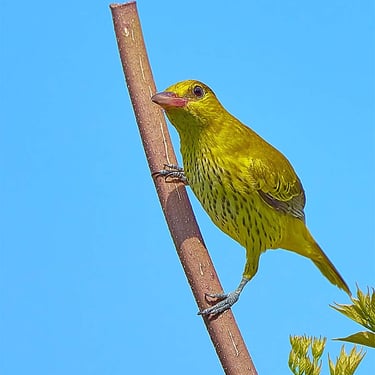
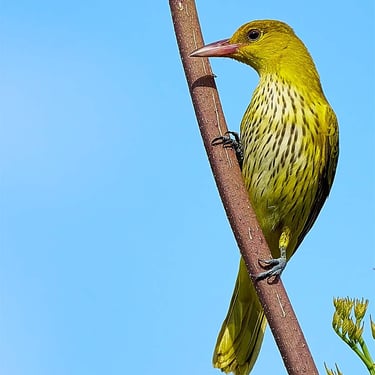
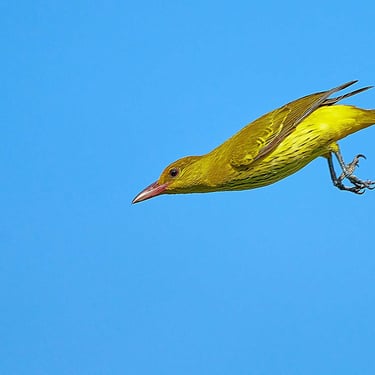
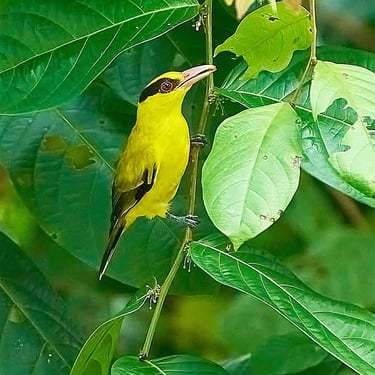
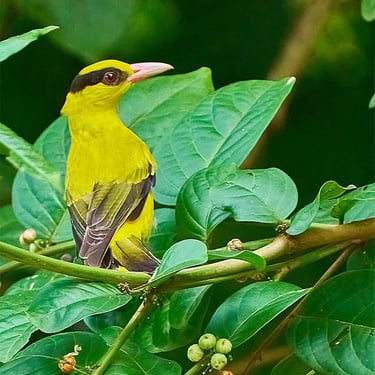
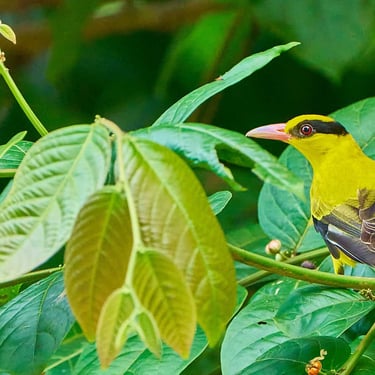
I learnt about a lot of birds when I visited Andaman. I don’t think any surprised me more than the Black Naped Oriole though. We spotted the male first on my second day there and that guy in Pics : 1 – 6 was impossible to miss. I knew nothing of the Oriole then, but what I did know in that moment was that I saw a golden streak dart across the sky and settle straight in front of us. Mani yelled “Oriole, Oriole ! Black Naped !” from the driver’s seat and it was on. The pink beak on that bright golden body with the black patch over the eyes stood out beautifully on that bright winter morning and as my focus settled on the frame around him, I heard Mani add that our subject was a male given the eye patch and the markings on his wings. I’ve written about the background on this guy in “A Matter Of Perspective” and that background had my attention more than the subject for a bit for sure. It was a pretty short sighting but after my guy darted off in a hurry just as he had arrived, ( which I caught in Pic : 2 ) we noticed that the juvenile of the species had landed to our right and was curiously watching us fuss about. The action obviously shifted to the side then and my juvenile was more than happy to pose for a few pictures ( Pics : 7 – 13 ) before flying off himself which I was lucky enough to catch again in Pic : 9. I’d just landed two back to back take off photos for the first time and that too of such gorgeous subjects in good light. In hindsight, it most definitely was the sighting of that day. Our next run in with the species was a couple of days later when we stumbled upon another male of the species out on a bush ( Pics : 14 – 16 ). This guy was closer and the tight background let me focus on his profile and those red and black eyes that just came out so much better with the close, green background of the leaves and bush.
These birds are obviously easy to spot because of their bright and contrasting colour combination. Black works wonderfully on yellow and that pink on the beaks along with the red in the eyes is just the icing on the cake as far as bright colours for photography go. These birds are stunners and that’s their specialty. No seriously, you won’t find anything else discussed when it comes to these guys. The juveniles have the streaks that disappear on adulthood but yeah, all the material about these birds just harp on and on only about how they look and deservingly though, they’re gorgeous and are bound to make even the non birder reach for their phone for a photo. They range around the Indian coasts and further East to most of South East Asia and up to eastern China, Mongolia and even up to some bits of southern Russia. There are 20 subspecies of the Black Naped Oriole. I’ve just seen the one from Andaman so far but what I gather is that the differences within the species are generally related to the black markings, napes and other markings on the juvenile and adult males. So nothing major really. I’ll most probably easily identify the species when I see one of em the next time. The ones I saw in Andaman were playful and happy to give me attention and yet not for too long. You won’t have them coming back for a second round of photography like Parakeets do and they won’t let you go about your business as they do their thing like Kingfishers. They will give you attention for a bit and then be on their way.
These guys, like most Orioles can get upto 30 cms in length with the females being slightly smaller than the males. They are monogamous and breed in territorial pairs, known to pick their nests close to other aggressive birds like Drongos and Shrikes. It’s a conscious and smart choice that gives them security and protection. They feed mostly in the canopy and are also known to be opportunistic omnivores. They are partially migratory, with some populations moving seasonally while others are resident. It kinda makes sense to me as to how the ones among them that breed in colder climates like China and Russia move down to India and South East Asia for the winter. What’s interesting here is that among the population in places like Singapore and Indonesia, some sub species have chosen a resident lifestyle in that climate while certain other sub species have chosen the benefits of the migratory life. I was new to the whole partially migratory species concept till I met these guys and it’s the Black Naped Oriole whose taught me that birds do this as well.
The Black Naped Orioles that I met in the Andamans were the closest that I’ve come to seeing real life Sone Ki Chidiyaein ( Golden Birds ). There may be other Orioles who are similar but this species will always be where my mind goes whenever I hear the term again. There’s no doubt as to why every discussion and description of these guys centers on their looks. They’re just so fantastic and I really need to see them again. Yeah, they’re that pretty and I highly recommend that you pick your shots very steadily when you find these guys. The movements are fast when they pose and they won’t be around for too long. Oh yeah, and a fast shutter’s needed. They’re midsized but pretty quick and will bail the scene when least expected.

© 2026. All rights reserved.