
The Flying Divemasters - Little Cormorants
The Highly Successful Little Cormorant
BIRDSCORMORANTS
Aniruddha Bhattacharya
7/14/20265 min read
Pics : 1 - 3 = Ranthambore National Park | Pics : 4 - 6 = Kaziranga National Park | Pics : 7 - 11 = Manas National Park | Pics : 12 - 16 = Guwahati
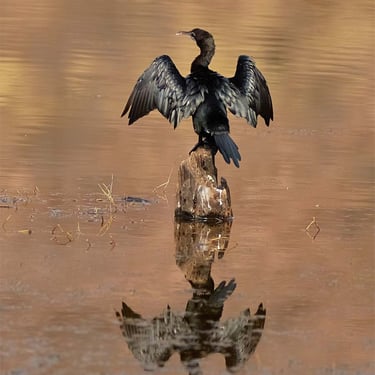
Most water bodies in the wildernesses of mainland India have Cormorants around. I’m not counting watering holes here and only considering large water bodies with the presence of an eco system in em and with the exception of the water bodies in the mountains where these guys are never present. These birds are usually guaranteed sightings in their range and have taught many a novice photographer including yours truly how to go about what they are getting into. Cormorants make for excellent subjects because of their tendency to spread out their wings and dry off by the water after a dive and that, along with the added presence of water in the images provides for pretty good photo opportunities for the ones looking to make images. Three kinds of Cormorants are usually seen in the water bodies of India and among them, the Little Cormorant is the most common. It’s cousin the Indian Cormorant looks pretty similar to the Little one but has green/blue eyes which I haven’t run into as of yet. In fact, I’ve only met the Little guy and that’s how I know that he’s the most successful of the lot in India.
Cormorants are fishing specialists who look pretty similar to Oriental Darters who are often seen in the North East as I wrote in “Champions Of Neckrobatics”. Both the species are after fish but their method of practising their livelihood differs greatly. The Darters use their spear like long bills while these guys are the masters of the dive and are known to dive down to 150 feet aided by their webbed feet to get the fish that they’re after and while the Darters are usually only found towards the North East of the country exclusively, these guys are all over and everywhere usually except at higher elevations. If the Kingfisher is the master of the plunge and grab that gives it the title of King, these guys are the Divemasters who have successfully conquered every habitat with water not only in India but across the planet. Even difficult Antarctica has Cormorants where these guys have to compete with Penguins who dive a lot further and can stay underwater for a lot longer. The Antarctic Cormorant is there at the shore even in that tough terrain giving the Penguins competition for the prey there. No surprise then that there are forty species of Cormorants on the planet with local variations in looks and behaviour and of those, the Little Cormorant has claimed India as it’s range.
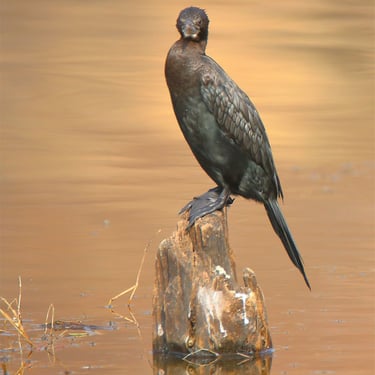
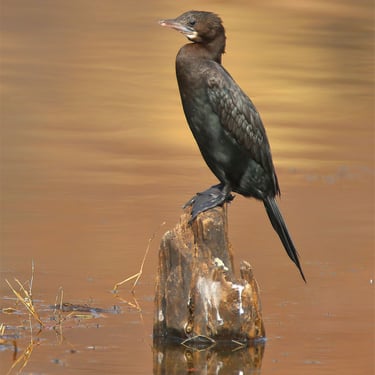
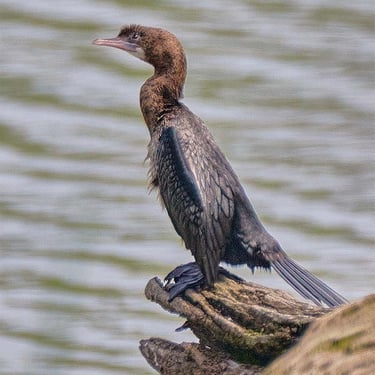
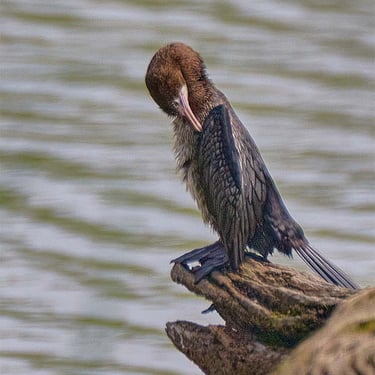
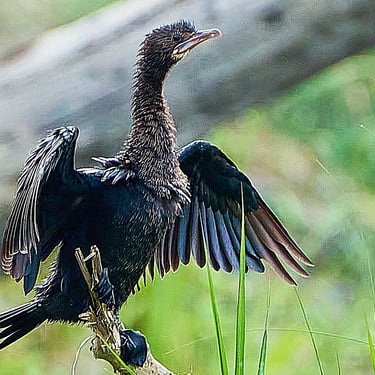
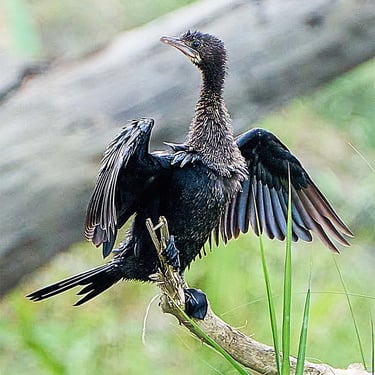
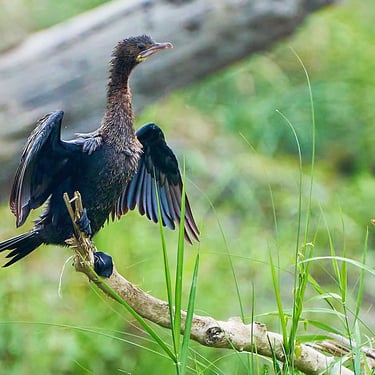
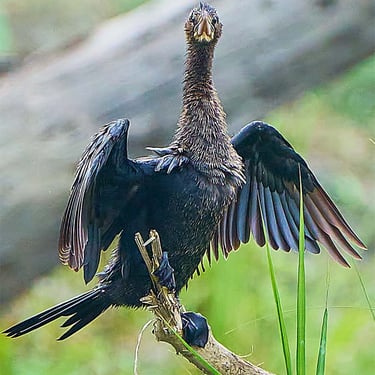
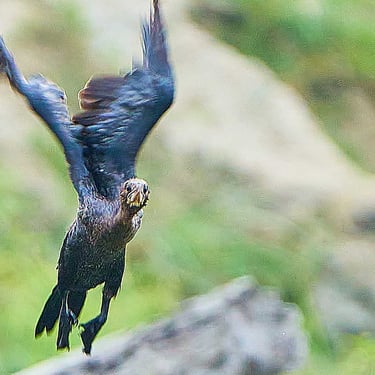
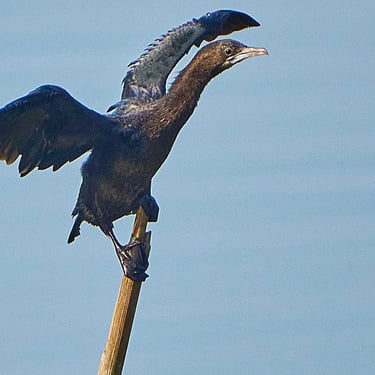
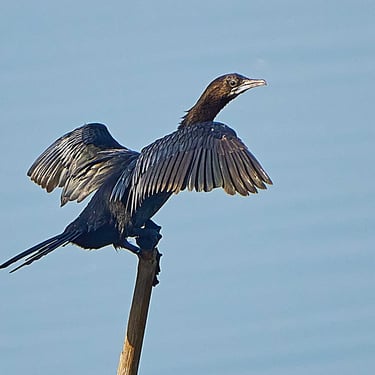
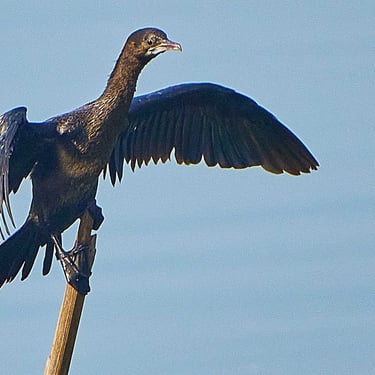
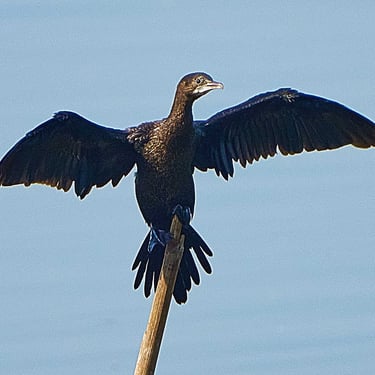
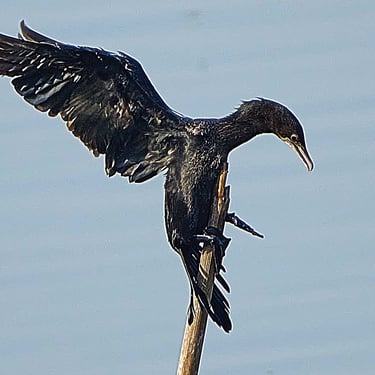
One of my first trips for wildlife photography was to Ranthambore where like most people, Tigers were all that I wanted and could identify as well. It was an awesome learning trip that I wrote about in “In ! Hook Line And Sinker” and like I said in that post, there was a lot of waiting on that trip despite having full day passes for the reserve and I actually got pretty lucky with very good Little Cormorant shots at sunset with the subjected reflected water there (Pics : 1 – 3). See those poses, well, that’s what makes this family of birds famous and there are numerous sculptures of these guys doing that all over the world. Aperture Priority’s fine for these guys usually unless you catch them in flight and they’re pretty composition friendly as well cause you can take your time with them. They’re darker in their breeding plumage like the ones here from Guwahati and Manas (Pics : 6 – 16) and lighter in their nonbreeding plumage like the one I caught in Ranthambore. They’re pretty midsized at around 50 cms and not camera shy at all. These birds are not intimidated by us at all and their body language just says that all the time. These guys have just decided to ignore us totally and usually go about their business unless they get annoyed and then they fly off.
They are an easily recognisable family and are mentioned in folklore from around the world including in Homer’s Odyssey. These guys are pretty easy for us to find in Assam and I could get to one in like 10 minutes right now if I wanted to. They're so common for us that that our minds kinda blend them into the landscape when we’re out looking for birds after a while. The common isn’t coveted in birding circles and we’re all guilty of ignoring the common cause it’s actually the common who are the most wonderful and have adapted the most beautifully to the environment. They have developed a bag of tricks that has ensured their survival and success despite all the hardships and handicaps that the planet, other creatures and life in general has thrown at them.
Despite their presence around the world, the details of the evolution of Cormorants in general are unknown. We know that these guys do not have water repellent feathers but that aspect of their feathers helps them use their wings to propel their bodies in water and helps in their under-water dives. The Little Cormorant is primarily a freshwater species and is found in lakes, mangroves, lagoons and rivers. They can survive in coastal saltwater environments but are rarely found out at sea. They range from India to Malaysia and have built a reputation for being adept at fishing in their range. Staying with the fishing abilities of the family, Cormorant fishing is actually a technique of fishing employed mostly in China and Japan where a snare is used to use the fishing abilities of the bird. The design of the snare actually allows the bird to swallow small fish and not the large ones which are claimed by the fisherman handling the bird. Other parts of the world engage in culling of Cormorants and their eggs by the Human fishing community who regarded these birds as competition that puts a strain on their livelihoods. The poor birds are so good at what they do that Humans brought the Purge out on em out of fear.
A study of Little Cormorants from North India has concluded that these birds can fish in water that’s less than a meter deep and they catch 2 – 8 cm fish there. Our little guys have a tendency of tossing their prey in the air when they get to the consumption and that sometimes leads to their catch being stolen from their mouths by other Little Cormorants, Storks, Gulls and Egrets. Little Cormorants are known to nest communally and males of the species are seen displaying at the nesting site by fluttering their wings. After the pairing, the males provide food to the females and then the couple participate in building the nest together which is a platform on sticks and usually takes around two weeks to build. The clutch size of their eggs can vary from two to six and the eggs hatch after 15 to 21 days. These birds are known to be vocal near their nests and they produce low roaring sounds, grunts and groans.
I guess I will always see the Little Cormorant as a great species for new comers to learn our hobby or for us to practice new techniques on cause these guys are usually seen drying off near the water in those perfectly still poses. The water and it’s reflection also helps in their compositions and it’s usually very easy to score good pictures of these guys when they’re in that pose and by the water. Finding one on a stump on the water like in my pics from Ranthambore is even better. Just a little bit of good light and pretty much anyone can have a great image and you have to admit that my guy does photograph pretty well indeed. Now I just need to catch myself images of some of the fancier ones that aren’t so common for me I guess and the addition to the collection would definately make me a lot happier.

© 2026. All rights reserved.