
Unequal Royalty - Collared Kingfishers
Lessons From Watching Collared Kingfishers At Ease
BIRDSKINGFISHERS
Aniruddha Bhattacharya
10/13/20267 min read
Shri Vijayapuram
Kingfishers are known the world over for being the best at what their name suggests as I wrote in “Swoop In And Snatch” which was about Kingfishers in general. But as is always the case, creatures adapt differently over time and these birds have evolved different lineages which are now grouped into river, water and tree groups; all of whom specialise in different ways of life. Water Kingfishers have evolved to hover over water to then dive and extract their prey while the river Kingfishers are small, compact and are hence adept at diving into flowing water to get what they’re after. Tree Kingfishers have adapted to life further away from water even and have developed heavier bills and bigger bodies that allow them to hunt other prey along with fish. Habits have a tendency of changing everyone and generational habits are bound to cause evolution when you throw a couple of million years into the mix.
My trip to Shri Vijayapuram in the Andaman Islands a couple of years ago actually let me observe Kingfishers go about their business without the subjects or the vehicle exiting the scene in a hurry for the first time. Birds had not been the focus of my trips into the forests of central India before that and holding up a shared vehicle over a bird when everyone else just wanted to see mammals was not really an option during those trips cause you just don’t know if waiting around a bird will make you miss a “celebrity” tiger and especially when there’s no guarantee that the birds themselves would hang around for too long with us watching either. All the birds around Shri Vijayapuram were a lot more human friendly and accommodating about their pictures being taken in comparison to the ones I’d seen the reserve trails as well and I guess that’s one of the reasons for it being such a huge birding hotspot among enthusiasts. Tiger Park safari trails aren’t the best locations to observe birds in leisure anyway and that’s just one of the many things that I guess you pick up along the way on the journey into wildlife.
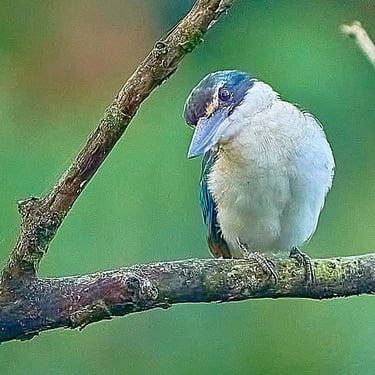
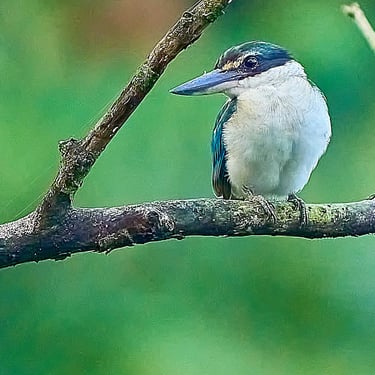
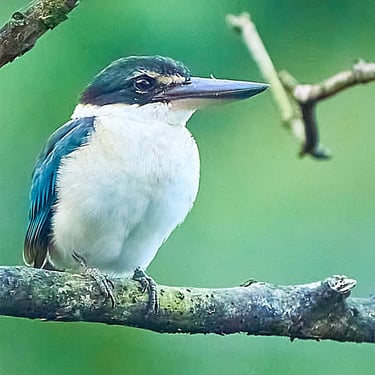
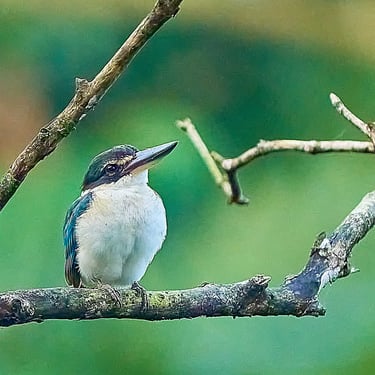
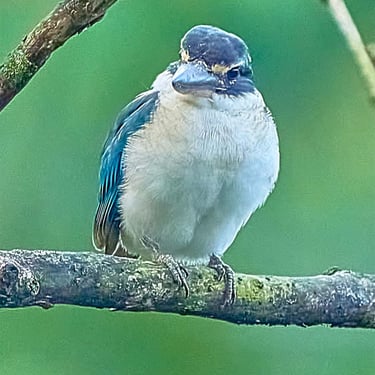
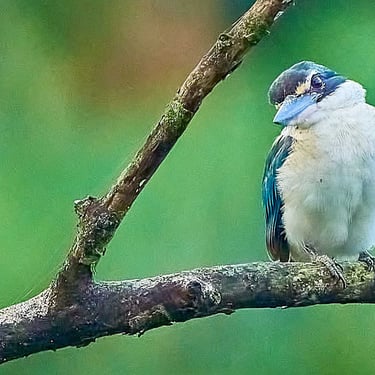
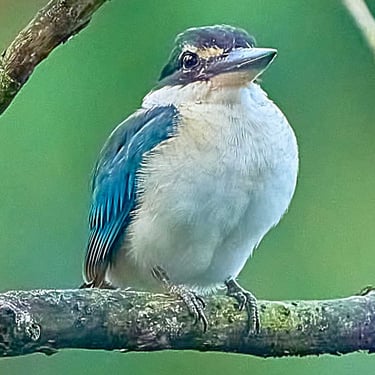
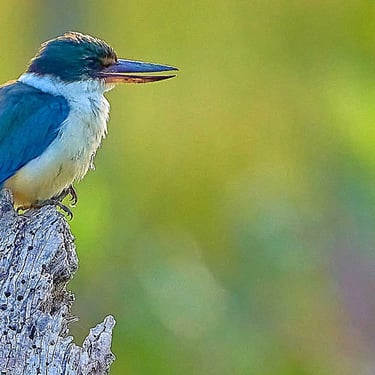
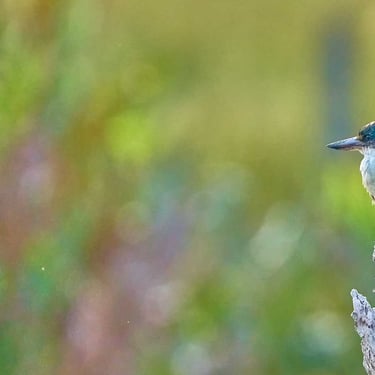
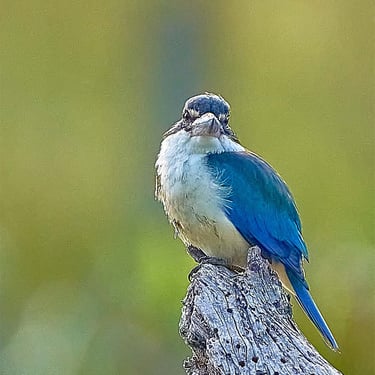
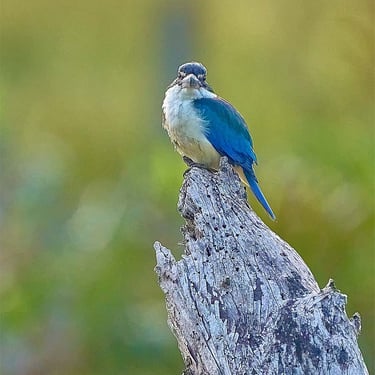
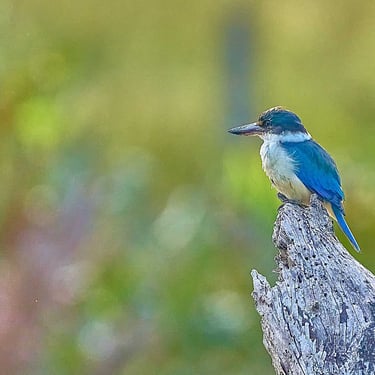
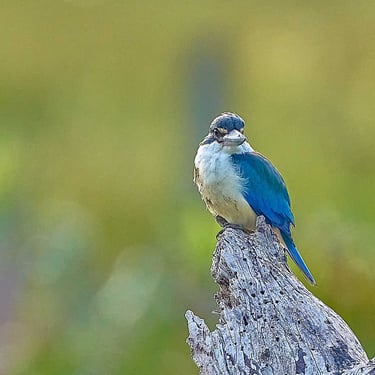
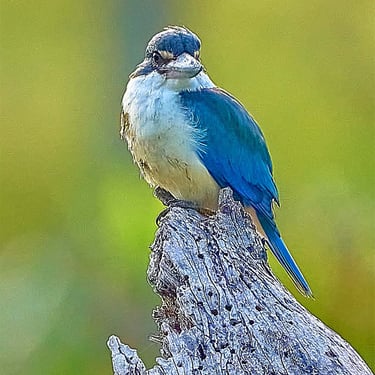
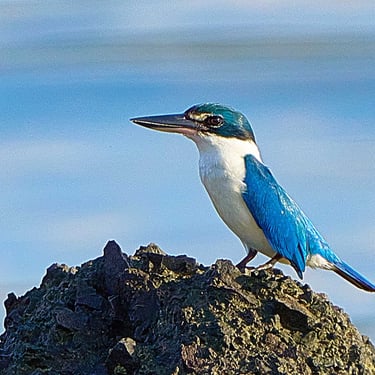
This guy in Pic : 2 looked kinda like a common Kingfisher to me initially as Mani pulled the car over and pointed at a water body by the side of the road. My guy was perched on a lone tree by the pond and as Mani announced the species as being “The Collared Kingfisher”, the bird looked our way and then turned his gaze back towards the water making me take note that this guy belonged to a species that I had not encountered before. My subject was a lot larger and had the white band going around it’s neck that it’s named after. In fact, I hadn’t been in this bird’s habitat at all till that moment because they’re found only in West Bengal and the Andamans in India going down to Indonesia, Philippines and Papua New Guinea and I hadn’t been to any of those other locations chasing wildlife either. It wasn’t difficult to catch this guy’s attention from the distance at all and he went on to give me quite a few stares in between his early evening recce of his hunting grounds that you can see in Pics : 2 – 11 which seemed pretty out of character to me at that time in comparison to the Kingfishers that I'd seen earlier. He left his perch as the evening set in then and I had just experienced the first among quite a few very fruitful sightings of the Kingfishers of the Andaman Islands. This was undoubtedly the most amount of time that I had spent this close to a Kingfisher at the time but as I soon learnt, it wasn’t anything unusual or special in those parts as far as many bird species found there were concerned.
These birds are found in costal areas and particularly around mangrove swamps, farmland, woodlands and grasslands. They range around parts of Africa, the red sea and the Arabian coasts towards the west of India. They’re also found in areas from Ratnagiri to Kerela, the Andaman and Nicobar Islands, the coasts of West Bengal and further East upto Papua New Guinea like I wrote earlier. There are 14 or so sub species spread across that range with slight differences in attributes and looks and none of those sub species call out exactly in the same manner. The males of the species get upto 25 cm and around 90 gms in weight while females of the species can get upto 100 gms. Different sub species can vary from blue to green above while the underparts can be white or buff. Certain races of the species can have stripes and spots as well and females tend to be greener in colour than the males. They often eat insects, lizards and small animals instead of relying solely on fish as their prey. Their larger bills have evolved to this end and these are the guys who are often found perched up on the tree with as much of an eye out for what’s in the water as they have for what’s coming and going to it. Oh, they’re fishing all right, but these guys just have a different definition of what all that encompasses, I guess.
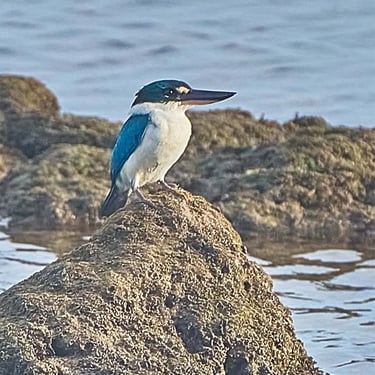
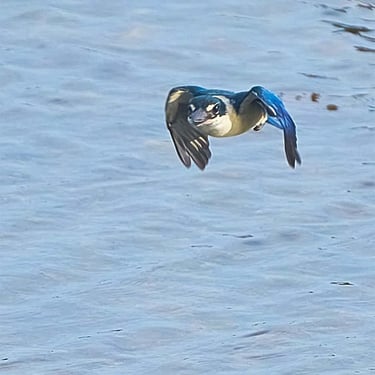
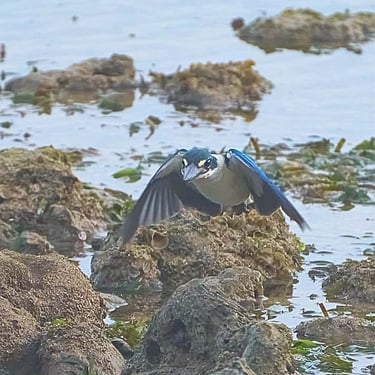
Collared Kingfishers gave me the highest number of sightings among all the Kingfisher species that I saw in Shri Vijayapuram towards the end of the year when I was there. I had four sightings of the species of which two were long and unhurried experiences with the subject totally at ease with my presence in its environment. My second run in with the species happened on the morning after the first sighting that I just mentioned in this post when we spotted a couple of these guys out by the cliffs that run around that coastal town as you can see in Pics : 20 – 24. This was the shortest of the four sightings and yet different because there were two individuals involved and although at a greater distance, it did involve the subjects taking flight which I tried my best to catch despite the distance. Now, I can’t really tell if these two were a couple or related individuals as the light that morning wasn’t really the best and I’m not entirely sure if the females of the sub species found in the Andamans show much of the green in comparison to the males as all the images I have show a consistent blue on the birds. I’m thus inclined to believe that I only encountered and photographed males of the species on that trip.
These birds are seasonally monogamous which basically means that a pair comes together for the breeding season which spans from March to August in India and these guys can be seen dramatically chasing each other over the canopy to establish a bond during that time. The male of the species then presents a gift which could be a crab, lizard or small fish to the female to solidify the pair bond. If the female then accepts the offering, both birds extend their wings in a synchronised display to signal the match for the season. Given that their heavy bills are of not much use for digging, these guys target softer natural substrates for their nests. They excavate cavities in rotting tree trunks, termite mounds, earth banks and even recycle woodpecker nests for their nests. Both parents participate in the digging of a narrow tunnel that expands into a bulbous nesting chamber at the end. Their eggs are laid on the bare floor of the excavated chamber and they do not bring in any soft linings for their nests. The females lay three to seven eggs which are incubated by both the parents during the daytime. The chicks of the species hatch in between two and three weeks. In optimal environments with high food availability, a bonded pair of the species will often raise two broods within the same season. Both parents of the species work around the clock then to feed the nestlings who are known to be voracious eaters. They grow quickly though and are usually coaxed out of the nest by their parents to take the first flight within a month or so of hatching.
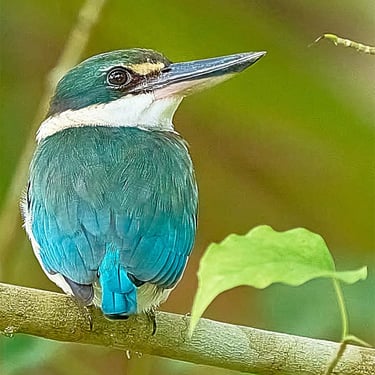
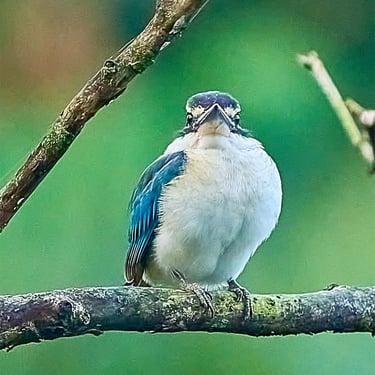
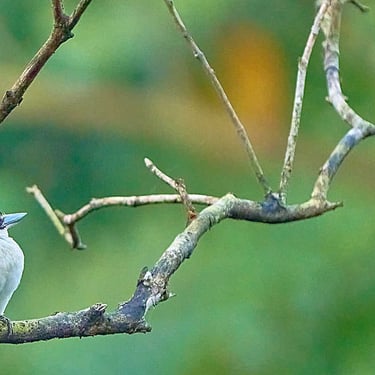
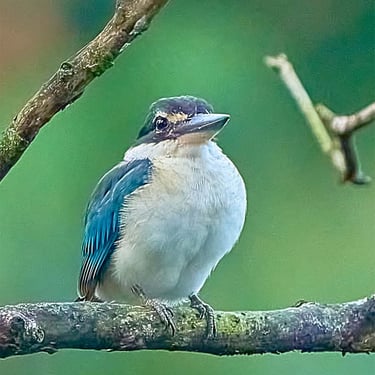
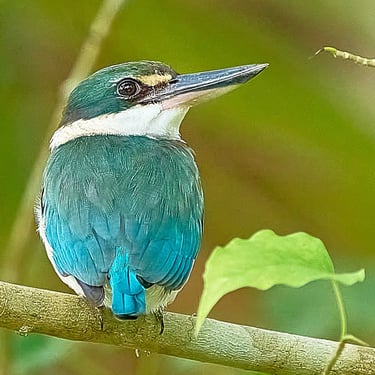
I’d scored some neat images of these guys in my first two meetings with them, but the light wasn’t really in my favour during those sightings as the first happened close to dusk and the second was during the early morning. Well, as Mother Nature would have it, the next two sightings of the species happened under excellent light and with backgrounds that matched the flamboyant colours of my subjects themselves as you can see in Pics : 1, 12, & 13 – 20. Those sightings tied off the series well for me and watching these guys up close and for a while taught me many things that I didn’t know when I showed up in the Andamans. I’d always assumed that all Kingfishers exclusively fish and yet, as it turns out, many of the Kingfishers of my home state of Assam like the White Throated Kingfishers were heavy billed tree Kingfishers like these guys who also specialise in hunting other game as well unlike their cousins with slimmer bills who specialize and excel in hunting fish exclusively. One could assume then that Tree Kingfishers don’t necessarily track every movement in the water and that, perhaps would explain why these guys were so much more relaxed up in their perches in comparison to many other Kingfishers that I’d met along the way and I just hadn’t noticed the difference because of a lack of exposure.
I’d mistaken the Collared Kingfisher for The Common Kingfisher when I’d first seen their kind and hanging around these guys kinda brought out how even related species from different lineages can be completely different in their preferences and behaviour towards most things. Sure, both the species belong to the Kingfisher family of birds but everything else including their size, diet, behaviour and habits have all changed today from the common ancestor that they had millions of years ago. It was awesome to meet Kingfishers who posed and gave me stares as well instead of always being completely focussed on what they were after. I scored the best pictures of Kingfishers that I have till date on that trip and I honestly believe that it’s the nature of these birds along with the environment of the place that allows for that. I think that I really oughta find some more of these guys that belong to the other lineages and somehow figure out a way for them to do their thing with me around. For now, though I’ll stick to the belief that the Kingfishers that exclusively prefer water are always focused on the water for any opportunity that might present itself for them cause I did see Common Kingfishers in Shri Vijayapuram as well and those guys had their focus locked onto their task pretty much like how they do everywhere else. I’ll let you know if that opinion changes though cause I just never know what I may pick up along the way.

© 2026. All rights reserved.