
Boss Of The Titflock - Green Backed Tit
The Green Backed Tit's Domination By Size
BIRDS
Aniruddha Bhattacharya
3/31/20265 min read
Sattal ; Uttarakhand
Tits come in different sizes, colours and shapes. The birds, bro ! Stay with the program here. But if you are curious about the origin of the name, I did explain that a while ago in “Hey Little Tit, Your Name Gives Me A Giggle Fit.”
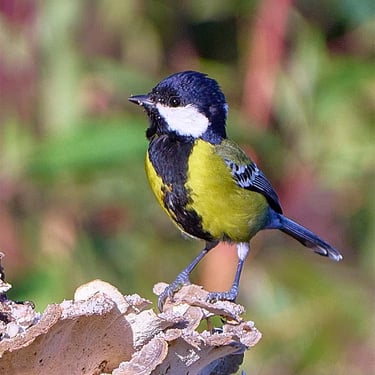
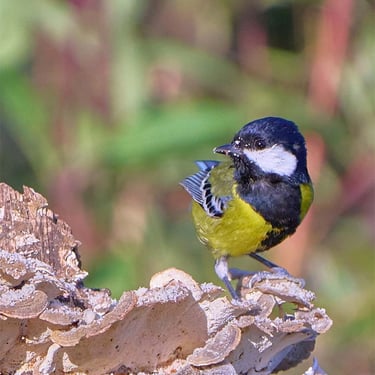
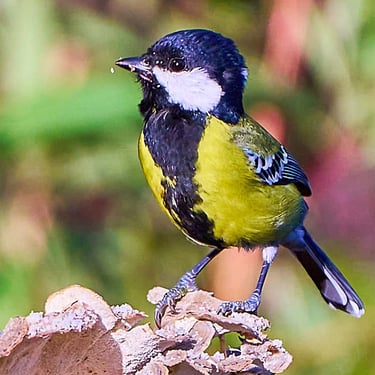
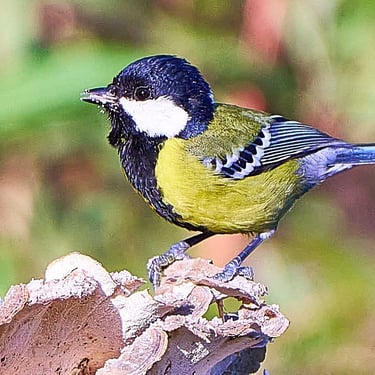
Right ! So, my expectation from Tits in general initially was obviously based on what I’d seen the most of and what you see most of online are the most easily photographed, which in this case would be the Great Tits. The Great Tit is the most photographed because it’s easy to photograph since it’s, well, GREAT ie, big compared to the rest in its habitat and it has a huge range spanning all of Europe and some of Russia as well. Well, I haven’t seen any of those guys yet, but the Tit who was the closest in appearance to my initial expectation form them all is the Green Backed Tit who I ran into in Sattal. These guys are almost as big and they sport colours that are very close to the Great Tit. They’re much easier to photograph than their smaller cousins and they totally opened up my understanding of how size changes the behavior of beasts by changing their perspective on the world. It was a wildlife "sack of bricks to my head" cause we all know that big dogs and their smaller cousins don’t behave similarly at all but I guess that a little lateral perspective was necessary for the point to be driven home for me.
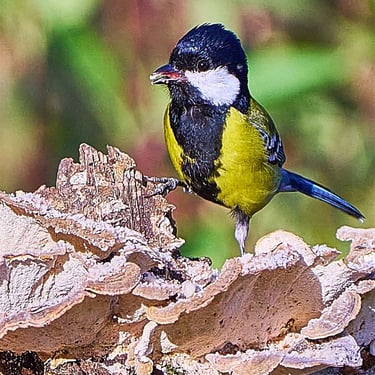
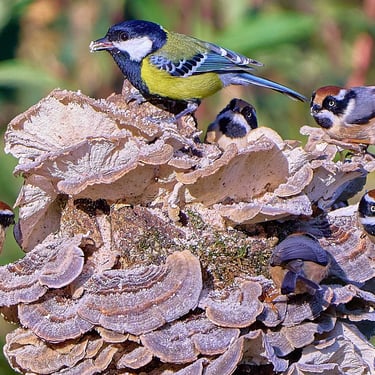
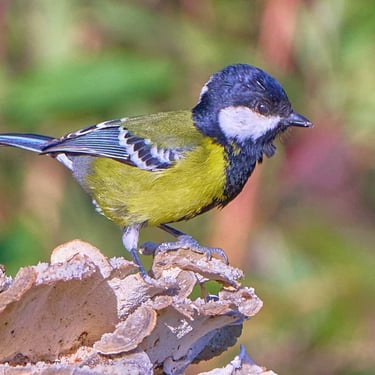
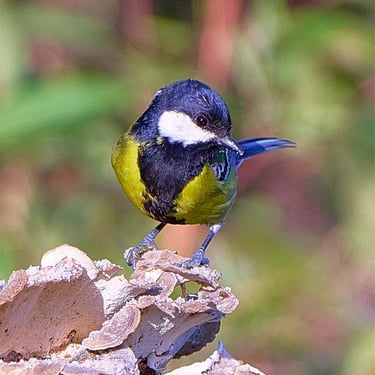
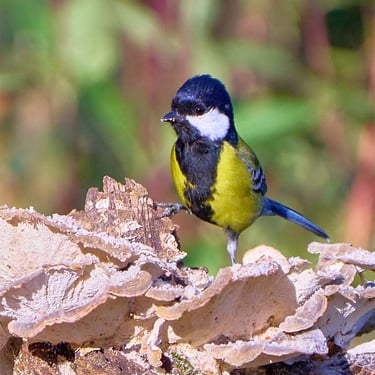
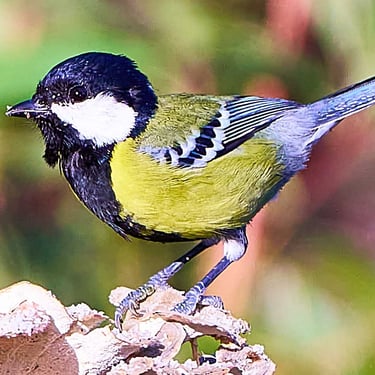
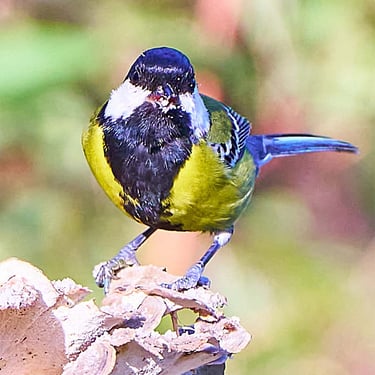
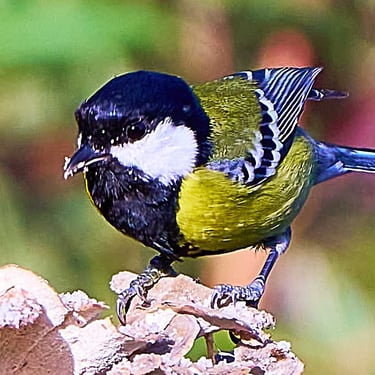
Tits are known to hang out in mixed flocks when they’re out and about foraging. It’s a pretty smart defense mechanism on their part where the largest cousins take the bottom positions of a tree, the medium sized species take the medium branches and the smallest of the lot take the ends of the branches. Everyone gets to prey that fits their profile that way and they can all stay alert for predators. Any change in the collective chirping behavior of the group can easily alert the whole lot about change in their immediate environment. Being physically the largest among the Titflock, that obviously makes our Green Backed Tit the boss of these mixed flocks and they do have a tendency to draw the smaller members of their family to a prospective foraging location like you can see in Pic : 3. Being the boss is obviously a good feeling and you can clearly see that on my guy’s face in Pic :1. Well not really but look at that pose man. What I found to be the most interesting about this sighting was that, my guy arrived at the location first and the rest didn’t stick around for too long after he’d left either. Their exit from the scene brought other, bigger birds out and I feel that the smaller Tit birds didn’t wana hang around for too long after my guy was gone. I haven’t seen mixed flocks with Tits and other kinds of birds yet but that’s apparently not uncommon in those parts. It wouldn’t be an issue for these guys given their size which probably gives them greater freedom from group dependency as compared to their smaller cousins.
Observing and photographing these guys is easier than the smaller Tit birds. Their movements aren’t as hurried and every action isn’t a blur. Smaller birds just need smaller movements of smaller body parts but they have to traverse the same topography. These guys can just be a lot more relaxed about it all. These guys can get upto 13 cms and 17 gms which is pretty much in the Great Tit category or thereabouts. The two species do not overlap territorially and these guys stay to the Lower Himalayan region and parts of South east Asia. The thing with photographing them is the black eyes on those black bands over their eyes. They might be big for Tits but they’re not big by any standards and black on black is a photography nightmare on birds like I described in “Drongo ! Drongo ! Naughty By Nature” and these birds are a lot smaller than the Drongos so you do need proximity and light on your side to get good pictures of them.
Like all Tits, these guys are vocal and in fact Tits are often considered to be the most vocal of all bird species. This helps in the formation of the titflocks which helps in communal foraging by providing safety in numbers where the change in sound and behavior at any point in the flock can warn everyone about a change in their environment or the approach of an outsider or predator. Quite a surprise then that they didn’t get called Babblers too but then I guess the bird classification goons of the East India Company got their lights turned on by the time they reached the Himalayas and found Tits in India as well. The Fission – Fusion societal system that I mentioned in my previous post about The Black Throated Bushtit holds true for these cousins as well where birds join and leave small factions or larger groups depending on their environmental necessities. They are cavity nesting birds that forage for insects, nuts and seeds. They stick to their territories and are not migratory. Their breeding season starts in spring and a normal clutch size in between five and seven eggs.
Like most birds of North East India and the lower Himalayas, there’s very little data out about the actual numbers of these guys. In many cases, there’s very little description of the details of the species available even online. These guys are classified as being of least concern and we know that they’re around certain regions but who’s doing the real accounting? Who knows and How? We don’t. We assume and that’s where it’s at in actuality. You cannot physically count birds so the system makes us count the species but is that indicative about the health of the numbers of the species? I don’t think it can be until a better observation and reporting system is envisioned to account for the actual picture over time. Here’s to hoping really that we do find ways and means to account for and protect the health of these species who are the real indicators of the overall health of our real wealth.
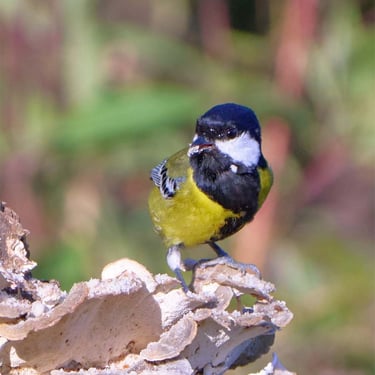
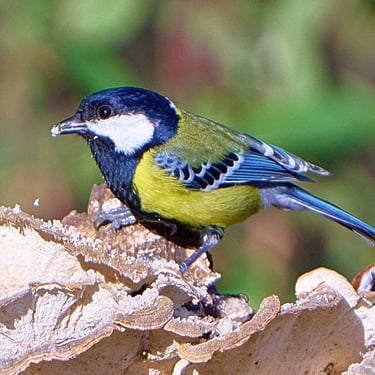
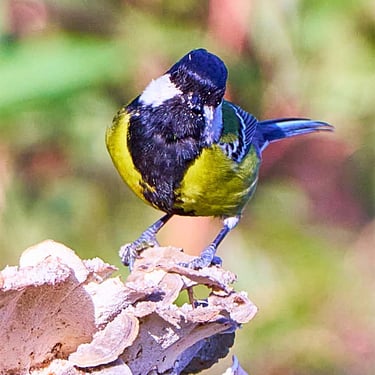
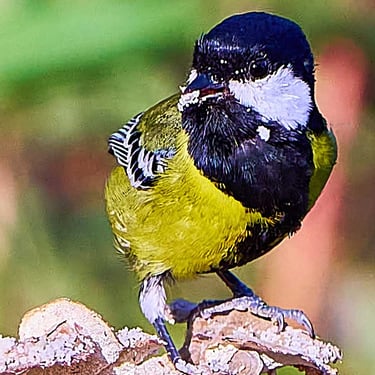
My one long encounter with the Green Backed Tit gave me a pretty different insight into their kind because it was from up close and at a birding hide. Seeing them at a closer proximity with the Black Throated Bushtit clearly highlighted how size makes such a huge difference in the behavior of all beasts and it also showed how these creatures interact with each other. I was exposed to the Himalayan Black Lored Tit on the same day as well and at a different location. Both these birds are of similar size but the sighting at the hide taught me a lot more about my subject. Proximity makes such a huge difference and I for one am glad about the existence of bird hides and just hope that these hides which are supposed to help in our understanding of the lives of these beautiful animals are just operated the way that they actually should be and without causing harm or interference in the lives of the subjects that they claim to raise awareness for. I saw the Green Backed Tit on my last evening in Sattal and the sighting finally gave me what my expectation from birds named Tit had been since before the trip. Pretty fitting actually if you think about it. A whole lot of lessons learnt first and pretty good ones too because in this case each and every one of the “different” looking tit bird was a wonderful find by itself. The Green Backed Tit in this sighting was the Boss of The Titflock for sure for as long as that lasted and you can clearly see that in his behavior. Look at the stance he’s on in Pic : 10. Yeah ! I very recently found a cousin of theirs in close proximity to me though and that's a discovery that I'll get to on here when I do I guess but I I'm hoping that it should take care of my curiocity about these birds in general in time if I keep getting lucky, that is. Let's see how it unfolds shall we?
© 2026. All rights reserved.