
Catching Cuteness - The Black Throated Bushtit
The Super Cute Black Throated Bushtit
BIRDS
Aniruddha Bhattacharya
3/23/20265 min read
Sattal ; Uttarakhand
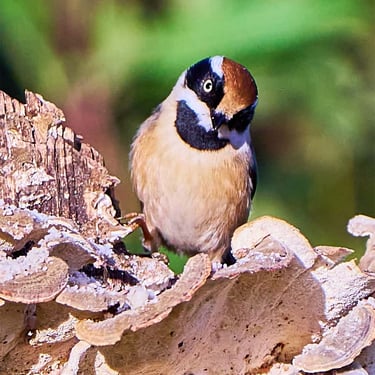
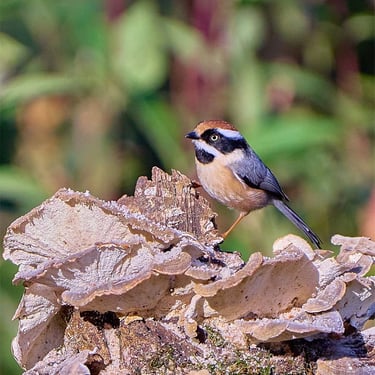
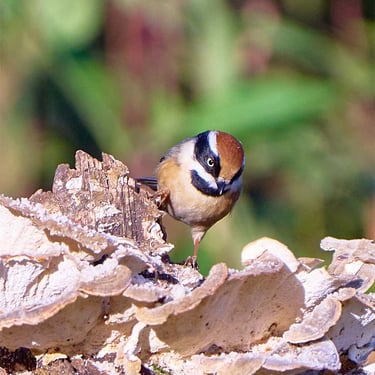
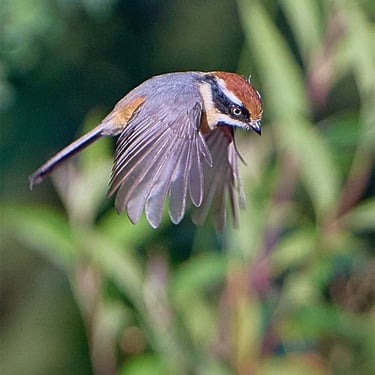
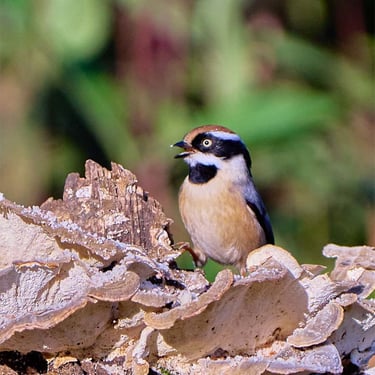
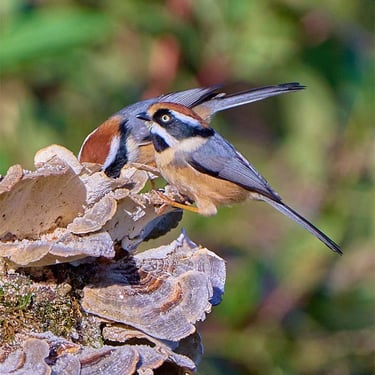
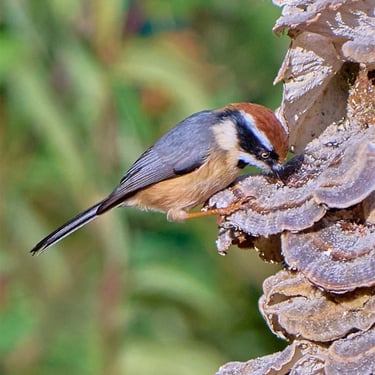
Little furry beasts are universally cute and our preference for adopted companions in our homes around the world and across cultures shows that. Now, not all animals may be cut out for domestication but that doesn’t take away the cuteness factor that sets similar creatures apart from each other. For me, the cutest bird that I have run into so far surely has to be the Black Throated Bushtit and yes, that beard like black throat definitely has a lot to do with that opinion of mine among other things like their physical patterns and behaviour. Just take a look at my guy in Pic : 1 and tell me otherwise. How cute is that little guy? I just wish we saw more of them around my hometown every time I see their photos. They’re just so cute.
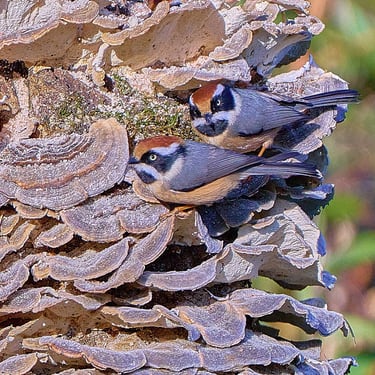
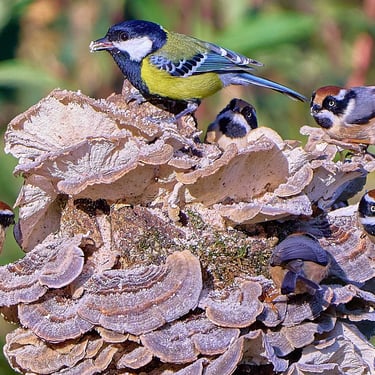
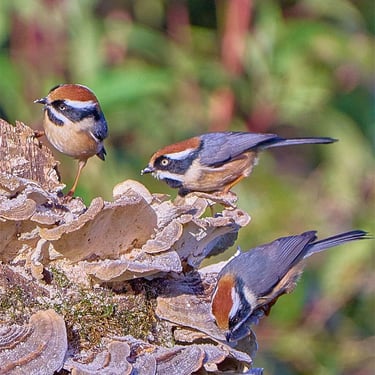
These little chubby fur balls were among the tiniest tits that the lower Himalayas introduced me to. At around 10 cm and 4 gms, they’re definitely among the smallest birds of the region and seeing them in a mixed flock brings out the stark difference in size between them and their cousins as you can see in Pic : 5. Things look cute for the observer also because although small, these guys hang in a gang to compensate for that and their behavior together is bound to make you smile even when you’re feeling down. Their flocks can easily have upto 40 and more members and they know the benefits of strength in numbers. Seldom alone and always making a ruckus, these little dudes are on a group mission always and their chatter most definitely lets their gang know of everyone’s location and situation. A foraging mission of theirs might look “oh so cute” to us but it’s survival for them and that’s serious family business when pretty much anything could kidnap one of your troop to make a tasty snack out of em. These guys have to stay focused, fast and on the move and the resultant cuteness is a side effect that I’m pretty sure that they aren’t even aware of. They’re too busy doing the survival and evolution at a much faster speed than we can relate to and just that is an different state of existence which itself would be so alien for us. It’s part of what makes them fascinating for me for sure and I’m sure that I’m not the only one who has noticed how these little birds are pretty smart for the supposed little bird brains that they carry around. It’s pretty amazing how much computing power that little brain is capable of when you think about it really. In fact, every time someone brings up the topic of artificial intelligence to me these days, I point to the example of little birds like these ones to highlight efficiency as I've done here before as well when I made a general post about all Tit birds which featured some of these pictures and thoughts in September 2024. There is no intelligence involved in regurgitation of compartmentalized data in my opinion. Intelligence is linked to life and everything that all life has in common. Just knowing how to sort data and join sentences together isn’t intelligence and neither is running many possible simultaneous permutations and combinations. That’s a computer’s job. There’s way too much that encompasses the definition intelligence and a capable database is probably at best a good tool for the actually intelligent.
Tits in general are considered to be among the smartest birds out there despite their smaller size. The presence of this family of birds around the world just goes to show their success and their adaptability to life. They aren’t present in South America, Antarctica and Australia but have pretty much spread across all the other highlands on the planet. They’re called Chickadees in America and those cousins of our Black Throated Bushtits are in the same scientific family none the less along with the Titmice and all the bearers of those three names look pretty similar to each other thankfully unlike the Babblers.
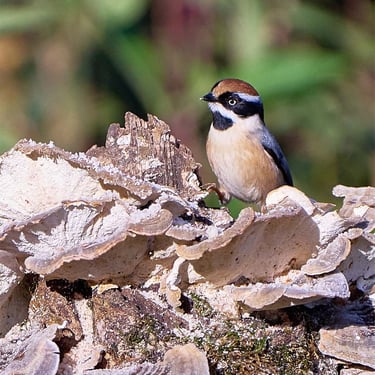
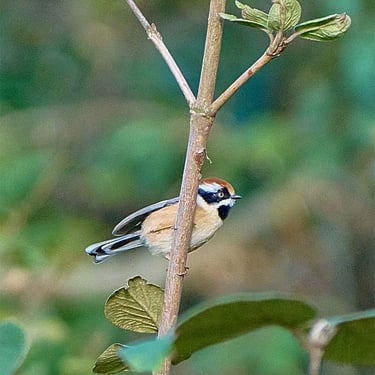
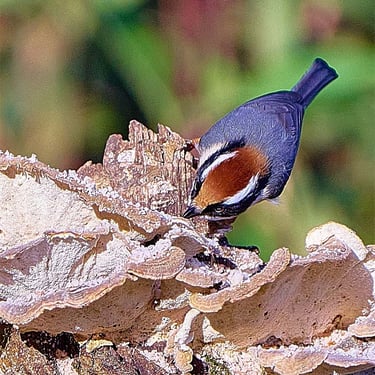
These guys are sedentary and reside along the lower Himalayas, South East Asia and southern China. I have only seen the Red Headed Black Throated Bushtit but they do come in a grey headed morph as well. They forage in the small branches and their short “tsp tsp” calls can usually be heard wherever they are unless they shut up cause they're scared. The tough part with taking their photos is catching em in the clear. Like most little birds, they do prefer the branches and it’s pure chance really if you will see em on a clear branch. The whole story would turn if you spent a lot of time in a location where they are common but then, I don’t even stop for a photo of a Red Vented Bulbul which is so common in my home state of Assam anymore now do I? 2.5 K shutter should suffice as a starting point with these guys but given their perpetual hurry and the chance of foliage and clouds, I ‘d highly recommend faster if possible for these guys for sure.
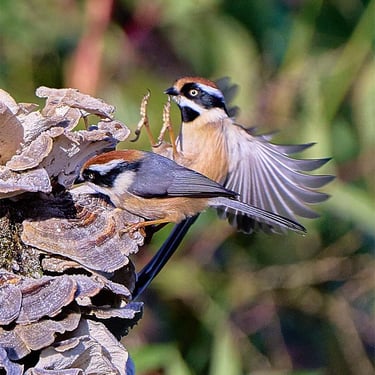
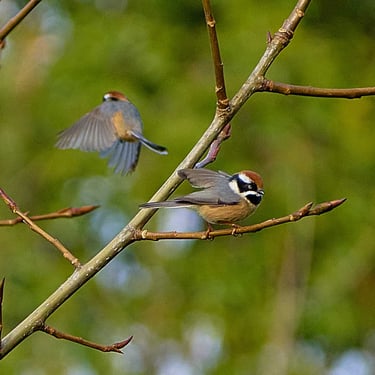
These social birds need their numbers for safety and they tend to split and form sub factions or come together as a bigger group as and when required depending on their needs from their environment. Theirs is a fission – fusion society by nomenclature because of this and they are often also seen in mixed flocks with other tits. In the mixed flock setting, these guys being the smallest are usually seen on the ends of the branches with the larger cousins taking up lower positions and the midsized species claiming the medium sized branches. It’s pretty interesting how that’s exactly they decided to hang out in the image in Pic : 5 where they were photographed on a set of stones set up in a birding hide. From what I've read, they also form mixed foraging flocks with other species of birds of the region but I guess I just wasn't around bounty worthwhile enough for that when I was in their part of the country. They’re known to feed on insects, invertebrates and seeds. Those little beaks on those tiny bodies aren’t good for much other hunting but thankfully there are many kinds of tiny insects out there in the forest for them. Their size and weight also does not make for strong flying over long distances but whatever energy they do have is spent in very fast movements around their habitats in the branches.
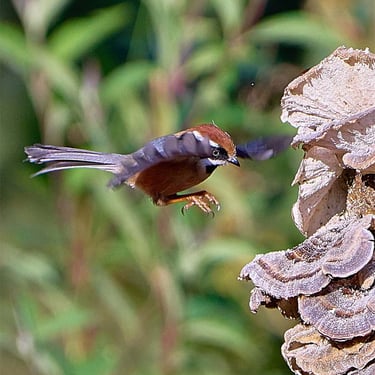
So these guys are cute and that’s pretty much established from their pictures but there’s a catch though. They’re cute cause you’re catching their cute expressions at a minimum of 2500th of a second in these images with some being shot at speeds faster than that. Many of these were taken at 1/4000th actually and don’t get me wrong, they do look pretty cute stomping around all together when they do approach on a branch but trust me, that cuteness is nothing when compared to what you see of the whole bird once you’ve taken the picture or paused / slowed down the video. They are so tiny that you won’t catch the cutest moments in their fast movements which make them a blur to the naked eye under normal viewing circumstances usually. There’s also the fact that as they are so tiny and skittish, you’ll probably never end up close to one to actually see details with the naked eye, let alone the cuteness. They have to move so little by our standards to achieve movement that it’s already fast, you know? In fact, pretty much everything noticeable and distinguishable about them is thanks to the camera. The other options of trapping or killing them in the name of research and science is obviously out dated and I doubt many of us guys who love life would entertain that when the camera is just so much easier a medium to appreciate them with. The effot doesn’t take away the fact that they’re cute. The cutest in fact and all you have to do is take a picture and reveal what you caught on the screen after a crop of course but then that’s part of the fun with these guys. It’s conditional perhaps but totally worth it in my book. Just look at em man. How cute is that? You just have to capture it for yourself and that's the catch.
© 2026. All rights reserved.