
In The Realm Of Unicorns III - The One Horned Rhino
The Greater One Horned Rhinos & Their Habitat
RHINOS
Aniruddha Bhattacharya
7/28/20266 min read
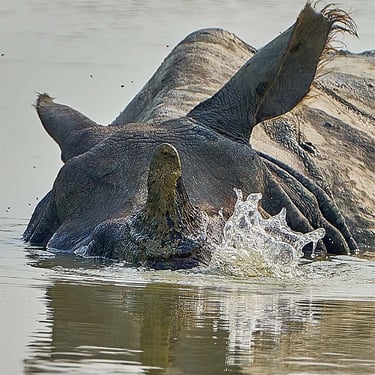
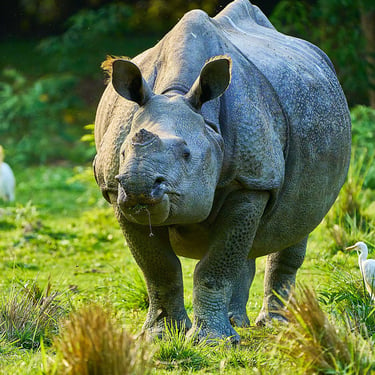
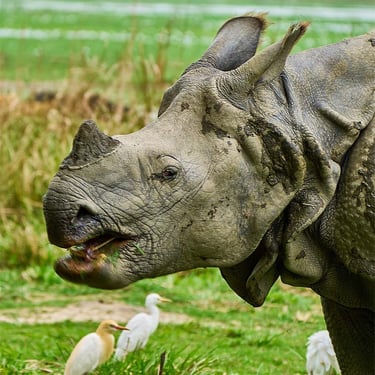
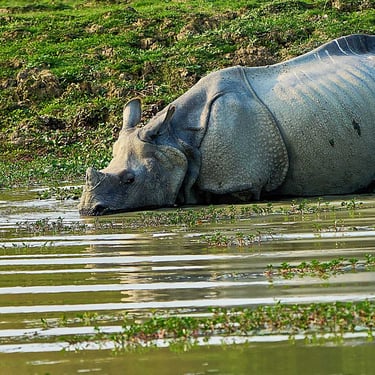
Pics : 1 - 4 & 9 - 14 ; Kaziranga National Park | Pics : 5 - 8 & 15 - 24 ; Pobitora Wildlife Sanctuary
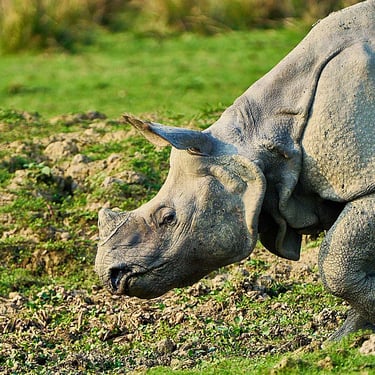
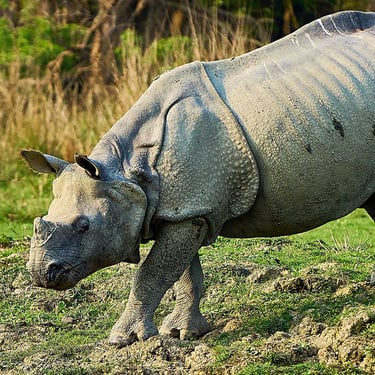
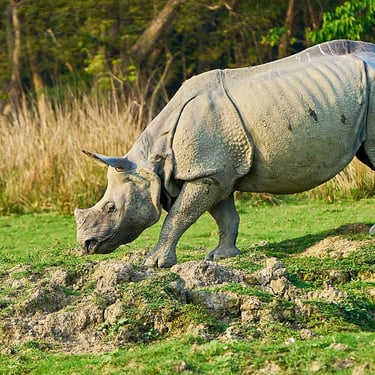
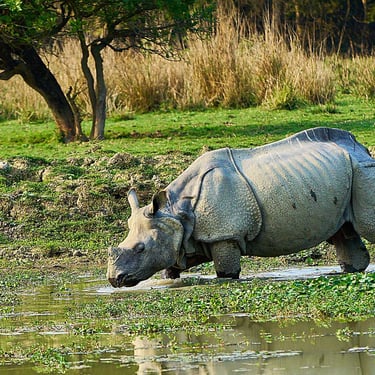
My home state of Assam is the last stronghold of the Greater One Horned Rhino species and the largest number of true Unicorns are found in the reserves here as I wrote in “Unicorns I”. In fact, the highest number of One Horned Rhinos in the world are found in Assam and Pobitora Wildlife Sanctuary has the highest density of Rhinos in the world. That said though, you won’t see Rhinos all over the landscape when you travel through the reserves in the state. These guys are usually solitary in nature and are pretty territorial. They may be herbivores, but Rhinos do not herd together like Buffalow and Antelope usually. Rhino life comes with its own preferences and standards and the behaviour of these beasts cannot be equated with other herbivores only by their preference in diet. Their social systems are unique just like their appearance and whether you believe it or not, these heavy weights like to have fun just like us all.
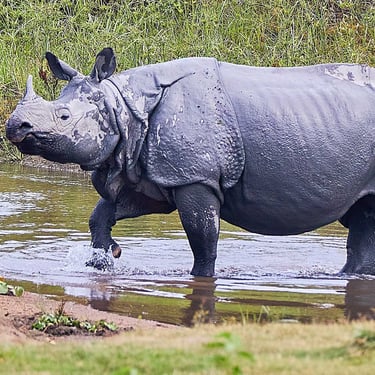
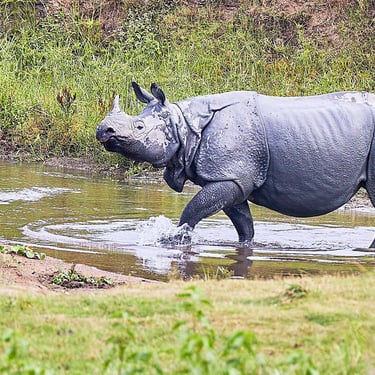
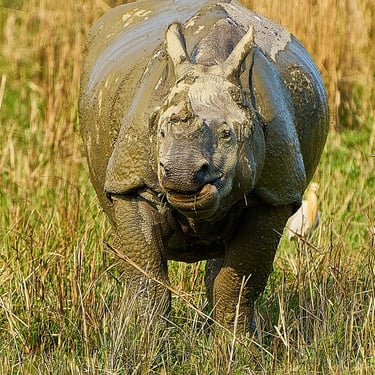
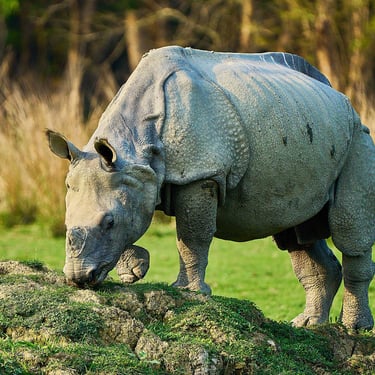
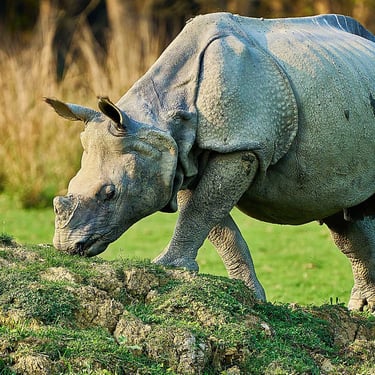
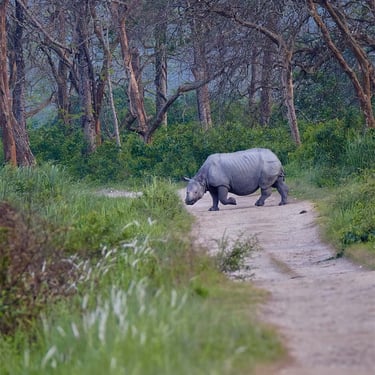
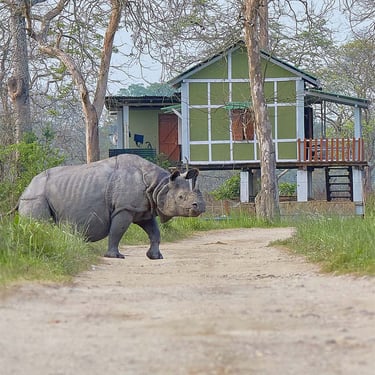
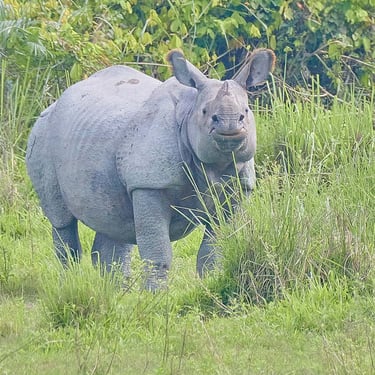
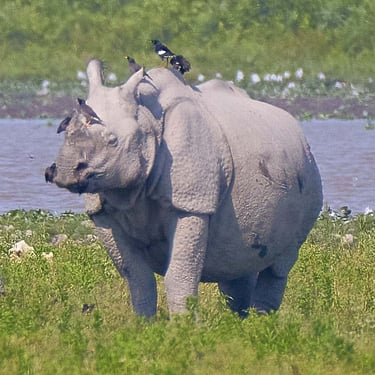
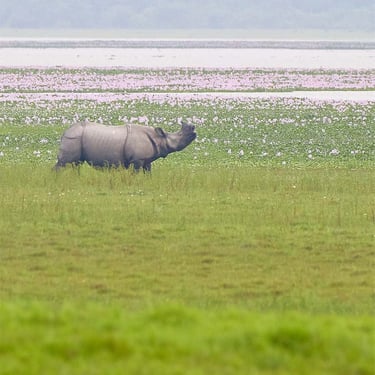
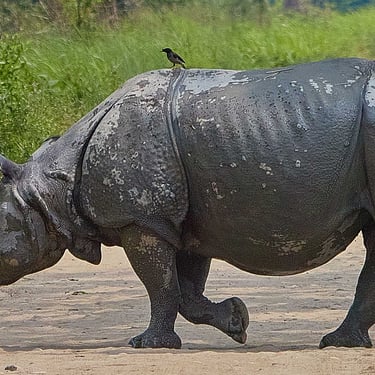
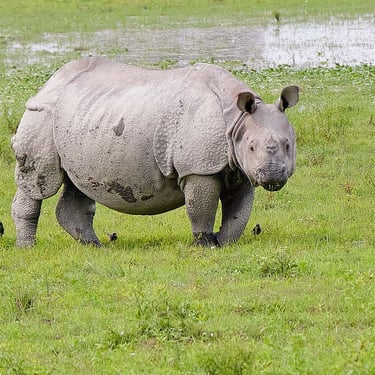
Learning to photograph these guys was a learnt skill for me and mostly due to the topography of the reserves in Assam wherein the roads in Assam usually have to be at a slightly higher level than the plains as I wrote in “Unicorns II”. Road crossings by these guys are highly coveted in this landscape and you will always find the knowledgeable drivers lining their vehicles up for a great shot of the subject and its habitat when they see an opportunity arise because of a road crossing especially if the crossing happens at a spot where the road and surrounding area are on the same level like in Pic : 1. It took me a few visits to realize why but yeah, the roads put you at the same level as your subject and distance makes balancing their large shapes in a photograph easier. The alternative is to catch them at eye level in the grass and that’s possible only in some stretches in most reserves with the exception of Pobitora, where the road is pretty much at the same level as the habitat all throughout. The size and shape of these subjects also makes getting balanced shots from a vehicle tricky as they aren’t tall and yet are wide and long. Things would be a lot easier with them if we could get on the ground to make our images and videos but that just isn’t an option while on safari. If tall grass is thrown into the whole mix as is usually case, you just have a difficult setting to work with as far as images are concerned.
The Greater One Horned Rhino is the second largest among the species of Rhinos found in the world and around 4000 of these unique beauties are found in Assam. This is about 80 % of their total population while the rest are found in neighbouring states and Nepal. They moved to the flood plains of Assam over 3300 years ago for a variety of reasons which possibly included habitat loss, over hunting in Northern and Western India and climate change. The flood plains of Assam suited them pretty well and the Rhinos were quick to pick the real estate that suited their needs the best at the time. Their numbers in Assam dwindled astonishingly to around 200 individuals by early 2000 because of poaching and habitat loss. Lights turned on somewhere and rightly so finally and a large variety of steps and measures for their reintroduction, protection and strict steps against poaching were introduced. The Rhinos adapted well to their translocation within the state thankfully and with the other new measures in place, their numbers have grown since to pull the species up to the classification of Vulnerable on the IUCN red list.
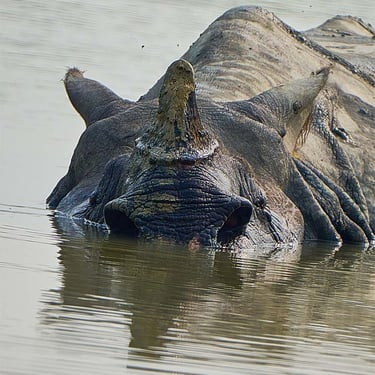
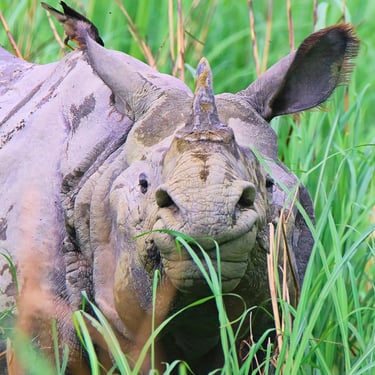
Rhinos have their own unique quirks like most animals and their social structure shows that. Rhino females are usually more social across the different species but the degree of social activity varies depending on the individual species. It’s pretty common to spot multiple females grazing together and in groups called “crashes”. The females are not as territorial as the males and these guys are the only animals whom I’ve encountered where the female’s territory is usually initially larger than her mates. Females share their mud baths and the abundant grassland easily with other females and nursing mothers. The script flips when mating comes into the picture and at this time, the females restrict their movements to the male’s territory which overlaps with theirs. Prior to giving birth, the females usually isolate themselves in secluded, dense areas and once the calf is born and old enough, they resume roaming their overlapping home ranges while bringing up the calves by themselves. Adolescent males sometimes form bachelor groups after leaving their mothers which gives them some safety in numbers from the bigger males who are highly territorial but these groups are fleeting and are abandoned as the males grow to seek their own territories for themselves. Overall though, Rhino territories are not as strictly defined as with many beasts like big Cats. Their territories overlap a lot and males often allow other males to pass through what they consider to be theirs. The presence of females and mating related politics have a huge role to play in their attitude towards what might be considered intrusion for the individual and any subsequent action. It’s the kind of action that I witnessed on my last trip to Pobitora where we suddenly heard the rustling of leaves followed by the thump of hoofs while on the forest trail. As we stopped to look, we saw one huge male chasing after another which was bleeding from it’s face. Oh these giants can book it when they want to for sure and it's a pity that the speed in this case, caused blur for me. These guys prefer to use their teeth in case of conflict usually to their horns which are made of pure Keratin like Horses hooves and Human hair. This wasn’t the first time that I’d witnessed Rhinos going at each other either. Fights are a part of Rhino mating rituals and I witnessed that a few years ago at Kazi and wrote about it here in “Love Bites ; Love Kills ! In a Rhino’s World”. I have also witnessed male Rhinos chasing after females on more than one occasion and by chasing, I literally mean that the females were booking it like their lives depended on it. Rhino love is a whole different thing in comparison to most animals and that’s just how it is for these heavy hitters. Individuals die in Rhino mating games and that includes the bigger males as well. Males of the species weight over 2000 Kgs and the females can weigh around 1600 Kgs. The heaviest recorded individual of the species was a male that weighed in at 4000 Kgs and 14 Feet in length. They are the second largest Rhinoceros after the White Rhinos of Africa and in its habitat second in size only to the Indian Elephant. Given that size and weight these guys can move that weight at around 60 Kmph when they need to and having witnessed it twice now, I know that I’m absolutely petrified about the thought of a potential real Rhino charge.
The thing is though, that just as I am scared about the Rhino charging at my vehicle, the male Rhino knows his capabilities well too and that can be seen easily at the number of mock charges that are witnessed at the ranges here during safaris. They do it to amuse themselves and assert their dominance. Some cars do sustain damage and turn turtle while trying to escape these beasts or because of direct contact with them but those incidents are actually few and far between if we account for the sheer number of vehicles that pass through the territory of these beasts on a daily basis. They’re pretty chilled out usually and keep to their own business and I recon that it’s a complete misadventure to not stay cautious around a 2000 Kg animal and that’s exactly where the experience of a knowledgeable local naturalist comes in to the picture to assess any risk that may arise in the territory of beasts. It’s always best to go into the wild with someone whose experience is known and I always insist on that. Most long-term naturalists know their subjects individually and know what to expect from them and when. They also predict the movements of their subjects better and keep you very well entertained with stories about those individuals and that’s why I always recommend getting the best for the best experience and photo opportunities.
The Greater One Horned Rhinoceros is the mascot for Assam in pretty much any event and sport and rightfully so. The successful turnaround in the fight against the poaching of these unique animals is one of the most successful conservation programmes that this country has executed along with the similarly successful programme that has brought Tiger numbers back throughout the country. Our efforts have saved this species from the fate that has been met by the Javan or Lesser One Horned Rhino whose population today stands at less than 50 individuals owing to the widespread poaching of the species across Asia for the demand of their horns in China. We’re pretty proud to be residents of the Realm of The Unicorns and I sincerely hope that the trend continues. These guys are not the easiest to photograph usually because of the topography, their body shape and their habit of always having their head down and minds in their own business. Catching action with these guys takes patience and the action is often brief and fast. You just have to be very careful, keep that engine on and have your car always facing where you intend to exit through in case things go south. They’re pretty amazing animals who have given me so many unique memories that I am very happy about. I do hope to catch them doing more unique things that I can share with you all here now that I’ve kinda worked out how to line up their shots. Let’s just hope I get to line em up right when the next opportunity arises.
© 2026. All rights reserved.