
Long Haul Fliers - Brown Shrikes
Marathon Migrations & Other Traits Of Little Brown Shrikes
BIRDSSHRIKES
Aniruddha Bhattacharya
10/20/20265 min read
Shri Vijayapuram
My post about Collared Kingfishers on here last week mentioned how the birds in the Andaman Islands were a lot easier to observe and photograph which was quite the welcome surprise for me. The same trait though, was just what I expected from these Brown Shrikes whom I met on multiple ocassions on that trip. I’d met Shrikes before and these guys are usually as bold as birds their size can be in any eco system. Always blessed with what looks like a perpetually smiling face to me, Shrikes usually make for awesome subjects because they are quite the posers and in that regard, the multiple sightings of the grey headed Philippine Brown Shrikes which I met in Shri Vijayapuram allowed me to take my time around these birds which was a habit that I started forming at around that time. It always pays to get everything that you can with birds because you just never know when you will get the opportunity again. The main issue with images of birds for me had always been related to clarity and I was still learning that chancing upon birds in good proximity and under decent light isn’t always possible but that’s the prerequisite for good images of these small subjects. You must make hay while the sun shines with most birds because you just cannot wing it in in post processing with em because of their size and tendency to have white clouds as backgrounds. Brown Shrikes are seen all around the country but I had no way of knowing if I would be catching them as close as I was in Shri Vijayapuram. I’d also moved on from social media to this website by then which allowed me to post a lot more images of every species that would all be presented together as well. The prospect of this blog had simultaneously started me down the road of going after the full story by then and I feel that the new requirements made me understand and photograph wildlife a lot better as a result.
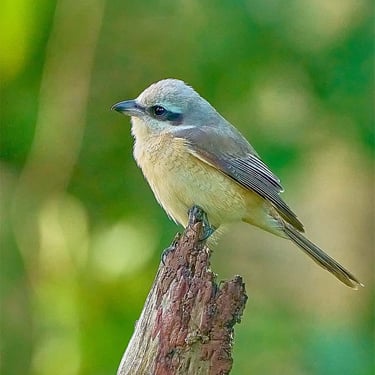
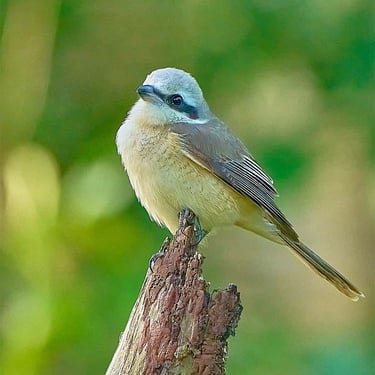
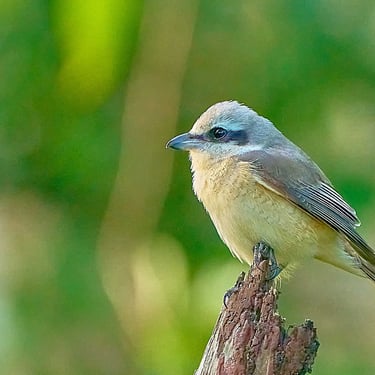
The Brown Shrikes in the images in this post had probably been in India for around a month or two when I found them in December 2024. These guys typically show up at Shri Vijayapuram around October and November and stay until April. Not all Shrike species migrate in the same way and these guys breed in Korea and eastern China before migrating south for the winter. They are mid-sized birds that can get up to 20 cm and 37 gms. My exposure to birds had been limited at the time and I was under the wrong impression that it’s only the larger species of birds that take on long migrations. Meeting these little creatures that travel thousands of kilometres across the sea without any rest totally amazed me about their capabilities as I wrote in “Mightier Than All, You Are !”
The buzz around AI was starting up at that time and meeting these little migratory birds made me question our understandings of consciousness and intelligence in comparison to all the hype that the tech bros were spinning around their creations in the news right at that time as well. The capabilities, intelligence, resourcefulness and energy efficiency of man-made intelligence seemed silly to me when compared to even a single Brown Shrike or Amur Stone Chat after I met them and the obvious realization was that data compartmentalization cannot be equated with efficient intelligence at all. Two years have gone by since and all I have to say on the topic now is that perhaps we need to get to the little bird level of intelligence first before we even dream of SUPER sizing the order cause we’re just not even in the same ballpark as Mother Nature with our capabilities yet and we’re actually just reinventing resource hoarding and nonsensical jargon for monetary gains at best for now.
Shrikes are famous the world over for being “Thorn Birds” adorned with bandit masks who also impale their prey on thorns like I wrote in “Butcher Birds Killing With A Smile”. There’s a lot more to these unique birds though and Brown Shrikes are well known for their extreme winter site fidelity. Some sub species of these birds breed in far away Siberia and then travel thousands of kilometres to South and Southeast Asia for the winter. These guys are known to return to the same winter locations year after year and they begin the process of establishing their winter territories soon after their arrival with loud chattering or rattling calls. The ones among them that arrive early and establish advantageous territories in their winter addresses appear to have an advantage over the ones arriving late and they all also go through their pre migratory moult during the winter. Their song during the winter quarters is faint and somewhat resembles the calls of the Rosy Starling and often includes mimicry of other birds. Their beak remains closed when they sing during this time and only throat pulsations are visible while the bird moves it’s tail up and down while singing.
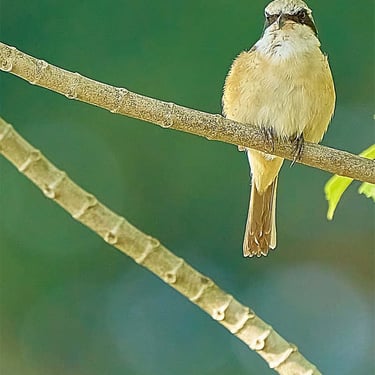
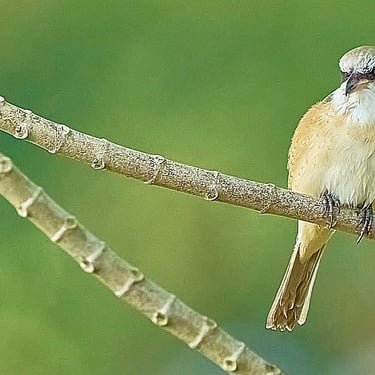
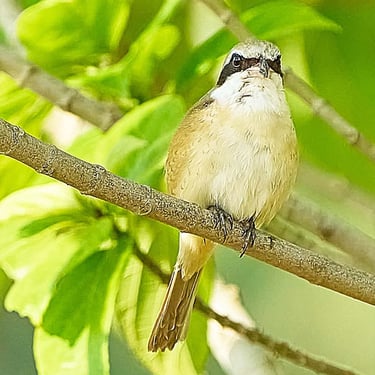
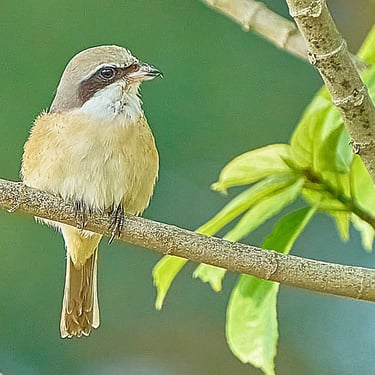
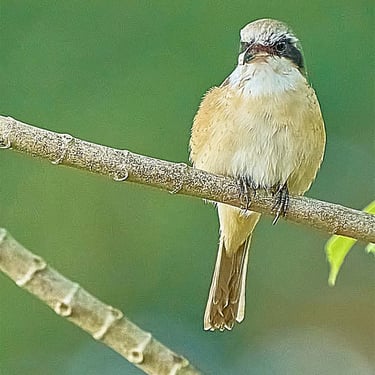
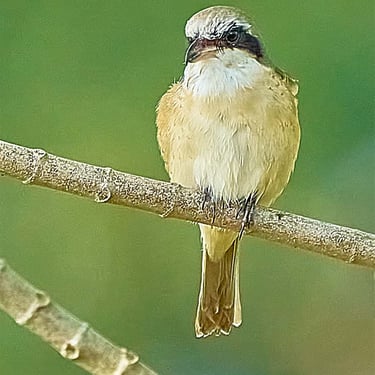
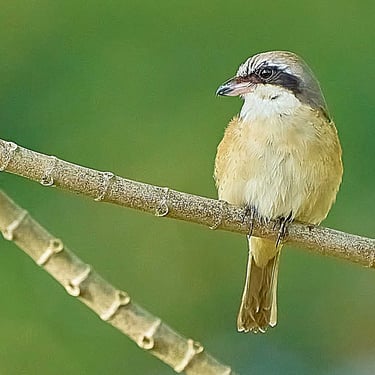
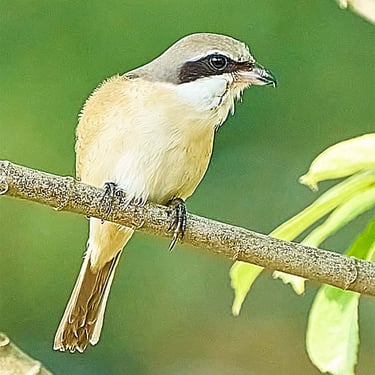
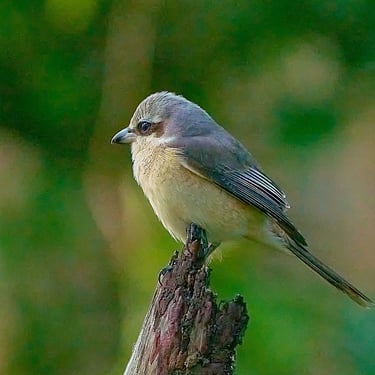
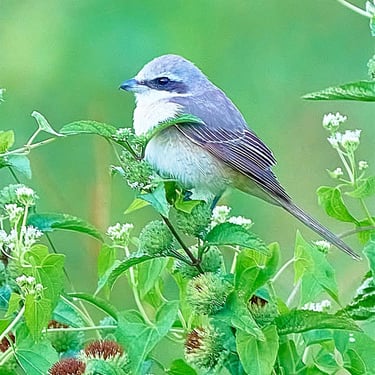
These guys are not a hassle to photograph when perched at all and even Aperture Priority usually suffices well for decent images of them because they are bold natured and usually stay calm when they get human attention making getting close to them a non-issue if you have the capability to do that at the time. You might only get a few stares from one of these guys if he’s preoccupied but you really get lucky when they give you their undivided attention cause they photograph very well usually and well caught light, distance and gaze all together can usually make for awesome images of these famous subjects in my opinion. My guys in the images here belong to the Philippine sub species of the Brown Shrike species and they have grey washed heads instead of the brown which is the norm among others of the species. The brown on these guys shows on the rump and tail and some brown notes are seen on their bodies and wings as well.
Brown Shrikes are songbirds and the males of the species use those skills by delivering a varied, repetitive song that also incorporates melodic notes and mimicry of other bird species along with ritualised dances and displays that mimic the impaling of their prey to attract females once they have arrived at their breeding grounds for the season. The males of the species also try and impress the females by showing off their caches of impaled prey which includes small reptiles, rodents and small birds. The male also feeds the female during the courtship period and the species is known to have a very male biased sex ratio. There is intense competition between males of the species due to the shortage of females in their population and males of the species that arrive early to their breeding grounds usually do well for that season for this very reason. Both the members of the seasonal pair bond cooperate in the construction of their cup shaped nest. Incubation of the eggs is taken care of by the females of this species and the males are responsible for feeding the females during the two weeks that it takes for the eggs to hatch. Once the eggs then hatch, both parents take on the responsibilities of foraging and feeding their young until they leave the nest in another two weeks or so.
Regarding the behaviour of the wildlife that I saw in Shri Vijayapuram, we have to remember that the behaviour of animals in every eco system is shaped by the possibility of the presence of predators in that environment just like how the presence of a Tiger makes the forest around go quiet except for the alarm calls announcing that very presence. Islands are closed eco systems and the wildlife there knows the risks they face and their level of ease is a natural reaction to their environment. The long encounters with the Brown Shrikes of Shri Vijayapuram gave me a deeper insight into the lives of the famous “Thorn Birds” that have inspired stories and lore among Humans for a very long time. These creatures have taken a natural disadvantage and turned it on its head in such a way that the results make them unique and they pull it all off so beautifully. They may be little but they are mighty beyond their size, these Brown Shrikes and I’m much wiser for having run into them like I did. Just gorgeous in every way, aren’t they?

© 2026. All rights reserved.