
See You ; See Me II - Asian Palm Civets
Famous For The Wrong Reasons
CIVETS
Aniruddha Bhattacharya
9/22/20265 min read
Pobitora Wildlife Sanctuary
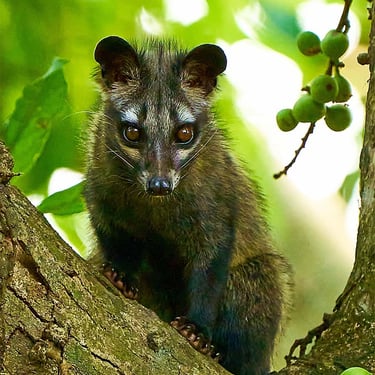
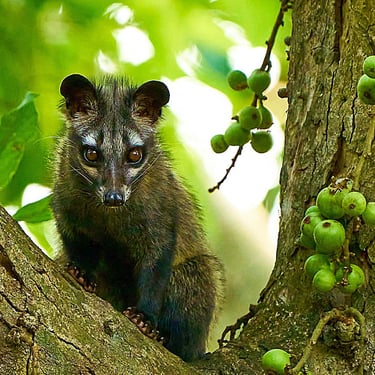
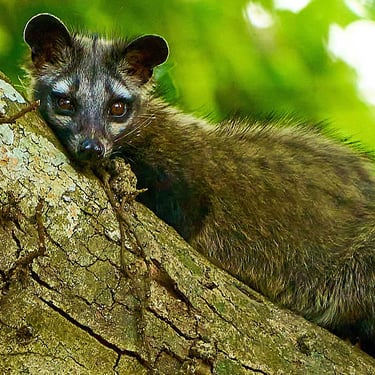
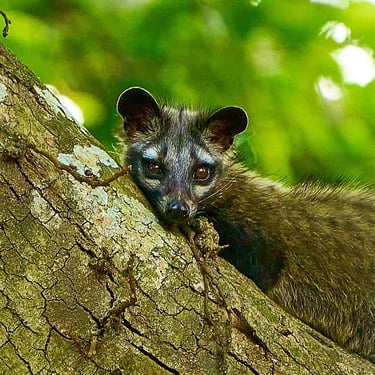
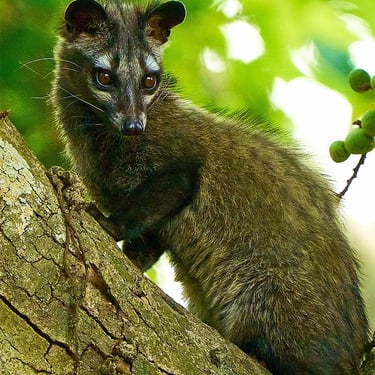
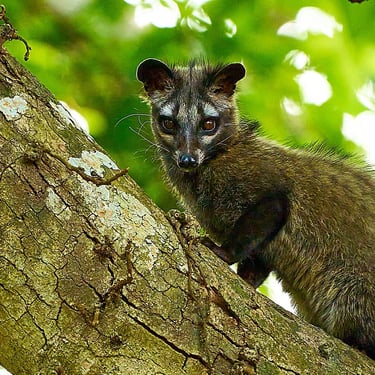
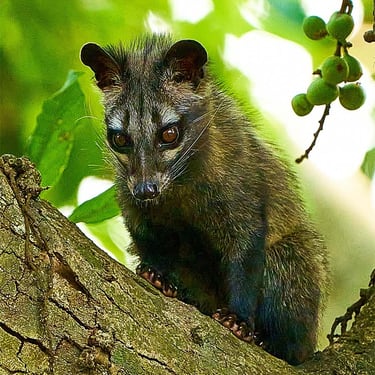
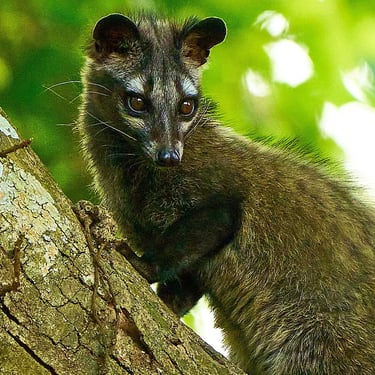
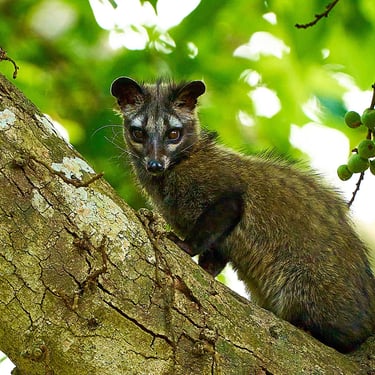
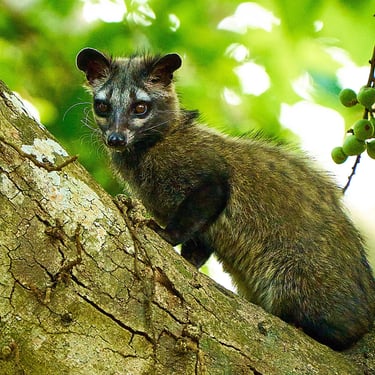
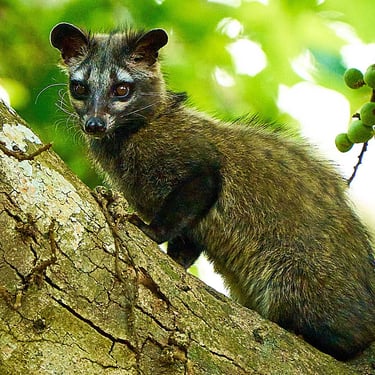
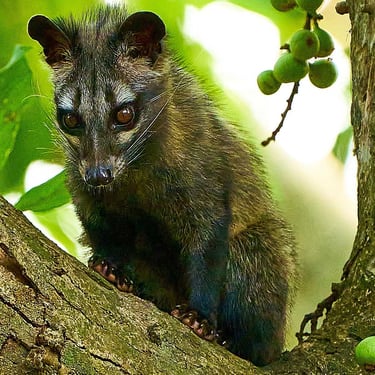
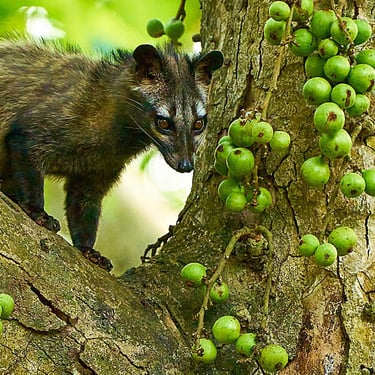
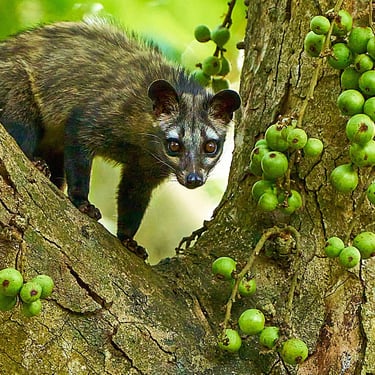
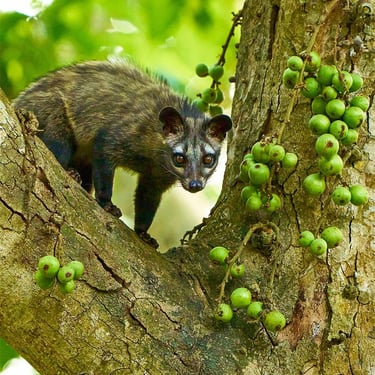
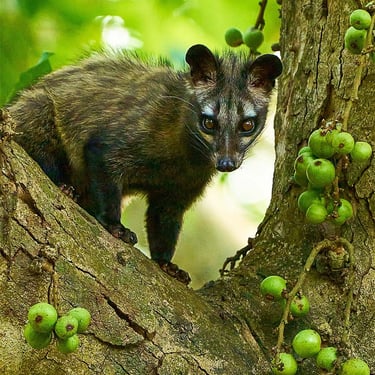
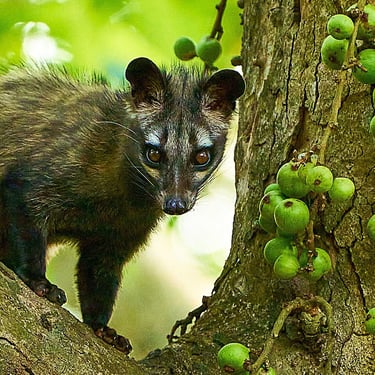
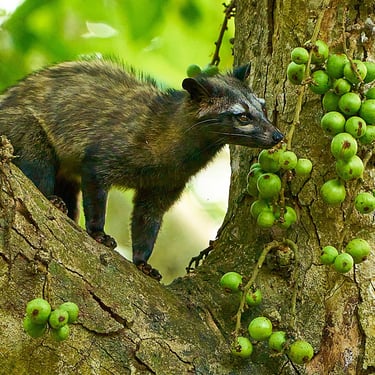
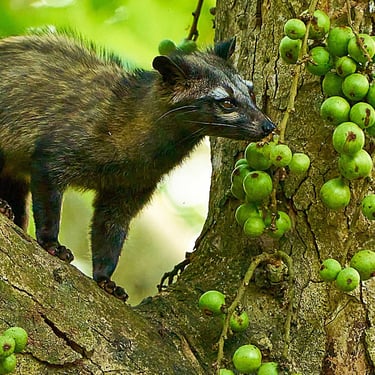
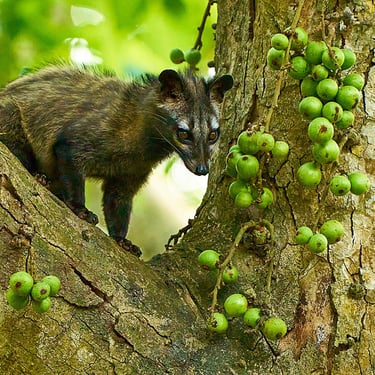
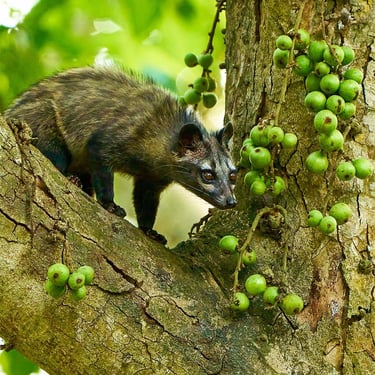
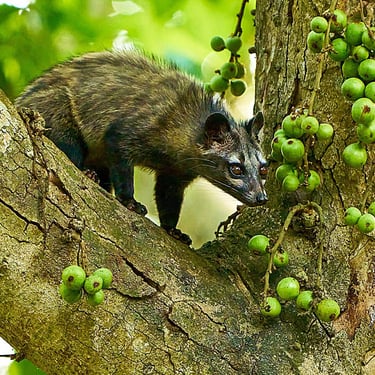
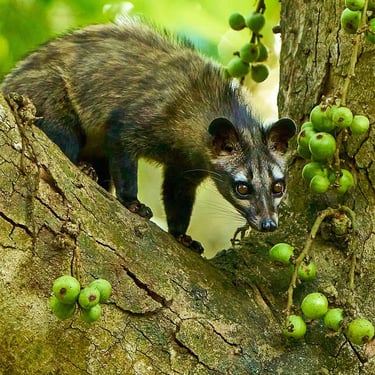
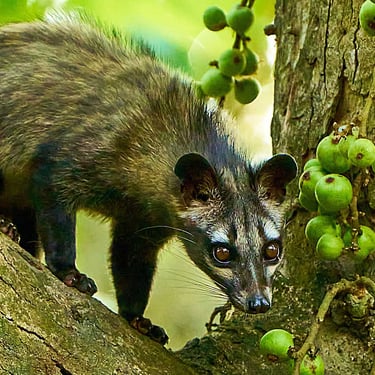
I wrote about Civets in “See You ; See Me – I” and the photos in that post were taken where I found my subject when we encountered each other at Pobitora Wildlife Sanctuary which is pretty close to my hometown of Guwahati. It was a gorgeous, well-lit afternoon and my guy gave me quite a few poses before he descended, dashed across the road in front of us and climbed up another tree on the opposite side of the road. What was interesting to note even then was that although his movements were unhurried and relaxed while he was in the tree, the dash across the road was rushed and my guy chilled out again once he reached his destination. He then started to go about his lazy afternoon in a relaxed way again while keeping his gaze on us the whole time. I could tell that this guy felt safe being up in the trees in Pobitora right then and the fact that he pretty much fell asleep in a bit while watching me photograph him kind of confirmed that fact for me in a few minutes. His change of location though, provided me with a complete change in the setting as the second tree that he was in had a lot more foliage and fruit around and the palette that I was playing with changed from brown to green while the distance to my subject stayed almost the same enabling me to score a totally different set of detailed images of one of the creatures that had given me the slip on so many occasions and across a lot of different locations like I said in my initial post. I’d lucked out twice consecutively with this guy and I returned to the same very spot the next day as well when we spotted a Civet who dashed out of the bush suddenly and raced away in a hurry. There was no way to tell whether it was the same guy or not but Umesh, my guide in Pobitora did tell me that the subject that I was photographing on my first sighting was part of a couple who had taken over this territory and were often seen on the trees there by the stream that runs through that Sanctuary. The rest of my planned days at Pobitora were washed out by the rain but this second set of photos of the Asian Palm Civet which are on this post are pretty much as good as they can get for me, I recon because this species is known to be very difficult to get close to and especially during the day given that they are nocturnal and shy. My subject here was in his territory, close to his food, water and the knowledge that he really doesn’t have many predators in Pobitora. Being a resident, I’m certain that he doesn’t see safari vehicles a threat if he’s in the branches and has grown accustomed to them in general. The sighting gave me gorgeous, detailed pictures of my guy in his habitat, close to his food while he enjoyed a lazy afternoon before his nocturnal lifestyle took over for him that day.
My previous post about this special dude mentioned how you can smell these guys from a fair bit away and how these guys have been persecuted for that by the perfumers in the past. Well, that trade may have lost popularity for now but the use of this specific species for other reasons has gained momentum as a specific kind of coffee called Kopi Luwak has become so popular in recent times that it’s elevated itself as the most expensive kind of coffee on the planet. Originating in Indonesia, where Dutch settlers initially started the coffee plantation businesses there, Kopi Luwak consists of partially digested coffee cherries which have been eaten and defecated by Asian Palm Civets. The cherries are fermented as they pass through the Civet’s intestines and the process apparently produces the best tasting coffee for some that can fetch upwards of 100 USD / kg. So basically, they get these guys to eat and crap these coffee cherries out and then they rummage through the shit to collect the cherries that they then sell at that price. Pretty lucrative huh? I guess we all know where these kinds of stories lead and it’s never towards the benefit of the animals that facilitate the process sadly. I mean, who’d wana eat the same cherries daily and what happens when they just don’t want the coffee cherry anymore? If they’re an investment, then do they really have a choice in the matter?
Now, some argue that it’s the Civets who choose the best of the cherries and that it’s that selection process that plays a role in making this coffee special but we all know that the traditional methods of looking out for civet feces to chance upon some coffee cherry leftovers were thrown out the door the day the process attached itself to brands that elevated it to the title of “The Best”. The pictures of the Civet Farms on the internet are heart breaking to say the least and I for one am proud that I trashed the only pack of the stuff in question that I was gifted a while ago. I’d rather eat a Civet out of hunger than keep it locked up in a 2 sq foot cage and farm the poor creature’s stomach enzymes for better flavour in my morning cup of coffee. These farms in Indonesia, Philippines and Vietnam not only force feed these Civets with coffee cherries, they apparently also keep other illegally traded species of Civets whom they farm for their scent glands as well. It’s sad how this can go on even today and I’m just thankful that the practise has not caught on here in India at least where my guy with the cure face in Pic : 3 can still chill on his tree without the possibility of a corporation capturing and farming his bodily fluids.
These guys are also called common palm civets, musangs and toddy cats. In Philippine mythology, the upland Bagobo people tell the story of a giant, talking Asian Palm Civet called Lakivot who embarks on a quest to find a magical tree of gold and the coveted flower of gold. The hero vanquishes many magical creatures in that tale and ends up eventually gifting the prize to a girl, transforming himself to a Human and marrying the woman. Beyond the myth though, local folklore across south and southeast Asia gave the Civet the famous “toddy cat” nickname because this species loves drinking the fermented sap from tapped palm flowers.
The fact that these guys swallow seeds whole isn’t the norm among most creatures their size in their habitat and that trait makes them the “mesocarnivore gardeners” of the rainforests of south and southeast Asia. They play a huge part in the eco system that they live in and distribute seeds throughout their territory. The forests of the Asian rainforests have been sculpted by these guys over generations and their necessary role in the upkeep of those eco systems has been studied, documented and reported down to how long and far these guys spread seeds daily. I think it’s clear that the Asian Palm Civets need to be in the forests and ensuring the health of the planet and not in little 2 by 2 cages flavouring coffee for the uber rich at the cost of their freedom and lives.
The Asian Palm Civet is famous today for producing a variant of coffee but not because it enjoys the task or chose it and that label itself is sad and sickening to be honest. These guys play a vital role in the health and upkeep of their habitats and the planet and their role is a lot more complex and important than the one that they’re known for sadly. I’m very thankful for my run in with this species at Pobitora because I could watch and learnt about their behaviour, get the kind of pictures of them from the wilderness that I’ve wanted for a while and then also learn about the lives and importance of these unique relatives of the mongoose. My guy in the photos here was a great find for me and one of the stars of my first Pobitora trip. Now, I’m not sure if I could catch these guys doing much else but then I’m sure that if it does happen, it will be on here for sure. With this hobby, you just never know till it happens I guess and that’s the fun of it.
© 2026. All rights reserved.