
What's In A Name I ? - Chestnut Tailed Starlings
The Non Iridescent Chestnut Tailed Starlings
BIRDSSTARLINGS
Aniruddha Bhattacharya
9/1/20266 min read
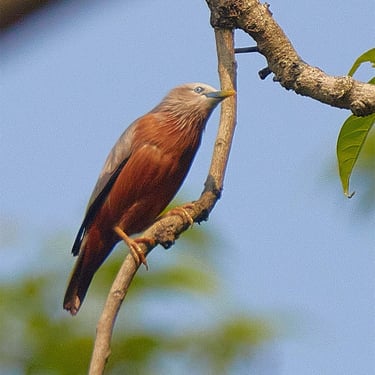
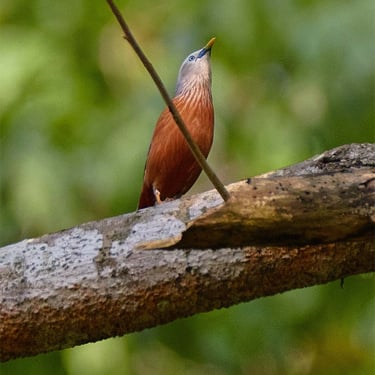
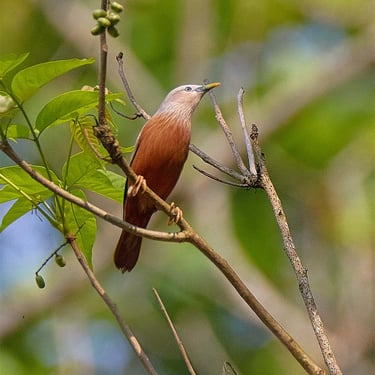
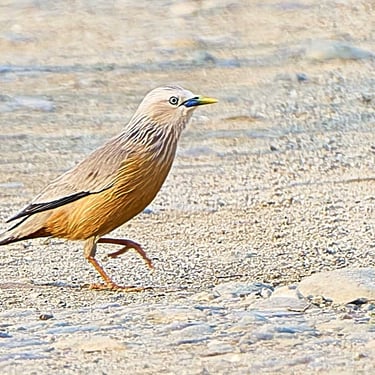
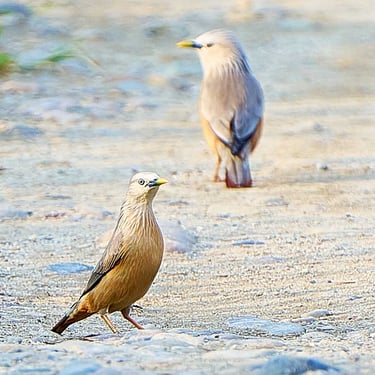
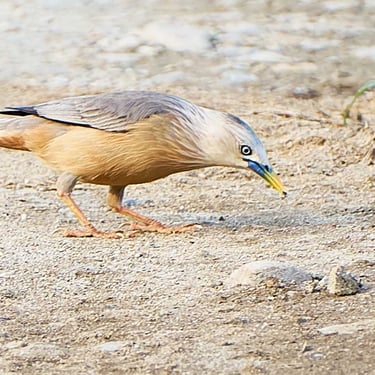
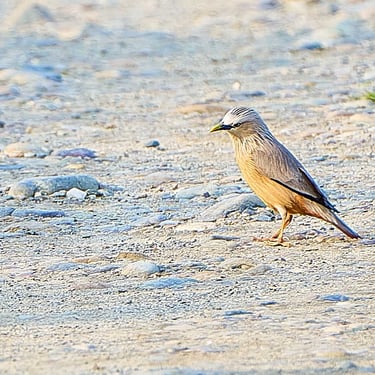
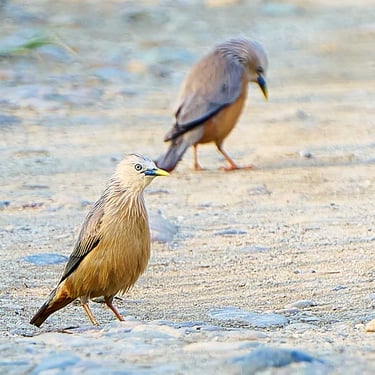
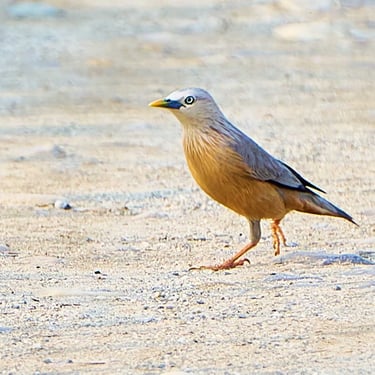
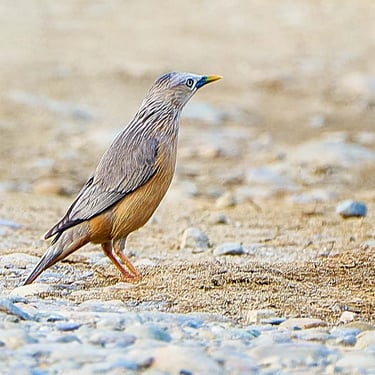
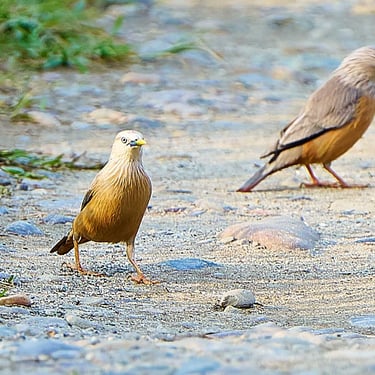
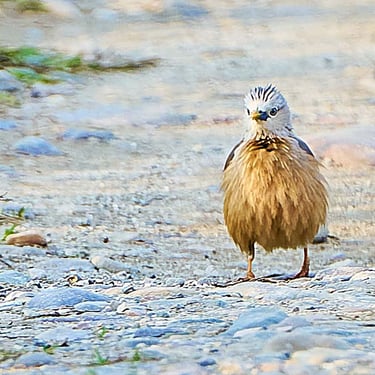
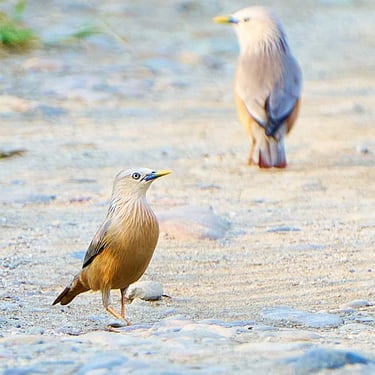
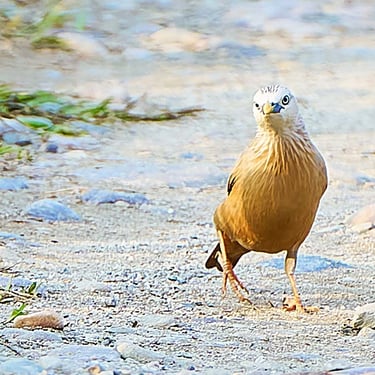
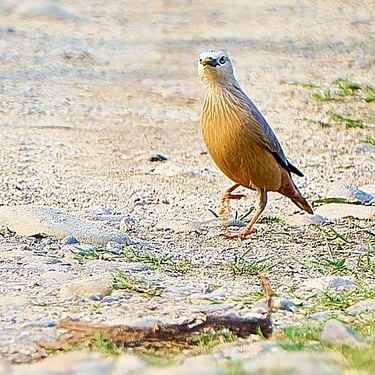
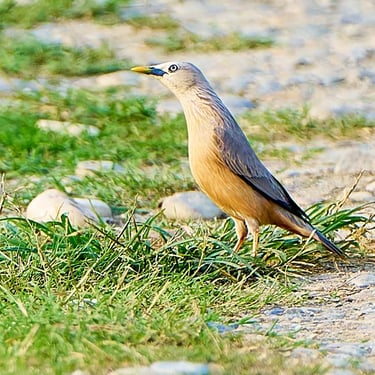
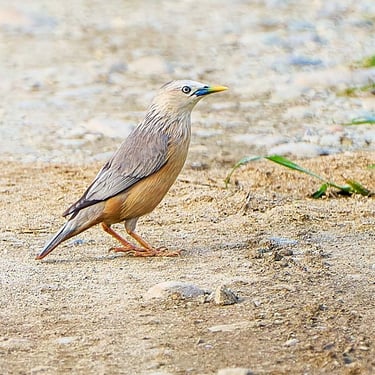
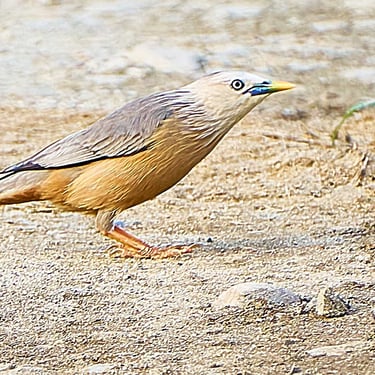
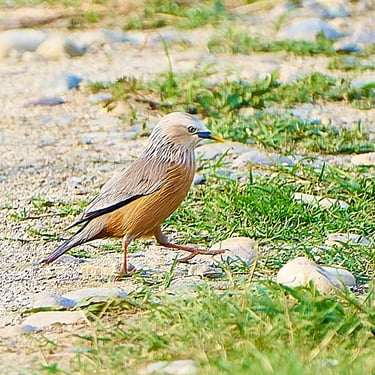
Pics : 1 - 3 = Chestnut Tailed Starling ; Kaziranga National Park | Pics : 4 - 19 = Chestnut Tailed Starlings ; Manas National Park | Pics : 20 - 24 = Chestnut Tailed Starling ; Pobitora Wildlife Sanctuary
“Bird classifications man! So confusing to understand, describe and also to remember. Such a task, I tell you”. That’s how I’d ended my previous post here about Starlings almost a year ago in which I’d also called these birds usually glossy and metallic coloured which many members of this family from the regions where the name originated can be. Well, it doesn’t really seem like a whole year has gone by this fast, but it is what it is, I guess and the year that’s gone by has had me seek my adventures closer to home mostly for a change. It’s not a bad thing really cause when you’re in this game for a bit like me, it does help to know one’s own habitat as well instead of always running off after the more glamorous options which might not always be close at hand. It’s been a busy year and I’ve learnt that making pictures and discovering stories about the often ignored can be a lot more difficult if anything and yet satisfying in its own way. I guess that it’s a space where the experience that you gathered from the initial adrenalin fuelled trips comes into play cause you’re not really running on just pure excitement and wonder yourself either this far into the game. If you’re into this hobby of ours for a while, then you’ve seen the patterns that life weaves and have also learnt that all creatures can give you a special moment. It’s a matter of the aligning of chance, timing and skill and that could just as well happen anywhere.
Bird’s classifications can be difficult because of their inherent nature of being mobile, often seasonally migratory and notably different in their ways from mammals. The same birds have many different local names and similar birds from a family might look very different to the untrained eye or even exhibit physical or character traits that are different from the rest of the scientific family. They’re difficult because every species within a family is unique and that’s the magic of nature. Don’t Humans from different parts of the world have different preferences in food or apparel and aren’t those Humans the same species though? It’s actually the huge variety that’s intimidating in my opinion. There are just too many kinds of birds in the world for you to see in one lifetime and I guess that the only solace is in just coming to terms with that. Starlings may be named after the stars but most of the Asian varieties among them like these Chestnut Tailed Starlings do not have the metallic, iridescent feathers that reflect light. They’re also Mynas but then, not all Mynas are Starlings mind you. What did I stay just at the start. Yeah!
Chestnut Tailed Starlings are the most easily and abundantly found Starlings in my home state of Assam. If fact, you might even catch a murmuration of a whole lot of these partially migratory birds where they make those awesome patterns while in flight over Deepor Beel, which is a freshwater lake on your way from Guwahati Airport to the city if you visit at the right time of year as I have on quite a few occasions but it just sadly never seems to happen when I have my cam with me these days. I’ve also seen them pretty much in every reserve in the state and like most Asian Starlings, they are forest dwellers who have not adapted to city life. Their local name is “Kath Xalix”, which basically translates to woodland Myna which makes perfect sense because these birds are in the same scientific family as the Mynas who are the chunkier members of the same scientific family with similar physical and character attributes. Many Mynas like the Common Myna who I wrote about in “Godsmacked By The Ordinary II”, have adapted better to urban life and I guess that their choice of real estate just comes down to preference of the species kinda like how its individual preference with us Humans.
The name Starling originated in Europe and if you look up the birds named so in Europe and Africa, you’ll see how the name is perfectly apt. That said though, the explanation given for the name is that these birds look like stars when they are seen in flight and against the light. So, in photographer terms, they produce a star shaped silhouette. Ummm Really? You were looking at them against the light when you named those gorgeous, metallic-coloured birds "Stars"? I guess the classifiers just needed to rationalise the name somehow after they ran into the Asian varieties which incidentally could just be the ones who came first though? What’s in a name really and especially in the case of birds where time and again, we’ve seen how searching for commonalities for global naming has proven comical in so many instances. There’s no consistency in the relationship between many global names for birds and their meanings simply because evolution throws a spanner in the works of the initial assumptions of consistency once time and distance enter the equation. As explorers probably started getting to Asia, they started seeing similar birds with common traits who just didn’t have the reflective feathers and that criteria just had to be swapped out for a new one that would basically just tie the thing together and also make place for the Mynas who are the chunkier cousins of the Starlings and are found all over this side of the world. The Mynas show pretty much all the characteristics of the Starlings to fit into the same scientific family but then they don’t do those famous Starling murmurations. That’s a Starling trait exhibited by only certain migratory member species of the family and it shows us again how similar species belonging to the same family often have individual preferences and traits which are different from the rest of family.
I discovered this species in Kaziranga when I was stopped by the side of the road cause my first Black Giant Squirrel whom I wrote about in “The Scampering Giant” had caught our attention as were were driving through the highway that runs by that reserve. I could only manage the three images that you see here in Pics 1 - 3 at that time cause the Squirrel was the main event for that sighting who had all my curiosity at that time. I then met a couple of these guys at Manas National Park a few years later and those two birds had taken over the road and were stomping about back and forth the same stretch for whatever reasons best known to them as you can see in Pics : 4 – 19. I guess you just had to be there for the experience cause we sat around parked and waited for them to disperse while Pinku, who was driving started a fictional, comedic running commentary on the assumed conversation between the birds in Assamese with the funniest tones and local accents. I was a little surprised on seeing them then cause these guys seemed a lot lighter in colour to the ones that I’d seen in Kazi and had to confirm the Id but then we all know how colour on birds especially can be influenced by a lot of factors. That sighting though was surely the funniest of that trip for me and one that’ll stand out cause we don’t really encounter a lot of funny moments that have us splitting sides with this hobby usually. The trip to Pobitora Wildlife Sanctuary earlier on this year let me catch the guy you see here in Pics : 20 – 24 foraging in the tree and that’s a pretty good find as well cause I just don’t catch birds feeding so close to the road usually. These birds are very similar looking to the White-Headed Starlings that I’d seen in the Andamans and the Malabar Starlings as well who were earlier considered to be part of the same species as the Chestnut Tailed ones. There's one theory about the origins of this family which states that Starlings might have started from Africa and spread out from there on while another states that they probably originated in East Asia from where they moved on to Africa and beyond. Not that it matters in the long run but I guess that we're back to whether the glossy kind or the duller variety came first with regards to this family and I guess that we will never actually know.
Hanging back from chasing the usual suspects this year has brought quite a few surprises for me and has taught me more than what the better known ever could cause we already know about the better known usually. Starlings are in a huge family comprising of around 128 species. Finding differences in bird species is common simply because that's the criteria for a different species. Slight differences in related species is the norm here as is warranted despite this vast amount of diversity. Seeing this up close helps in the understanding of the whole picture that exists when we consider the entire planet. These Chestnut Tailed Starlings of Assam pretty much solved the riddle that this family of birds presents us with when we encounter them first and also shows us how just assuming that a species originated where the accepted name started from could actually be very misleading with regards to creatures because evolution out dates language by a lot. It’s all been good and fun but I really want those shots of these guys doing their murmurations even more now. Might just get lucky with that this coming winter. Who knows? Let’s see I guess.


© 2026. All rights reserved.