
In Streaked Lighting - Puff Throated Babblers
Catching Little Ground Dwelling Puff Throated Babblers At Level
BIRDS
Aniruddha Bhattacharya
10/6/20266 min read
Mulshi, Maharashtra
My post here last week was about how I ended up chasing a rarely seen species called The Pallid Scops Owl up and down the landscape of far away Koyna in Maharashtra for an adventure that I will always remember. That bird didn’t really provide much action though when we did get to it finally and the adventure there was in the hunt for that rare sighting mostly. The Puff Throated Babblers in the images here today, in contrast are pretty much the opposite of that species because of their population, their commonality, the setting that I met them under and their ways of life which are all totally different from last week’s subject and yet, these little guys gave me a totally different kind of adventure the day before I met the Pallid Scops Owl in Koyna. They’re commonly found birds in India and yet, the situation and circumstances around this sighting gave me images that I’m very happy with, nonetheless.
I was staying at a bird hide in Mulshi, Maharashtra and that itself was a new experience for me at a location that I hadn’t been to before. I had a no frills kinda dorm for 3 to myself and was the only guest there which itself was an adventure to start things off. My host had ensured the availability of a person on call to cater to my needs as internet coverage there was sketchy and I’d have to walk to certain areas within the premises to get mobile coverage there as well. But being alone, surrounded by the sounds of nature and available access to the bird hide were well worth the effort as far as I was concerned and those reasons were my motivators for making the trip in the first place. Birds visit their drinking holes throughout the day and as they want and internet access and network is a rarity in most of the locations in this game anyway. I was just spending the night in the middle of the action instead of travelling to it in the morning and I thoroughly enjoyed the overall experience of it all for the couple of nights that I spent there. It was pretty much like camping with a roof over your head and a private working toilet as well in the middle of the forest and that’s a pretty good deal when you’re there for wildlife exclusively. The fog would roll in at night and make the scene look and sound so magical there that the lack of amenities and conveniences didn’t even cross my mind.
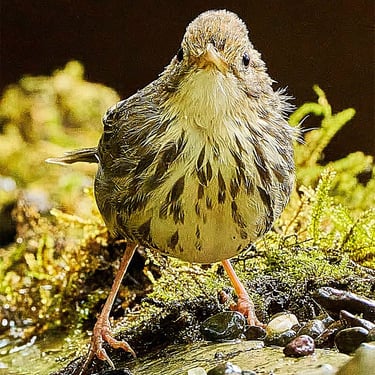
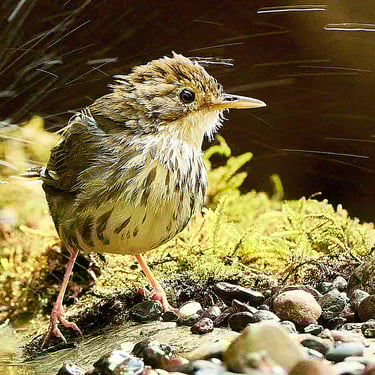
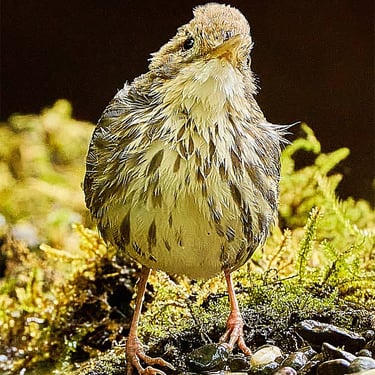
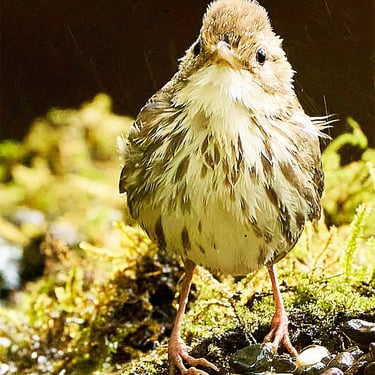
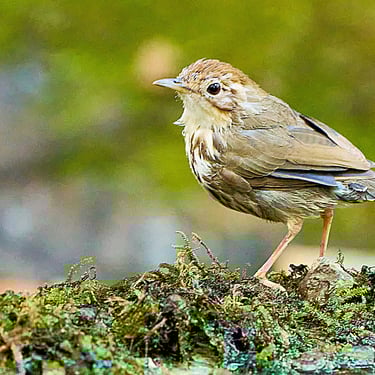
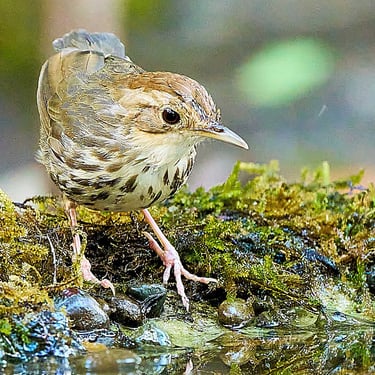
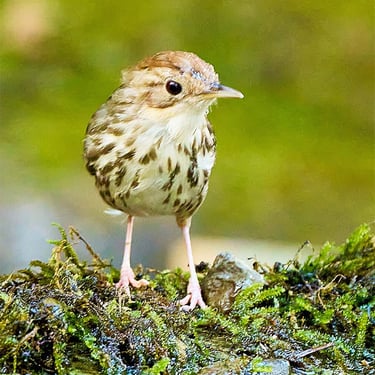
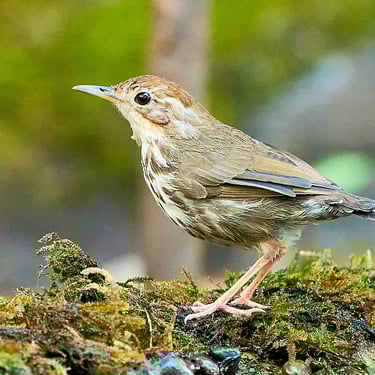
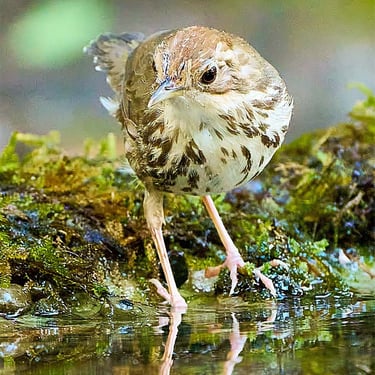
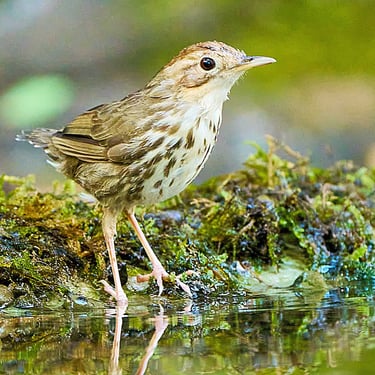
I mentioned this species and posted some of their pictures in “The Babbler’s Fuss – II” which was about the varied species that have been given the name Babbler based only on the very common trait of being noisy in their bushes which in all actuality cannot be a distinguishing factor for species as it is just too common and the trait is also seen in birds who do not carry the said name. These little 17-20 cm birds who weight about 20 gms or so are found along the Himalayan foothills, going down to the northeast of the country and all along the eastern and western ghats of India. They range from Pakistan, through India and to Malaysia and Singapore. I’d missed these guys despite their huge range though because of their preference to hang out in dense vegetation and their habit of foraging on the forest floor where they turn leaf litters around for their grub. These little guys are like rodents with wings on the forest floor, in the midst of the thickets and that’s where they prefer to stay for safety as this lifestyle over generations has given them strong legs and weak flight. They’re non migratory residents who probably visit this watering hole regularly and their entry into my field of vision was unique because they came in a group and knew their way around well enough to play and have fun in the water together.
The birding hide at Mulshi is set up well and is dug into the ground, letting the observers watch and photograph the subjects at their level and hence taking away the issue of angled images and videos that capture small subjects from the top. I’d have to be laying down to get the images that I could make there out in any other setting and I’m pretty sure that there’s no way that I’d manage to stay like that for an entire day to achieve what I could from that hide. I’d been to other birding hides in Sattal and must admit that this set up is a lot more user friendly for photographers for sure. The host at Mulshi did not feed the wildlife that visited the watering hole throughout the day as far as I could see and viewing time isn’t tied to a specific mealtime which would interfere with the natural life cycles of the wild. The distance of the hide from the water there was also adequate for me to try darkening up the background in my images and I’ve written about that in “A Matter Of Perspective – I”. It was my first time out trying this after stumbling into the technique in Andaman and that static location really helped by allowing me to play around to get to understand how to dial it all in when needed.
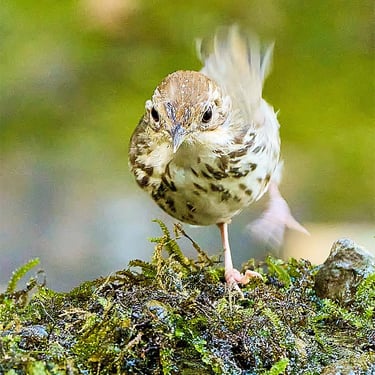
Puffed Throated Babblers are named as such because they puff out their white throats when they sing and call. These little birds have loud calls for their size and they are known to be vocal with clear, repetitive, whistles, songs and alarm notes that accompany this throat inflation. They have low, short and weak flight patterns that they mostly use to get out of difficult situations after raising the alarm with their puffed throat enabled alarm calls. I wasn’t lucky enough to catch one of these guys with their throats puffed up during this sighting but I’m sure to be on the lookout for that now that I know that they do that. There are thirty or so recorded sub species of these guys spread across their wide range of habitation which have slight variations in their looks and other traits. Being ground dwellers, they build dome shaped nests on the ground itself and in between the bamboo thickets that they prefer. Their nests are made of leaves and twigs at the base of bushes, with the opening pointing downwards if the nest is on a slope. Their clutches usually have 2 to 5 eggs with northern populations usually having larger clutches and hatchlings of the species usually leave the nest a couple of weeks after hatching.
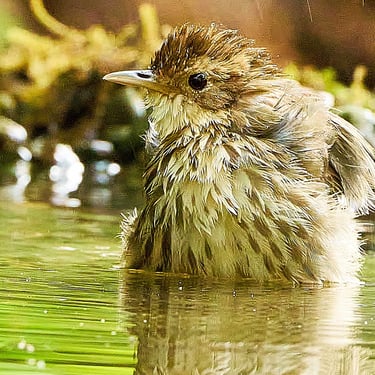
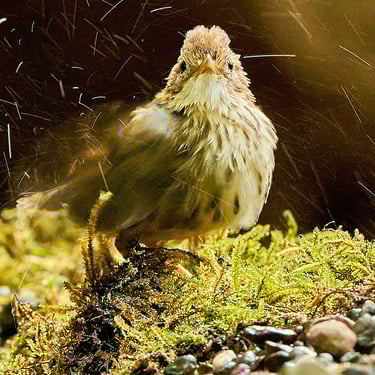
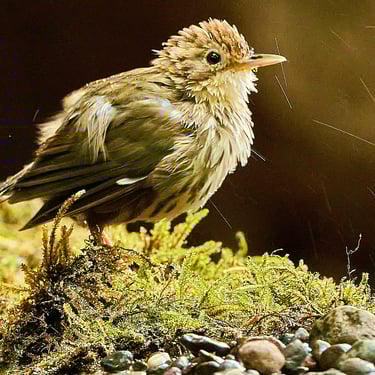
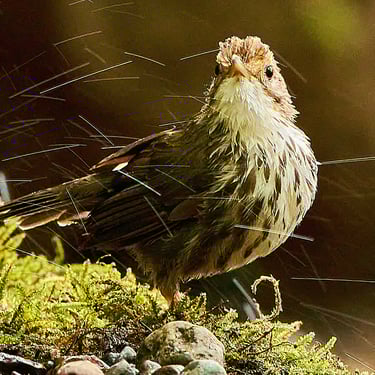
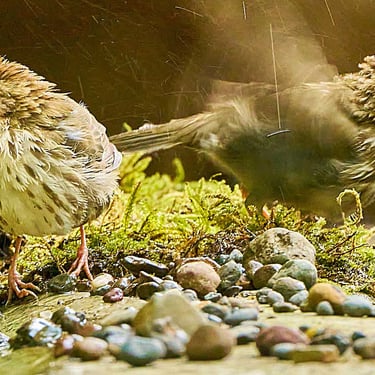
The four of these guys that I met at Mulshi knew the lay of the land well and went on to enjoy their bath time at the watering hole as they came when they had the whole place to themselves. They’d flap their wings in the water and that would inadvertently create the streaks of water droplets that you see in the pictures here in Pics : 3, 4, 5, 8 & 16 which kinda look like little streaks of light. The effect was unique from my perspective and made those images different and special for me. I doubt that I’d have those images if I was photographing them at any other place because I probably wouldn’t have thought up these compositions if I was laying on the forest floor with the hot sun beating down on me. Watching them from up top would just never give you the perspective in the first place.
These Puff Throated Babblers whom I met at Mulshi gave me an insight into a very common species that had given me the slip most probably because I had not been looking at the forest floor. That and the fact that these guys probably avoid proximity to the road given their preference for life on their feet and in between dense foliage and bamboo had kept them away from my camera in all my repeated trips to the forests where they probably do exist. The hide at Mulshi put me at a perspective that allowed me to catch these little ground dwelling birds do their thing up front and centre and let me compose my images with an ease which probably would not have been possible in other locations. They’re common subjects but I’m glad that my first run in with them happened under conditions that enabled these pictures. Hides are a great idea in my opinion if their management is proper and I just hope that the powers that be implement a system that allows us to watch and photograph these wonderful creatures within accepted directives and norms that do not harm or change the behaviour of wildlife. We are seeing the initial steps of that process in this country and I hope that we get there sooner than later for the benefit of all concerned.
© 2026. All rights reserved.